How to Brush Your Cat's Teeth: A Safe Step-by-Step Guide
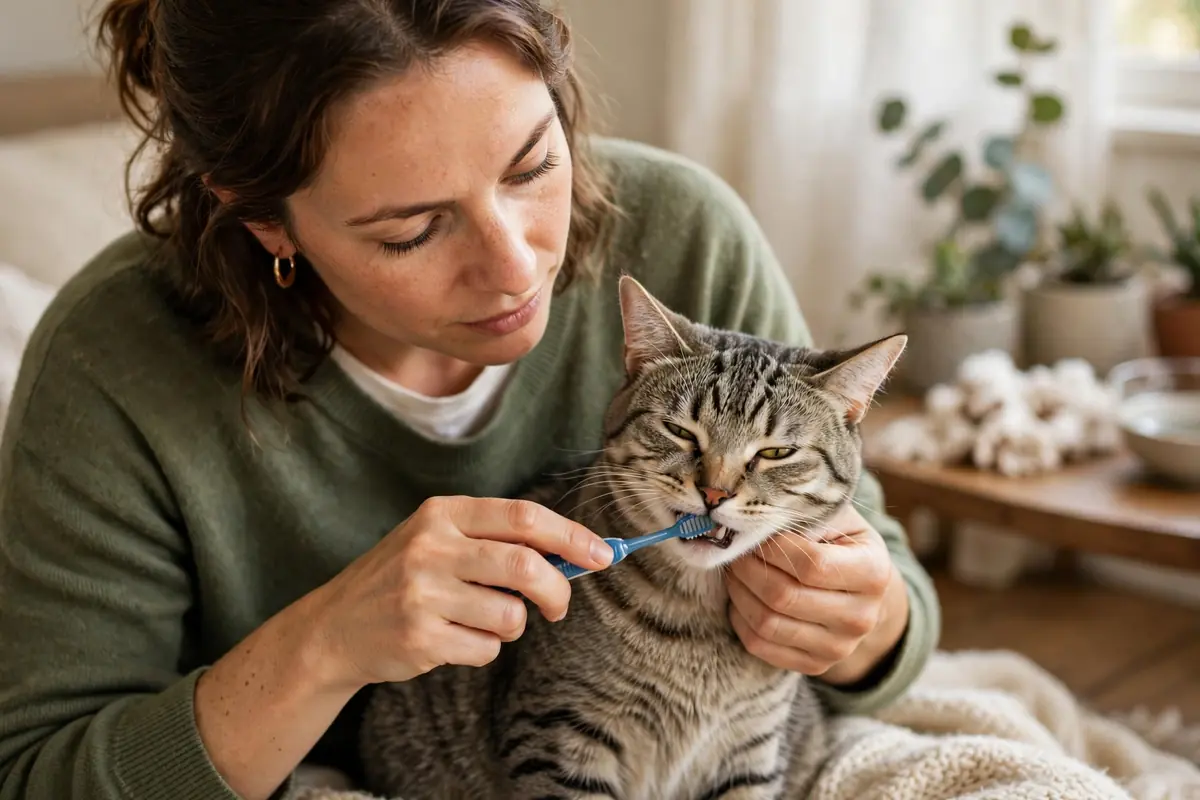
Yes, you really can brush your cat's teeth — and doing so is one of the best things you can do for their long-term health. Dental disease is one of the most common health problems in adult cats, yet it is also one of the most preventable. A few minutes of gentle brushing each day removes the soft plaque that would otherwise harden into tartar, irritate the gums, and eventually lead to painful infections, tooth loss, and even strain on the heart and kidneys.
The catch is that most cats do not volunteer for a toothbrush on day one. This guide shows you how to introduce tooth brushing the patient way — with the right supplies, a gradual training plan, and the correct technique. Done calmly and consistently, most cats accept brushing as just another part of their routine. If you notice bleeding gums, loose teeth, or stubborn bad breath, have your veterinarian check your cat's mouth first, before you begin.
What You'll Need
Gather your supplies before you start. Using the wrong products is the most common mistake cat owners make, and it can genuinely harm your cat — so read this list carefully.
- Pet toothpaste (enzymatic). This is the non-negotiable item. Toothpaste made for pets is safe to swallow, free of foaming agents, and usually flavored with chicken or fish so cats accept it. Never use human toothpaste. It contains fluoride, which is toxic to cats when swallowed, and many brands also contain xylitol, a sweetener that is dangerous for pets. Cats cannot spit, so everything you use must be safe to swallow.
- A cat toothbrush or finger brush. Pet toothbrushes have very soft, small heads designed to fit a cat's mouth. A finger brush — a soft silicone sleeve that slips over your fingertip — is even gentler and gives you better control, making it ideal for beginners and nervous cats. Both are inexpensive and available at pet stores and online.
- Treats. Small, soft treats will be your training tool. You will reward your cat at every step so brushing becomes associated with good things.
- A calm spot. Choose a quiet room where your cat already feels comfortable, with good lighting. A countertop or a chair where you can sit with your cat in your lap works well. The key is consistency: always brush in the same place so it becomes a familiar ritual.
Optional but helpful: dental wipes made for pets (a fallback for cats that never accept a brush), and a vet-approved dental diet or treats, which can supplement — but never replace — brushing.
Step 1: Get Your Cat Used to Mouth Handling
Do not start with the toothbrush. For the first two or three days, your only job is to teach your cat that having their mouth touched is safe and rewarding. Pick a time when your cat is relaxed — after a meal or a play session, never when they are wound up or half asleep.
Sit with your cat and gently stroke their cheeks. Then, with one finger, softly lift one side of the lip to reveal the teeth underneath. Hold it for a few seconds, then offer a treat and praise. Keep sessions under five minutes. If your cat pulls away, let them go and try again later.
Step 2: Introduce the Toothpaste Taste
On day three or four, squeeze a pea-sized dab of pet toothpaste onto your fingertip and let your cat lick it off. Most enzymatic pastes are flavored to taste like food, and many cats love the taste immediately — this is your biggest advantage, because the cat starts looking forward to the "toothpaste treat."
Let them lick it freely for a day or two without any brushing. If your cat turns up their nose, try a different flavor — a cat that rejects one often accepts another.
Step 3: Brush With Just a Finger
Now combine the two steps. Put a dab of toothpaste on your fingertip, lift the lip on one side, and gently rub the paste along the outer surfaces of the teeth — the side facing the cheek — using a slow circular motion. Focus on the upper canines and the large back teeth (premolars), because plaque builds up fastest there.
Keep this session to about 30 seconds. You do not need to scrub the inner surfaces (the tongue side) — a cat's rough tongue handles those. You also do not need to rinse; pet toothpaste is designed to be swallowed safely. End with a treat and gentle praise, every single time.
Step 4: Graduate to the Brush or Finger Brush
Once your cat tolerates finger brushing calmly for a few days, introduce the actual tool. Let your cat sniff and lick the toothpaste off the brush first so it is not a surprise object. Then repeat exactly what you were doing with your finger: outer surfaces, gentle circles, 30 seconds, one side at a time.
A finger brush is often the best first tool because it is soft and lets you feel how much pressure you are using — think of it as massaging, not scrubbing. Switch to a small pet toothbrush later if you prefer; the technique is identical.
Step 5: Build Up to a Full Session
Over the next week, gradually extend the session: do both sides of the mouth, work from the canines around to the back teeth, and build up to roughly 60 seconds total. Aim for daily brushing if you can manage it — plaque begins hardening into tartar within 24 to 72 hours, so frequency matters. A short, consistent routine beats an ambitious one you abandon.
Make it part of an existing habit: brush teeth right before the evening meal, for example, so dinner becomes the reward. Cats thrive on predictable routines, and yours will too.
What to Watch For: Signs of Dental Trouble
Brushing gives you a front-row view of your cat's mouth, which is a hidden advantage — you will notice problems early. While you brush, watch for:
- Red, swollen, or bleeding gums. Healthy gums are pink and firm. Bleeding during gentle brushing can indicate gingivitis and warrants a vet visit.
- Persistent bad breath. A cat's breath is never minty-fresh, but a strong foul odor can signal infection or decay.
- Yellow or brown tartar buildup. Brushing removes plaque, not hardened tartar. Visible tartar near the gumline means it is time for a professional cleaning.
- Drooling, pawing at the mouth, or dropping food. These are signs of mouth pain — stop brushing and call your vet.
Ask your veterinarian to check your cat's teeth at every annual exam, even if everything looks fine to you. Many dental problems hide below the gumline, where only a professional exam — and sometimes dental X-rays — can find them.
Home Brushing vs. Professional Cleaning
It is important to understand what brushing can and cannot do. Home brushing is prevention: it removes soft plaque before it hardens. It cannot scrape off existing tartar, clean under the gumline, or fix diseased teeth. When tartar accumulates, your vet will recommend a professional dental cleaning under anesthesia, which allows a thorough scaling and polishing plus X-rays of the tooth roots.
Think of it like this: brushing is the daily maintenance that keeps professional cleanings less frequent and less extensive. For a broader look at keeping your cat healthy day to day, browse our full Care Guides collection.
Frequently Asked Questions
Can I use human toothpaste on my cat?
No, never. Human toothpaste contains fluoride and often xylitol, both of which are toxic to cats. Always use a toothpaste made specifically for pets, which is safe to swallow and usually flavored to appeal to cats.
How often should I brush my cat's teeth?
Daily brushing is ideal, but even two to three times a week makes a meaningful difference. Consistency matters far more than perfection, so build a routine you can realistically maintain.
What if my cat refuses to let me brush their teeth?
Go back a step in the training process and slow down. Spend several days just lifting the lip and touching the teeth with a finger, rewarding calm behavior each time. Some cats never accept a brush but will tolerate a finger brush or dental wipes.
Do older cats still need their teeth brushed?
Yes, senior cats benefit from dental care just as much, but start extra gently and ask your vet to check their mouth first. If a cat already has gum disease or sore teeth, brushing can be painful and should only begin with veterinary guidance.
Can brushing replace a professional dental cleaning?
No. Home brushing prevents plaque buildup, but it cannot remove hardened tartar below the gumline. Most cats still benefit from a professional dental cleaning by their vet when tartar accumulates.