Moving Long Distance With a Cat: 11 Tips
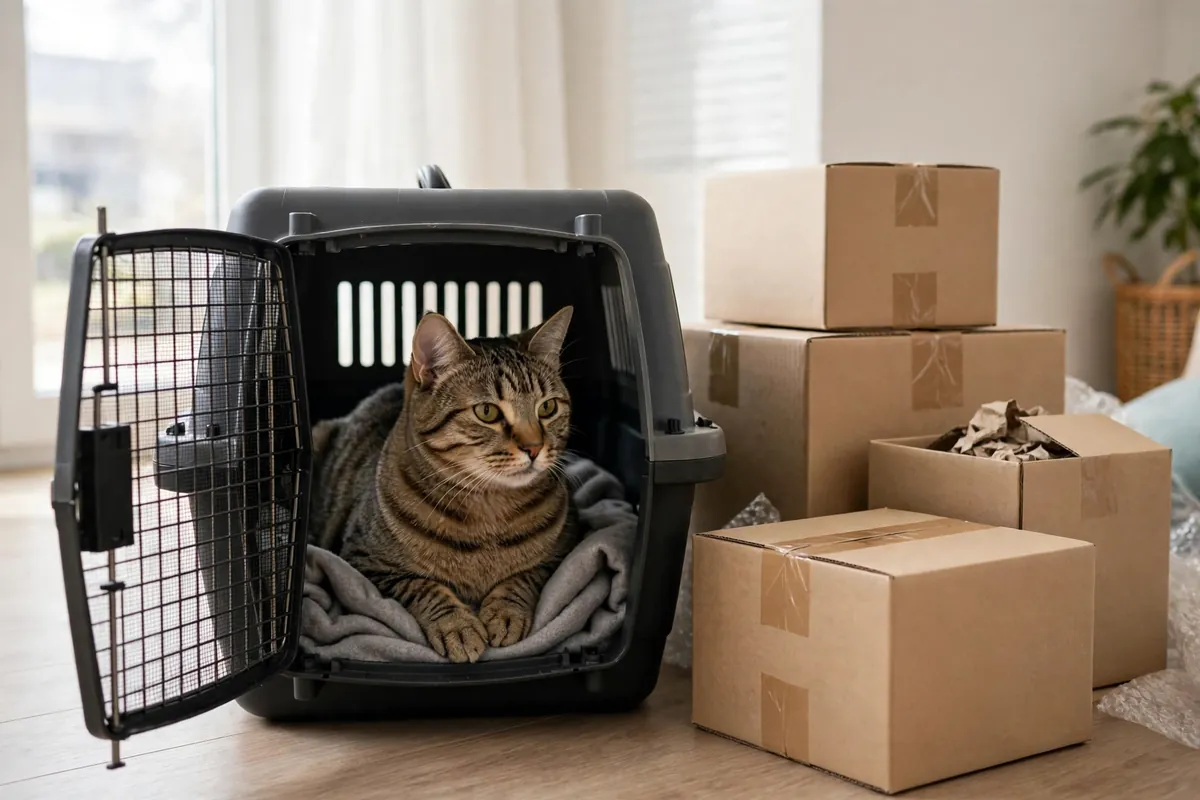
Moving long distance with a cat is one of the most stressful events a cat can experience — and one of the most manageable, if you plan it around how cats actually cope. Cats are territorial animals who find security in familiar smells, routines, and hiding places. A long-distance move takes all three away at once, then adds hours in a car, unfamiliar noises, and a strange new house at the end. The good news is that most cats settle within a few weeks when the move is handled in stages, and the tips below cover every stage, from weeks before departure to the first night in your new home.
The single most important principle is this: keep your cat's world as small, familiar, and predictable as possible for as long as possible, and expand it gradually in the new home. Everything else — carrier training, vet preparation, travel-day routines, and settling-in steps — follows from that idea. Here are eleven practical tips that put it into action.
1. Start Carrier Training Weeks Ahead
The carrier is where most moves go wrong, because many cats only see a carrier on vet days and associate it with stress. Weeks before the move, leave the carrier open in a favourite room with a soft blanket and treats inside, and feed occasional meals near it. The goal is a cat who walks into the carrier voluntarily, not one who must be chased and stuffed in on moving day. For a long journey, choose a sturdy, well-ventilated carrier large enough for your cat to stand, turn, and lie down, with a familiar-smelling blanket inside and a secure latch.
2. Visit the Vet Before You Leave
Book a check-up a few weeks before departure, especially for senior cats or cats with chronic conditions. Ask for vaccination records and prescriptions, and discuss travel: most cats do not need sedation, which can affect temperature regulation and balance on long journeys, though your vet may recommend it for a genuinely panic-prone cat. Also research a vet near your new home, and check health-certificate requirements well in advance if you are crossing state lines or borders.
3. Pack Your Cat's Essentials Last — and Keep Them Accessible
Prepare a dedicated cat bag that travels with you, not in the moving truck: food and water bowls, a few days of their usual food (do not switch foods during a move), any medications, a litter box and litter, a scoop, paper towels, waste bags, a familiar blanket, and a favourite toy. Cats with an upset stomach from stress need their normal food, not a new brand, and a familiar-smelling blanket in the carrier and the new home provides continuity that no new purchase can replace. Keep this bag in the car with you throughout the journey.
4. Keep Your Cat's Routine Until the Last Possible Moment
Packing chaos is stressful for cats, so protect their routine as long as you can. Feed at the usual times, keep their favourite sleeping spot available until moving day, and leave one room relatively undisturbed for as long as possible. On moving day itself, confine your cat to a single quiet room — ideally a bathroom — with food, water, litter, and a hiding place, with the door clearly marked so movers do not open it accidentally. A cat who escapes during a move, in an old neighbourhood or a new one, is one of the most common and most preventable moving disasters.
5. Travel Safely in the Car
On travel day, your cat travels in the carrier, secured with a seatbelt or placed on the floor behind a seat so it cannot slide. Never let a cat roam free in a moving car: a loose cat under the brake pedal or bolting from an opened door is a serious safety risk. Keep the car comfortable, and never leave your cat alone in a parked car, even briefly. Plan stops every two to three hours to offer water and check on your cat, but do not open the carrier outside the car — a frightened cat in an unfamiliar car park is extremely hard to recover.
6. Manage Food, Water, and Litter on the Road
Most cats will not eat, drink, or use a litter box normally while travelling, and that is usually fine for a day's journey. Offer small amounts of water at stops and a light meal if you stop overnight, but do not force food. For multi-day trips, book pet-friendly accommodation in advance and set up a portable litter box in the hotel bathroom each night, along with food, water, and a hiding spot. Expect some litter box avoidance or reduced appetite for the first day or two after arrival — stress-related, and usually temporary.
7. Set Up One Safe Room First in the New Home
Before your cat enters the new house, prepare one room completely: litter box, food and water, scratching post, hiding places such as a box or a bed under furniture, and unwashed bedding that smells like the old home. Let your cat explore this single room first, with the door closed, for at least a day or two. Cats who are released into an entire empty house at once often hide for days and may stop eating; cats given one safe room first gain confidence room by room, and most are exploring happily within a week.
8. Reintroduce the House Gradually
Once your cat is eating, drinking, using the litter box, and moving confidently in the safe room, open one additional room at a time over several days, always leaving the safe room accessible as a retreat. Keep windows and doors closed during this phase, and check that there are no escape routes through damaged screens or open vents. For outdoor cats, keep them indoors for at least three to four weeks after a move — cats who are let out too soon in a new area frequently try to return to their old territory and become lost. Microchip details and ID tags should be updated to the new address before the first outdoor outing.
9. Watch for Stress Signals After the Move
Some stress after a move is normal: hiding, reduced appetite, overgrooming, or litter box changes in the first week are common and usually resolve as the cat settles. Watch for the signals that need a vet: refusal to eat for more than 24 to 48 hours, no urination for more than a day, vomiting or diarrhoea that persists, or a cat who remains completely hidden and unresponsive after a week. Feline facial pheromone diffusers in the safe room can help some cats settle.
10. Keep Kids and Visitors Calm Around Your Cat
Ask visitors and children to let the cat come to them, avoid picking him up in the first days, and keep noise moderate near the safe room. Patience in the first week pays off for months afterwards in a confident cat.
11. Update Identification and Records Immediately
Update your cat's microchip registration, ID tag, vet records, and pet insurance address in the first week, not when you get around to it. Register with the new vet, transfer prescriptions, and keep a note of the nearest emergency vet clinic on your phone. If your cat does slip out during the settling period, current identification is what brings him home — and a recently moved cat is far more likely to be picked up by a stranger who has no idea where he belongs.
A long-distance move will never be your cat's favourite week, but with carrier training, a safe room, and a gradual reintroduction, it does not have to be traumatic. Give your cat time, familiar smells, and a retreat he controls, and the new house will become home faster than you expect.
Frequently Asked Questions
How long does it take a cat to settle after a long-distance move?
Most cats start exploring within a few days and settle within two to four weeks, though shy cats may take longer. A safe room and gradual reintroduction speed the process.
Should I sedate my cat for a long car journey?
Usually not. Most cats travel fine without sedation, and sedatives carry their own risks. Discuss it with your vet only if your cat has a history of severe travel panic.
How long should I keep my cat indoors after moving?
At least three to four weeks for a cat who will eventually go outdoors. This lets him learn the new home's smells and reduces the risk of him trying to return to the old territory.
What if my cat will not eat after the move?
Reduced appetite for a day or two is common. Offer familiar food and warmed wet food, keep the safe room quiet, and call your vet if he refuses food for more than 24 to 48 hours.
Can I move my cat in the moving truck?
No. Cats should travel with you in the car, in a secured carrier, with access to their essentials bag. Moving trucks are unsafe, unventilated, and stressful for animals.