7 Hypoallergenic Cat Breeds for Allergy Sufferers
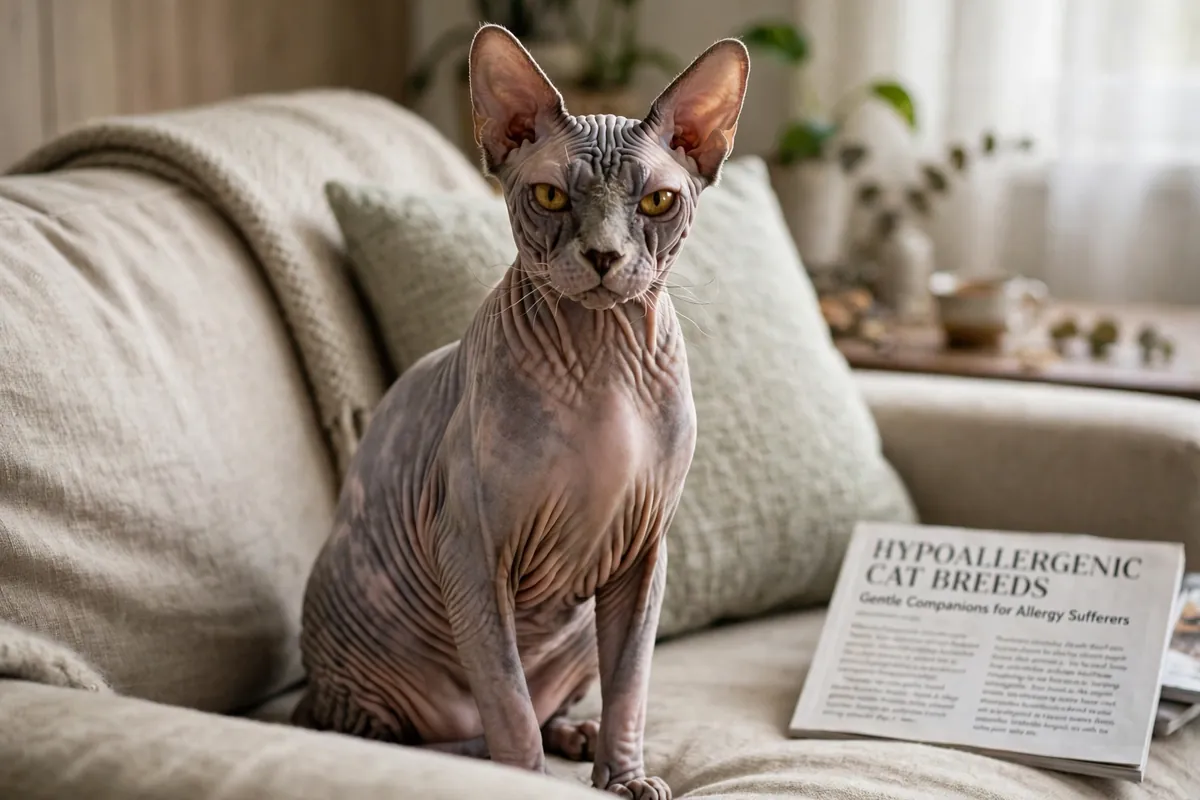
Let us be honest up front: no cat is completely hypoallergenic. The allergy trigger is a protein called Fel d 1, found in a cat's saliva, skin oils, and urine — not in the fur itself. But some breeds produce noticeably less of it (like the Siberian and Balinese), while others simply spread less of it around your home (like the nearly hairless Sphynx). For many mild allergy sufferers, that difference is enough to make living with a cat possible.
If you sneeze, itch, or wheeze around cats but cannot imagine life without one, this guide is for you. Below are 7 cat breeds most often recommended for allergy sufferers, what makes each one easier on sensitive noses, and — just as important — the home habits that keep allergens down no matter which breed you choose. One rule before we start: "hypoallergenic" means lower allergen, never zero. Anyone with severe allergies should spend real time with the individual cat and talk to an allergist before committing. Browse more profiles in our cat breed guides here at Purrfect Paws.
What Actually Causes Cat Allergies?
The culprit is Fel d 1, a tiny, sticky protein produced mainly in cats' saliva and sebaceous (skin oil) glands. When your cat grooms — which they do for hours a day — saliva coats the fur. As the saliva dries, the protein becomes airborne on microscopic dander flakes that float around your home, settle into fabrics, and cling to everything. That is why "hairless" does not automatically mean "allergy-free," and why a short-haired cat is not necessarily better than a long-haired one. What matters is how much Fel d 1 a cat produces and how much of it ends up floating around your living room.
7 Hypoallergenic Cat Breeds Worth Knowing
1. Siberian
The Siberian is the poster cat of the hypoallergenic world — a big, fluffy, triple-coated forest cat that, paradoxically, many allergy sufferers tolerate well. Research has found that many Siberians produce lower levels of Fel d 1 than the average cat, though levels vary between individuals. Beyond the allergy angle, they are wonderful family cats: sturdy, playful, dog-like in loyalty, and famously good with children. If you want a full-coated, full-personality cat despite your allergies, start here.
2. Balinese
Often called the long-haired Siamese, the Balinese pairs an elegant silky coat with a reputation for producing less Fel d 1. Their single-layer coat sheds less than you would expect for the length, which means less dander drifting around. Personality-wise, they are the extroverts of this list: chatty, acrobatic, and glued to their people. A Balinese will follow you from room to room narrating the journey.
3. Sphynx
The hairless icon. Without fur, there is far less for saliva-coated dander to cling to and spread — but remember, the allergen is in skin oils, so Sphynx cats still produce it. Their secret weapon is maintenance: Sphynx cats need regular baths to prevent oil buildup, and each bath literally washes allergens away. Many sensitive owners report doing far better with a freshly bathed Sphynx than with any furry breed. See our full Sphynx breed guide for what the skincare routine really involves — it is a commitment, but the payoff is one of the most affectionate cats alive.
4. Devon Rex
With their huge ears, elfin faces, and soft wavy coat, Devon Rex cats shed remarkably little — and less shedding means less allergen-laden hair around your home. They are warm, mischievous, and intensely people-oriented, often described as a cross between a cat, a dog, and a monkey. Their fine coat also means minimal grooming for you. Learn more in our Devon Rex breed guide.
5. Cornish Rex
The Cornish Rex takes the low-shedding idea even further: their coat is an ultra-fine layer of down-like undercoat with no guard hairs at all, so there is almost nothing to shed. They are slender, athletic sprinters with boundless energy and a habit of perching on the highest available shoulder. Like the Devon, they are not allergen-free — but many mild sufferers find them very livable.
6. Oriental Shorthair
Close cousins of the Siamese, Oriental Shorthairs have a short, fine, close-lying coat that sheds minimally and is easy to keep clean with a weekly wipe-down. They are sleek, vocal, and dramatic — Siamese personality turned up a notch — and they bond fiercely with their families. For allergy sufferers who love the Siamese temperament, the Oriental Shorthair is a natural fit.
7. Russian Blue
The Russian Blue's dense, plush double coat sheds less than many short-haired breeds, and the breed has a long-standing reputation among allergy sufferers as one of the more tolerable cats. They are gentle, quiet, and a touch shy — the kind of cat that picks one or two favorite humans and adores them completely. A calm, tidy, low-drama companion for a calm, tidy home.
How to Keep Allergens Down (Whatever Breed You Choose)
The breed is only half the equation. These habits make a bigger difference than most people expect:
- Run a HEPA air purifier in the rooms where you and your cat spend the most time. HEPA filtration genuinely captures airborne dander.
- Vacuum with a HEPA-filter vacuum weekly, including upholstery and curtains where dander settles.
- Wash bedding and blankets — yours and the cat's — in hot water regularly.
- Groom your cat often (ideally outdoors or in a ventilated room) to remove loose hair and dander before it spreads. For Sphynx and Rex breeds, follow their specific bathing routines.
- Wash your hands after handling your cat, and avoid touching your face — simple, but it cuts symptoms noticeably.
- Keep the bedroom a low-allergen zone. It is hard to resist a cat on the pillow, but giving your airways eight dander-free hours a night helps many sufferers enormously.
- Clean the litter box daily. Urine also carries Fel d 1, so a clean box means less allergen in the air.
Test Before You Commit
Allergen levels vary between individual cats — even within the same breed and the same litter. Before adopting, spend extended time with the actual cat: visit the breeder or shelter multiple times, handle the cat, and see how you feel over hours, not minutes. Better yet, arrange a trial foster period if the rescue allows it. And please, never adopt a cat hoping you will simply "get used to it" without a backup plan — rehoming is heartbreaking for everyone, especially the cat. An honest conversation with your allergist beforehand can also clarify whether medication or immunotherapy could make cat ownership comfortable for you.
Frequently Asked Questions
Is there a 100% hypoallergenic cat breed?
No. Every cat produces the Fel d 1 protein that triggers allergies. Hypoallergenic breeds produce less of it, or spread less of it around the home — but no breed is completely allergen-free.
Do hairless cats still cause allergies?
They can. The allergen lives in skin oils and saliva, not fur, so hairless breeds like the Sphynx still produce it. However, their regular bathing routine washes allergens away, which helps many sensitive owners.
Are male or female cats better for allergy sufferers?
Neutered males and females are generally reported to produce less Fel d 1 than unneutered males. If allergies are a concern, choosing a spayed female or neutered male is a sensible starting point.
Can I build up a tolerance to cat allergies over time?
Some people report that their symptoms ease with gradual exposure, but it is not guaranteed and it is not a safe plan to rely on. Talk to an allergist before committing, and never adopt a cat you could not keep if symptoms persist.
What is the best hypoallergenic cat breed for families with children?
The Siberian is a favorite pick — sturdy, playful, and famously good with kids — while the Balinese suits families wanting a social, chatty companion. Always let allergic family members spend time with the specific cat first.