Why Does My Cat Sneeze When I Scratch His Chin?
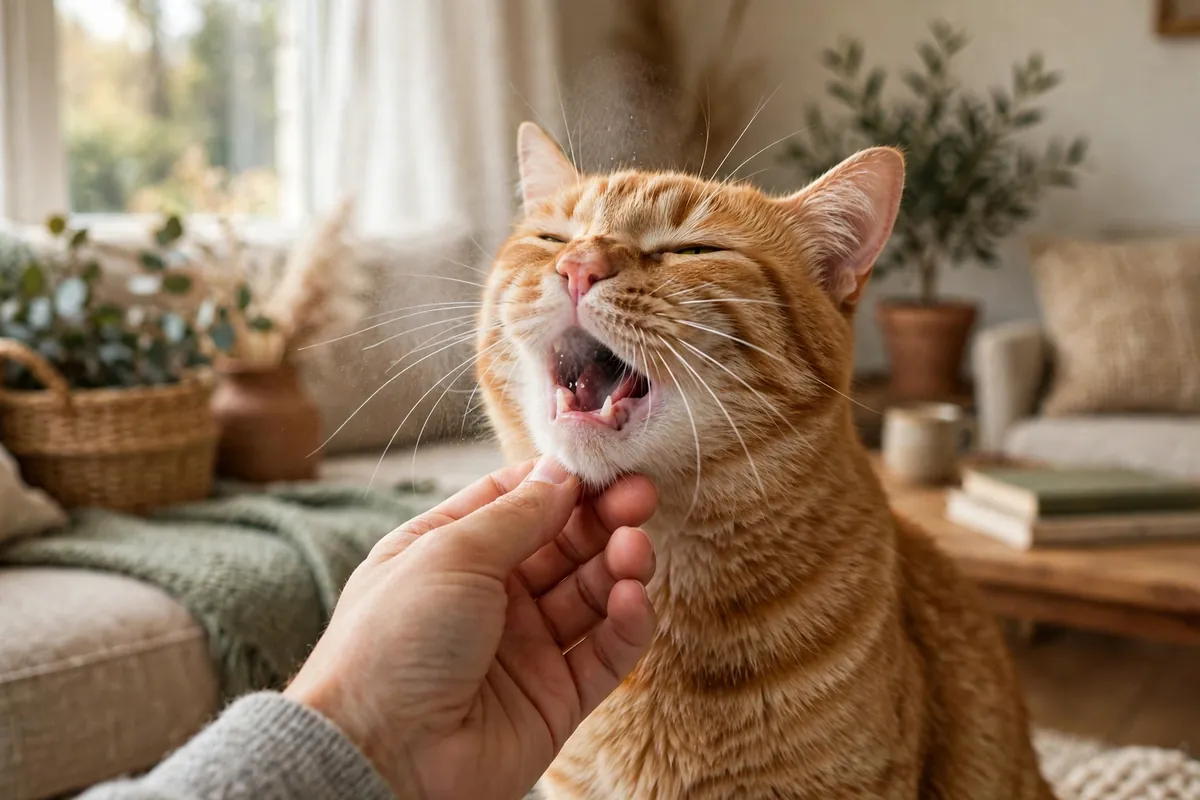
If you scratch your cat's chin and he answers with a sneeze, you are not imagining the connection — and in most cases, it is nothing to worry about. A chin scratch can tickle the sensitive nerves around your cat's nose and whiskers, and a sneeze is simply his body's way of clearing that ticklish sensation. Many cats sneeze once or twice during a good chin rub and then lean straight back in for more, which is the clearest sign that they are enjoying it, not suffering from it.
That said, a sneeze during chin scratches is worth a closer look if it comes with other symptoms. Repeated sneezing, a runny nose, watery eyes, or a change in appetite can point to an upper respiratory infection, allergies, or irritation in the nose. This guide explains why chin scratches make some cats sneeze, how to tell a harmless tickle sneeze from a sick sneeze, and what to do in each case.
Why Chin Scratches Trigger a Sneeze
A cat's chin, cheeks, and whisker area are packed with nerve endings. When you scratch there, you are stimulating the same region that helps your cat sense the world — his whiskers detect tiny air movements, and the skin around his mouth and nose is extremely sensitive to touch. For some cats, that stimulation feels like a tickle deep inside the nose, and the sneeze reflex fires to clear it. It is the same basic reflex that makes some people sneeze when they look at bright light or pluck an eyebrow hair.
Scratching can also move loose fur, dust, or dried discharge near the nose, and the sneeze clears that debris out. Cats groom constantly, so a little loose fur around the chin is normal, especially in long-haired breeds or during shedding season. A single sneeze that ends the moment you stop scratching, with no discharge and a happy cat, is almost always just this tickle response.
Is It Normal? Signs Your Cat Is Fine
The sneeze itself is rarely the problem — the context around it tells the story. A harmless chin-scratch sneeze usually looks like this: your cat sneezes once or twice, shakes his head, and then pushes his chin back into your hand asking for more. His nose stays dry or only slightly moist, his eyes are bright, and he eats, plays, and grooms normally for the rest of the day.
Cats that love chin scratches often develop a little routine around them. They may drool slightly, knead with their paws, or start purring loudly the moment your hand reaches their chin. All of that is contentment, not distress. If the sneezing only happens during scratches and never at other times, and your cat is otherwise his normal self, there is usually nothing to fix — you can simply scratch a little more gently, or switch to the cheeks and behind the ears, which many cats prefer.
When a Sneeze During Scratches Means Something More
Pay attention if the sneezing pattern changes. A cat who suddenly starts sneezing every time he is touched, sneezes in long fits of five or more, or sneezes when nobody is touching him may have an irritated or infected nose. The warning signs to watch for are thick yellow or green nasal discharge, discharge from only one nostril, blood in a sneeze, watery or squinting eyes, noisy breathing, reduced appetite, or a cat who hides and stops grooming.
Upper respiratory infections, often called cat colds, are the most common cause of frequent sneezing in cats, especially in kittens, shelter cats, and multi-cat homes. Allergies to dust, pollen, scented litter, or household sprays can also inflame the nose and make it extra sensitive to touch. Dental disease is a less obvious culprit: tooth roots sit very close to the nasal passages, and an infected upper tooth can cause sneezing and one-sided discharge. None of these can be diagnosed from a sneeze alone, which is why a vet visit matters when other symptoms appear.
What to Do at Home
For a healthy cat who just sneezes at chin scratches, the best response is simple: scratch more softly, use the flat of your fingers rather than your nails, and keep sessions short. Wash your hands before handling your cat if you have been around dust, pollen, or strong scents, and avoid wearing heavily perfumed lotion on the hand you pet him with. A quick, gentle wipe around his chin with a damp cloth once a week can remove loose fur and dried food that might tickle his nose.
If sneezing is becoming frequent, check the environment first. Switch to a low-dust, unscented litter, skip air fresheners and scented candles in rooms your cat uses, and vacuum soft furnishings regularly. Keep your cat's water bowl fresh and his food appealing, and watch his eating and litter habits for a few days — a simple diary of when he sneezes and what else you notice will be genuinely useful at the vet. Never give human cold medicines, decongestants, or antihistamines without veterinary advice, as many are unsafe for cats.
When to See the Vet
Call your veterinarian if sneezing lasts more than a few days, keeps getting worse, or comes with any of the warning signs above — especially thick or bloody discharge, breathing difficulty, loss of appetite for more than a day, or a kitten, senior cat, or cat with a chronic illness who starts sneezing. Sneezing after a chin scratch alone, with a bright and hungry cat, does not need an emergency visit, but it is still worth mentioning at your cat's next routine check-up if it is new behaviour.
At the visit, your vet will usually examine the nose, mouth, and teeth, check for fever, and ask about your cat's vaccination history and environment. Most causes are straightforward to treat, from antibiotics for a bacterial infection to a dental cleaning for a bad tooth. The sooner you go, the simpler the treatment tends to be — and the sooner chin scratches can go back to being pure, sneeze-free enjoyment.
Frequently Asked Questions
Why does my cat sneeze when I scratch his chin?
Chin scratches stimulate sensitive nerves around the nose and whiskers, which can trigger a tickle-like sneeze reflex. One or two sneezes during a scratch, with a happy cat and a dry nose, are usually harmless.
Is it bad if my cat sneezes every time I pet him?
Not on its own, but sneezing every time — especially with discharge, watery eyes, or appetite changes — deserves a vet check, as it can signal a respiratory infection, allergy, or dental problem.
Should I stop scratching my cat's chin if he sneezes?
Try scratching more gently or switching to the cheeks and behind the ears first. If he leans in for more, he is enjoying it. Stop and watch him if the sneezing turns into long fits or comes with other symptoms.
Can allergies make my cat sneeze when touched?
Yes. An already inflamed nose from dust, pollen, scented litter, or sprays is more sensitive, so even gentle touch can set off a sneeze. Reducing household irritants often helps.
When is cat sneezing an emergency?
Seek prompt vet care for bloody sneezes, thick coloured discharge, difficulty breathing, refusal to eat for more than a day, or sneezing in a very young, elderly, or already ill cat.