Why Does My Cat Yowl at Night? 7 Reasons for Nighttime Screaming
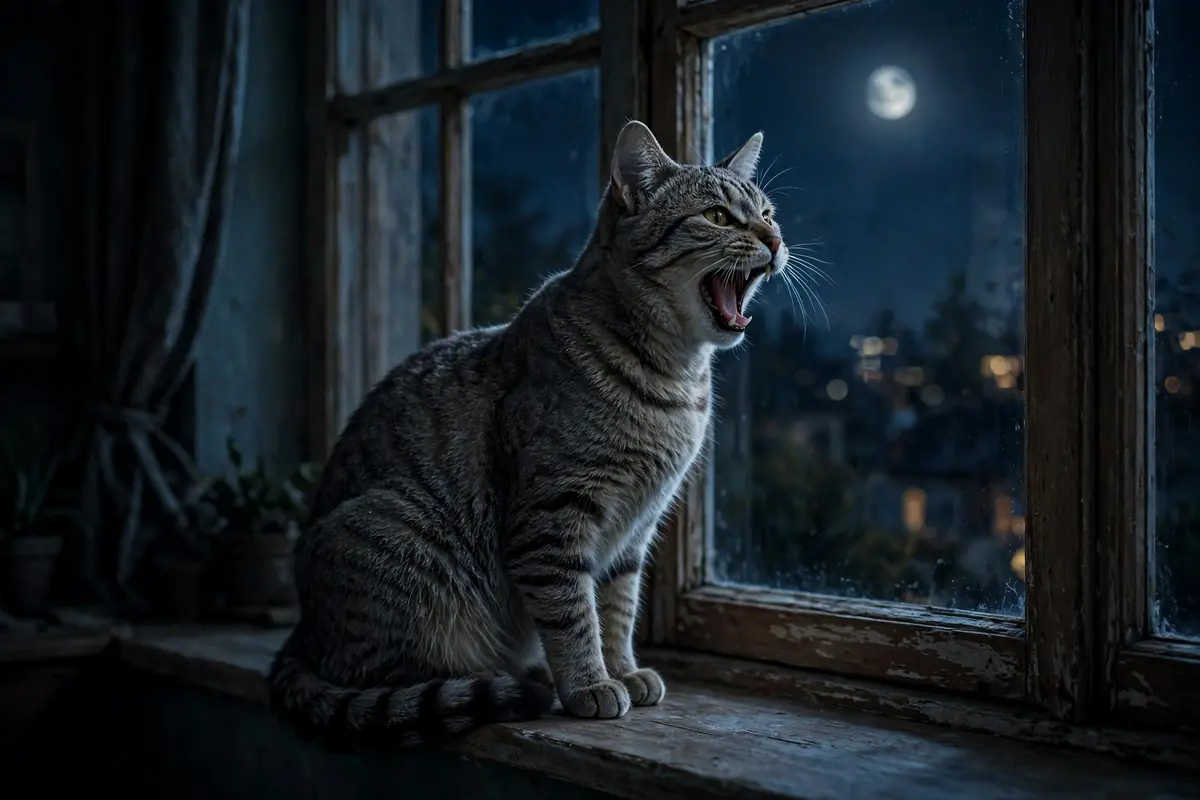
It is 3 a.m. and your cat is screaming down the hallway like the house is on fire. If your cat yowls at night, the short answer is that it is usually a normal feline behavior with a straightforward cause — hunger, boredom, attention-seeking, or hormones. Cats are crepuscular creatures, most active at dawn and dusk, and vocalizing is one of their main tools for communicating with their world.
But not every midnight concert is innocent. In senior cats, new or worsening nighttime yowling can point to pain or cognitive dysfunction syndrome — the feline equivalent of dementia. Below are the 7 most common reasons, plus how to quiet things down and the red flags that mean a vet visit.
Your Cat's Night Shift: Why Nighttime Is Prime Time for Noise
In the wild, cats are twilight hunters. Their eyes, ears, and instincts are tuned for dawn and dusk, when prey is most active. Domestic cats kept that internal clock, so the hours when you are deeply asleep are often when your cat feels most wired. That burst of energy is the same instinct behind the infamous 3 a.m. cat zoomies — except some cats announce it vocally too.
Night also makes yowling more effective from your cat's perspective. The house is quiet, so sound carries, and you are lying still in bed — a captive audience. A meow that might go unnoticed during a busy afternoon gets an instant response at 3 a.m. If getting up once taught your cat that yowling summons room service, expect an encore.
7 Reasons Your Cat Yowls at Night
- They are hungry — or believe dinner is overdue. This is the number one suspect. Cats have precise internal clocks and strong opinions about meal timing. If breakfast normally lands at 6 a.m., a 4 a.m. wake-up howl is your cat's way of pre-ordering. An automatic feeder set to dispense a small meal shortly before your cat's usual wake-up time can break the habit, because the food arrives without you getting out of bed to deliver it.
- They want your attention. During the day you move around, talk, and interact. At night you go suspiciously still for eight hours, and some cats find that unacceptable. Attention-yowling is common in social, chatty breeds like Siamese and Burmese, and in cats who are alone much of the day. The tricky part: any response — even grumbling — teaches the cat that yowling works. Once you have ruled out genuine needs, the kindest long-term move is to not reward the noise.
- They are bored and bursting with energy. A cat who naps all day while you are at work wakes up at night with a full battery and nothing to do. Under-stimulated cats often vocalize out of sheer restlessness. A vigorous interactive play session in the evening — wand toys, chase games, anything that mimics hunting — followed by a meal can drain that energy. Puzzle feeders and food-dispensing toys left out overnight give a restless cat a job to do while you sleep.
- Mating calls. If your cat is unspayed or unneutered, hormones are a prime suspect. A female in heat can yowl loudly and persistently for days, and unneutered males will answer with their own operatic replies — sometimes to a female in heat several houses away. This type of yowling is intense, repetitive, and often paired with restlessness or spraying. Spaying or neutering usually quiets hormone-driven vocalizing considerably.
- They are in pain. A cat who suddenly starts yowling — especially one who was previously quiet at night — may be hurting. Cats are masters at hiding discomfort, so new vocalizing can be one of the few visible clues. Watch for companion signs: changes in appetite, hiding, litter box lapses, limping, flinching when touched, or a drop in grooming. Pain-related yowling is a vet matter, not a training matter.
- Cognitive dysfunction in senior cats. Cats over 10 or 11 can develop cognitive dysfunction syndrome, the feline version of dementia. Disoriented seniors may yowl at night because they wake confused, forget where they are, or cannot find their people in the dark. Typical companions include staring at walls, getting stuck in corners, disrupted sleep cycles, and forgetting litter box habits. If your older cat's nighttime soundtrack is new, a vet check is the right next step — some symptoms can be managed, and other medical causes need ruling out first.
- Stress, change, or territorial anxiety. A new home, a new baby or pet, rearranged furniture, or a stray cat prowling outside the window can all unsettle a cat — and unsettled cats vocalize, often at night when the rest of the household is quiet and the cat feels most alone with its worries. Keeping a consistent routine, providing safe hiding spots and high perches, and giving the cat time to adjust usually help. If an outdoor cat is the trigger, blocking window views at night or using motion-activated deterrents outside can reduce the drama.
How to Quiet the Nighttime Concerts
Start with the least dramatic explanation. Make sure food, fresh water, and a clean litter box are all available before bed — a surprising number of midnight concerts end with a full bowl. Next, tire your cat out: 15 to 20 minutes of active play in the evening, ending with a meal, mimics the hunt-eat-groom-sleep rhythm cats are built for.
For the persistent yowler whose needs are met, consistency is everything. Do not get up, do not call out, and do not toss a treat to buy silence — every one of those rewards the behavior. It can get slightly worse before it gets better, which is normal when an old strategy stops paying off. And never punish yowling: scolding, spray bottles, or shutting the cat away tend to raise anxiety and can make the vocalizing more intense, not less.
Cats losing their hearing often yowl louder, especially at night, because they can no longer gauge their own volume — if your older cat seems to be shouting, mention hearing at the vet visit.
When Nighttime Yowling Is a Vet Red Flag
Most nighttime yowling is behavioral, but some of it is medical. Call your veterinarian if the yowling is sudden and out of character, if your cat is a senior with new nighttime vocalizing, or if the noise comes with other changes — appetite shifts, weight loss, hiding, aggression, litter box problems, or a scruffy coat. These combinations can point to pain, thyroid disease, high blood pressure, or cognitive decline.
As a rule of thumb: a young, healthy, spayed cat who has always been chatty is probably just being a cat. A cat whose nighttime behavior has changed is telling you something. For more decoding of quirky habits, browse our Cat Behavior guides or head back to the Purrfect Paws home page.
Frequently Asked Questions
Why does my cat only yowl at night and never during the day?
Cats are crepuscular, so their energy naturally peaks around dawn and dusk. At night the house is quiet, so the yowling sounds louder, and you are a still, captive audience in bed — which makes vocalizing more likely to get a response than it would during a busy day.
Should I ignore my cat when she yowls at night?
First rule out real needs — food, water, a clean litter box, and any sign of illness. Once those are covered, avoid rewarding the noise with immediate attention, since that teaches your cat that yowling works. Never punish or yell; it raises stress and often makes the vocalizing worse.
Will spaying or neutering stop nighttime yowling?
If the yowling is driven by mating hormones, spaying or neutering usually reduces it a great deal. But it is not a cure-all — yowling caused by boredom, hunger, pain, or cognitive decline needs its own solution, so talk to your vet about the likely cause in your cat.
Why is my senior cat suddenly yowling at night?
New nighttime vocalizing in a cat over 10 or 11 often points to cognitive dysfunction syndrome (feline dementia), vision or hearing loss, or pain from conditions like arthritis. A sudden change in an older cat's vocal habits deserves a veterinary checkup.
Can yowling mean my cat is in pain?
Yes, it can. A cat that starts yowling out of character — especially alongside appetite changes, hiding, litter box lapses, or reduced grooming — may be hurting. Because cats instinctively hide discomfort, new or intense vocalizing is worth taking seriously and mentioning to your vet.