Cat Food Portion Calculator: How Much to Feed Your Cat Per Day
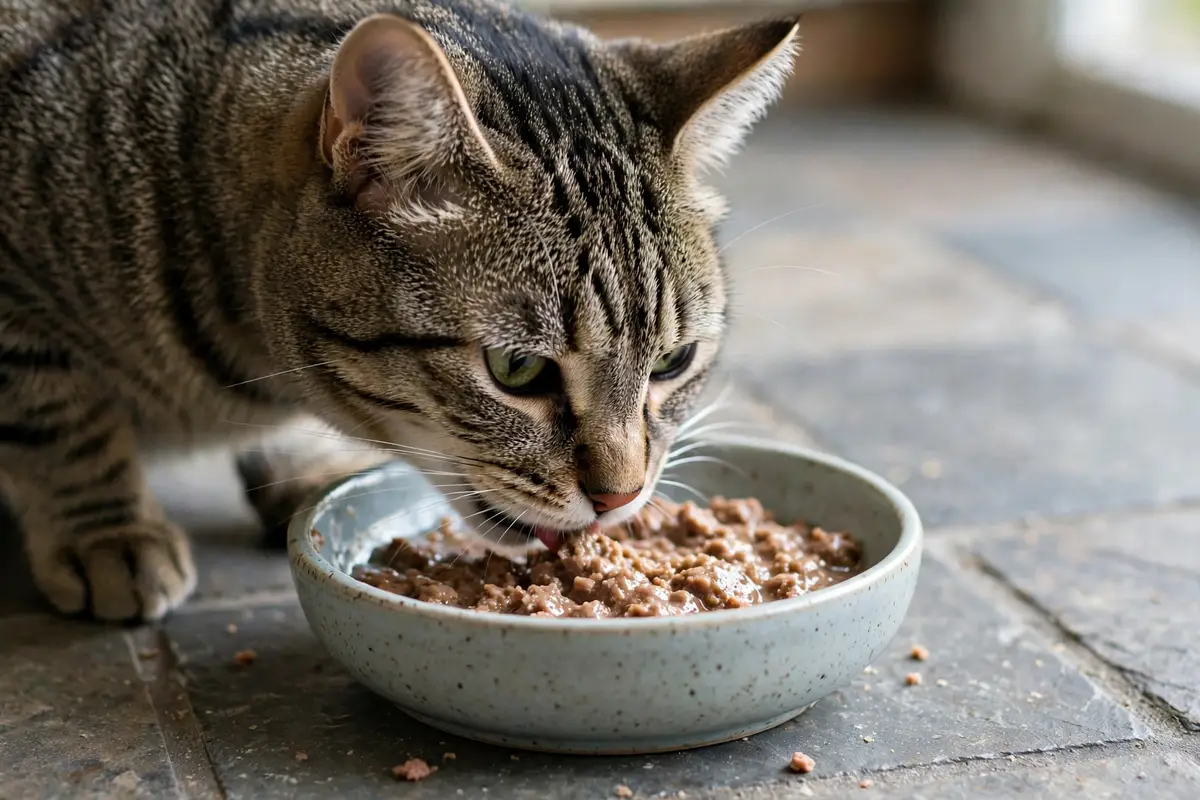
How much food does your cat actually need each day? The feeding guide on the pack is a starting point, but it is written for an "average" cat — and no cat is average. A sleepy indoor senior and a bouncing kitten can weigh the same and need very different amounts.
This free calculator estimates your cat's daily calories and turns them into practical portions: grams of wet food, grams of dry food, and how many meals to split it into. It runs entirely in your browser — nothing is sent anywhere, and nothing is stored.
🐾 Calculate Your Cat's Daily Portion
Not sure? Most adult house cats weigh 3.5–5.5 kg. Weigh your cat by holding them on bathroom scales, then subtracting your own weight.
Your cat's estimated daily amount
| Resting energy (RER) | |
| Age × activity factor used | |
| If feeding wet food only | |
| If feeding dry food only | |
| Suggested meals per day |
Mixing wet and dry? Split the calories between them — for example, half the calories from wet food and half from dry food — so the total still matches the daily estimate above.
How the Calculation Works
We use the standard veterinary resting-energy formula, stated openly so you can check it:
RER = 70 × (weight in kg)0.75
RER is the energy a resting cat burns just staying alive. Daily needs are RER multiplied by a factor for age and activity:
- Kitten: × 2.0 — growing kittens need roughly double their resting energy.
- Adult: × 1.0 (low activity), × 1.2 (normal), × 1.4 (active).
- Senior: × 0.9 (low activity), × 1.1 (normal), × 1.2 (active) — older cats often need slightly less, but this varies a lot individually.
Food amounts use typical calorie densities: wet food ≈ 85 kcal per 100 g, dry food ≈ 380 kcal per 100 g. Real brands vary — always check your pack's kcal figure, and if it differs a lot, trust the pack and adjust the grams so the calories still match.
How to Use the Result
- Split it across meals. Kittens do best on 3–4 small meals a day; adults on 2; seniors on 2–3 smaller ones. Never leave the whole day's food out at once if your cat tends to overeat.
- Weigh the food, don't guess it. A kitchen scale beats a scoop — a "handful" of kibble can easily be 30% more than you think.
- Watch the waistline, not just the bowl. You should be able to feel your cat's ribs under a thin layer of fat and see a slight waist from above. If weight creeps up or down over 2–4 weeks, adjust by about 10% and re-check.
- Count treats. Treats should stay under 10% of daily calories — a few treats a day is fine, a constant stream is a hidden meal.
- Fresh water always. Especially for cats eating mostly dry food, keep a clean bowl (or fountain) available at all times.
Frequently Asked Questions
How many calories does a cat need per day?
It depends on weight, age and activity. A typical 4 kg adult indoor cat needs roughly 200–250 calories a day. This calculator estimates it from your cat's weight using the veterinary resting-energy formula, adjusted for age and activity.
Is this calculator a substitute for my vet's advice?
No. These are estimates for a healthy cat. Sick, pregnant, nursing, very overweight or underweight cats need individual advice from a veterinarian.
Should I feed wet food, dry food, or both?
Either can work if the total daily calories are right. Wet food adds hydration, which many cats need; dry food is convenient and cheaper per calorie. Many owners mix both — just make sure the combined amount matches the daily calorie estimate, not each food's full portion.
My cat is still hungry after the calculated portion — what should I do?
First check the food pack: calorie density varies a lot between brands, so the pack's kcal figure beats any generic estimate. If weight is stable and your vet is happy, a small adjustment is fine. Constant hunger, rapid weight change, or begging that suddenly increases is worth a vet check.