Best Cat Carriers in 2026: 8 Vet-Approved Picks
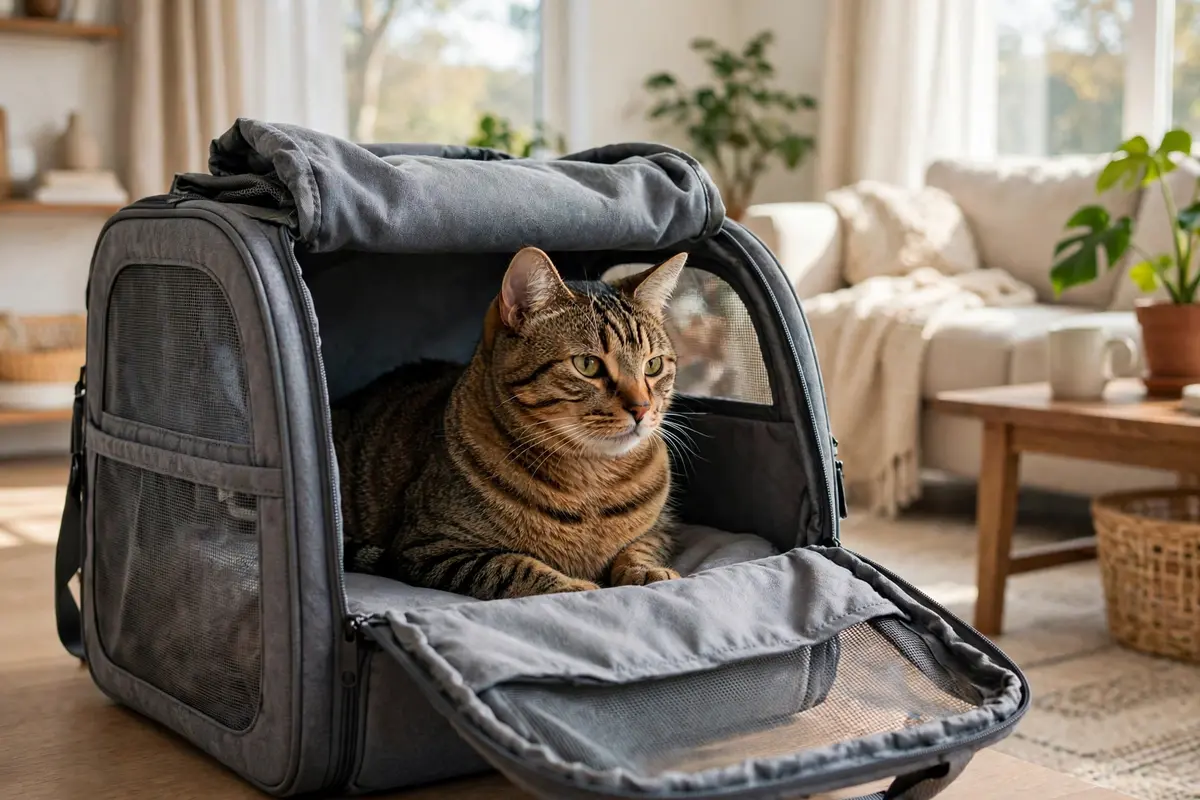
Choosing the right cat carrier matters more than most owners realize. A good carrier keeps your cat safe in the car, calm at the vet, and comfortable on longer trips — while a wrong one can turn every journey into a stressful struggle. The best carrier for your cat depends on your cat's size, temperament, and how you travel, not on a single brand name.
This guide explains the main carrier types, what features to look for, how to size a carrier correctly, and how to help your cat actually like going inside it — so you can pick with confidence in 2026.
What Makes a Good Cat Carrier?
Every good carrier shares the same basics. It should be sturdy enough to hold its shape when lifted, well ventilated on at least two sides, and easy to open — ideally with both a front door and a top opening, so you can lift a nervous cat out from above at the vet instead of dragging it out headfirst. Secure latches matter more than fancy extras: zippers should run smoothly, clips should lock firmly, and the handle should feel solid with your cat's full weight inside.
Comfort counts too. A flat, non-slip base with a washable pad helps cats settle, and a carrier that can be secured with a seatbelt or placed flat on a car seat is safer than one that slides around. If you fly, weight matters as well — you will be carrying it through an airport, so a carrier that is sturdy but not needlessly heavy is worth seeking out.
Hard-Sided Cat Carriers: The Sturdy Classic
Hard-sided carriers, usually made of rigid plastic with a metal or plastic grate door, are the workhorse choice for most cat owners. They offer the best protection in a car, hold their shape when lifted, and are simple to wipe clean after accidents. Most have a top half that unclips, which vets appreciate because a cat can be examined while still sitting in the bottom half.
The trade-offs are weight and bulk. Hard carriers are heavier than soft ones and do not compress to fit tight spaces, so they can be awkward on crowded flights. They are best for car travel, vet visits, and cats that scratch or push hard against soft walls. Look for a model with a secure latch rather than a single twist lock, ventilation on the sides and back, and a door wide enough for your cat to walk through without crouching.
Soft-Sided Cat Carriers: Light and Travel-Friendly
Soft-sided carriers are made from padded fabric over a flexible frame, with mesh windows for airflow and a shoulder strap or handles for carrying. Their biggest advantage is flexibility: they weigh less, fold flat for storage, and often squeeze under airplane seats where a rigid carrier would not fit. Many cats also find the enclosed, denim-like feel less exposed than a hard plastic box.
On the downside, soft carriers offer less crash protection and can be chewed or clawed through by a determined cat. They also sag if the frame is weak, so check that the carrier keeps its shape with your cat inside. Choose one with strong, lockable zippers, a rigid base board, mesh on at least three sides, and a safety tether inside that clips to your cat's harness. For air travel, confirm the carrier's dimensions against your airline's under-seat limits before buying.
Backpack Cat Carriers: Hands-Free Adventures
Backpack carriers have become popular with owners who walk, cycle, or use public transport with their cats. Worn like a rucksack, they free your hands and keep your cat close to you, which many cats find reassuring. Some designs include a clear bubble window, while others use mesh panels for better airflow.
Backpacks suit calm, smaller cats and shorter outings best. They are not ideal for large cats, long trips, or cats that panic in confined spaces, since the wearer cannot easily see or soothe the cat. If you choose one, look for padded shoulder straps, a waist strap to spread the weight, good ventilation on several sides, and a secure internal tether. Never use a backpack carrier on a bicycle without a model specifically designed for it, and always keep the weight balanced.
Top-Loading and Wheeled Carriers: Special Features Worth Considering
Top-loading carriers deserve a mention because they solve the hardest part of vet visits: getting the cat out. A wide top opening lets you lower a cat in and lift it out gently, which is far less stressful than coaxing a reluctant cat through a small front door. Many hard-sided models now combine a front door with a top hatch, giving you both options.
Wheeled carriers and carrier strollers are another option, especially for heavier cats or owners who struggle to carry weight. Rolling a carrier through an airport or vet clinic is easier on your back, and strollers give cats a roomy, ventilated cabin. The catch is size: wheeled models tend to be bulkier, and not all airlines accept them in the cabin. They are best for car trips, vet visits, and owners who prioritize easy transport over compact packing.
How to Choose the Right Size Cat Carrier
Size is where many owners go wrong. A carrier that is too small leaves your cat cramped and stressed; one that is far too large lets the cat slide around in a moving car. The right fit lets your cat stand up, turn around, and lie down stretched out. Measure your cat from nose to base of tail for length and from floor to top of head for height, then compare those numbers with the carrier's interior measurements — not the exterior ones, which include handles and feet.
For kittens, buy for the adult size your cat is expected to reach if the breed is known, or choose a carrier with a removable divider. For large breeds, look for carriers marketed for larger cats or small dogs, and test the fit at home with the door open before any trip. Remember that airline cabin limits are strict, so a carrier that is perfect for the car may still be too tall for a particular aircraft.
Safety Features to Check Before You Buy
- Secure closures. Latches should lock positively and zippers should have clips or locks so a clever paw cannot open them from inside.
- Ventilation. Mesh or vents on at least two, ideally three, sides keep airflow up on warm days.
- Seatbelt compatibility. A carrier that can be belted in or wedged securely on a car seat is far safer than one sliding loose.
- Sturdy handles and straps. Test them with weight inside — a handle that strains in the shop will fail on a busy travel day.
- Easy cleaning. Removable, washable pads and wipe-clean surfaces matter, because accidents happen.
- Escape-proof design. Check for gaps at seams and doors where a determined cat could squeeze through.
How to Help Your Cat Love Its Carrier
The best carrier in the world is useless if your cat refuses to enter it. The trick is to make the carrier part of the furniture. Leave it out permanently with the door open, a familiar blanket inside, and a treat or two placed in it each day. Let your cat investigate on its own schedule — sniffing, sitting in it, even napping there are all wins.
Once your cat enters willingly, practice short sessions: close the door for a minute, offer a treat, and open it again. Then try carrying the closed carrier around the house, then a brief car ride to nowhere. Each step should end with praise and a treat. With a few weeks of this, most cats stop dreading the carrier entirely, and vet visits become dramatically easier for everyone.
One last tip: keep a spare blanket and a small towel in your travel kit. A familiar-smelling blanket calms cats, and a towel draped over the carrier reduces visual stimulation during stressful moments like airport security or a busy waiting room.
Frequently Asked Questions
What size cat carrier do I need?
Your cat should be able to stand up, turn around, and lie down comfortably inside. Measure your cat's length and height, then compare with the carrier's interior dimensions, not just the outside. When in doubt, size up — a slightly roomy carrier beats a cramped one.
Are soft-sided or hard-sided carriers better?
It depends on your cat and your trip. Hard-sided carriers offer more protection and are easier to clean, while soft-sided carriers are lighter and often fit better under airplane seats. Many owners keep one of each: hard-sided for vet visits and car travel, soft-sided for flying.
How do I get my cat to like its carrier?
Leave the carrier out at home with the door open, a soft blanket, and occasional treats inside. Let your cat explore it on its own terms for days or weeks before any trip. A carrier that only appears on vet-visit days will always be feared.
Do airlines require a specific type of carrier?
Most airlines require carriers that fit under the seat in front of you, with secure closures and adequate ventilation, and they set their own size and weight limits. Always check your airline's pet policy before you travel, since rules vary by airline and aircraft.
How often should I replace a cat carrier?
Replace a carrier when zippers stick, latches weaken, seams tear, or the structure no longer holds its shape. Check closures and straps before every trip — a carrier is safety equipment, and worn parts are not worth the risk.