Can Cats Drink Milk? The Surprising Truth
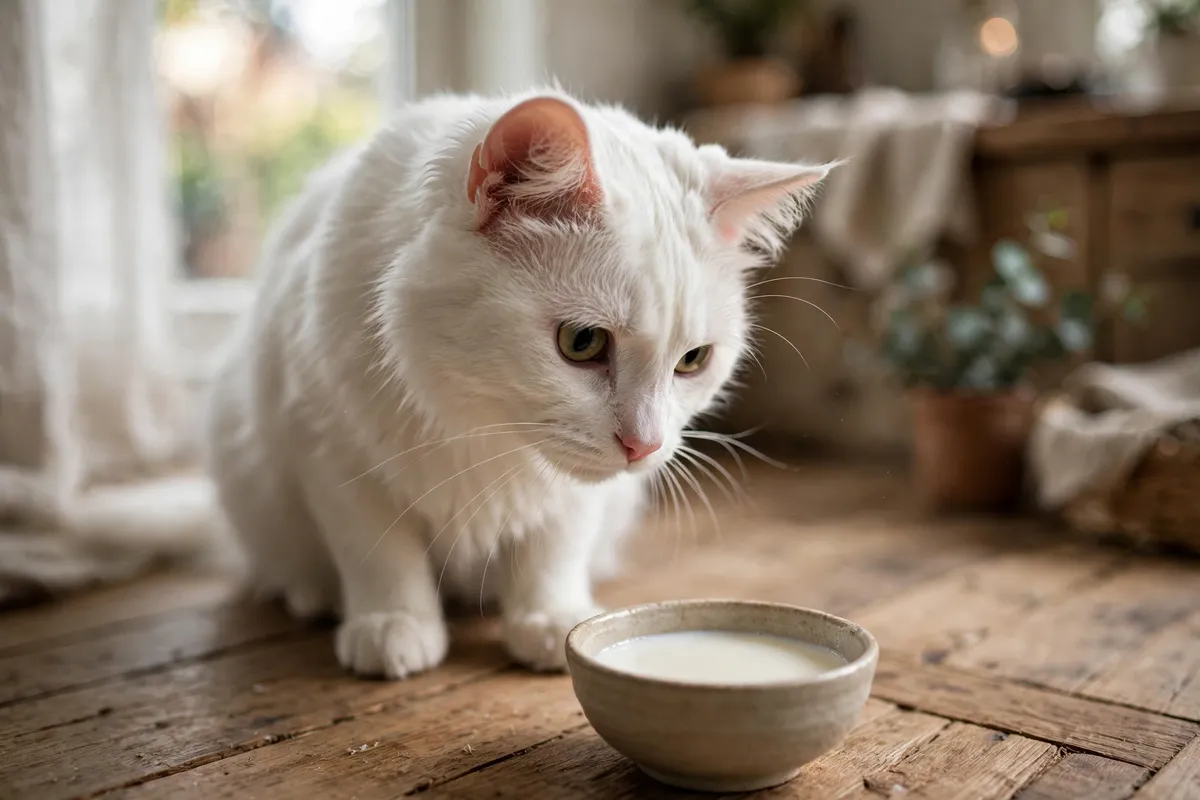
Here is the surprising truth: most adult cats should not drink cow's milk. Despite the classic cartoon image of a happy cat lapping up a saucer of milk, the majority of adult cats are lactose intolerant — they stop producing enough of the lactase enzyme needed to digest milk sugar after weaning. The result is usually stomach cramps, gas, and diarrhea rather than a happy treat. Milk is not poisonous to cats, but it offers them nothing their regular food doesn't, and for many cats it causes genuine discomfort.
So where did the myth come from, why do some cats seem to tolerate milk just fine, and what should you offer instead? This article explains lactose intolerance in cats, why kittens are different, what actually happens when a cat drinks milk, whether a tiny saucer is ever okay, and the safer alternatives — including commercial cat milks made for feline digestion.
Why Most Adult Cats Can't Digest Milk
Milk contains lactose, a sugar that can only be broken down by an enzyme called lactase, produced in the small intestine. Nursing kittens make plenty of lactase because their entire diet is milk. But after weaning — usually around 8 weeks — a kitten's body gradually scales lactase production down, since in nature a cat would never drink milk again after leaving its mother.
In most adult cats, lactase levels drop so low that a meaningful serving of cow's milk passes through the gut undigested. Undigested lactose draws water into the intestines and ferments via gut bacteria, which is what produces the classic symptoms: bloating, gas, abdominal cramps, and diarrhea, typically within 8 to 12 hours of drinking milk. This is lactose intolerance — not an allergy (which involves the immune system reacting to milk proteins), but a straightforward digestive mismatch.
Not every cat is affected equally. Lactase decline is a spectrum: some adult cats retain enough enzyme to handle a small saucer with no visible trouble, while others react to just a few laps. There is no reliable way to know where your cat falls without trial — and since milk provides no nutritional benefit a cat needs, there is little reason to run the experiment.
But Kittens Drink Milk — Why the Difference?
This is the source of much confusion, so it is worth being precise: kittens drink their mother's milk, which is specifically formulated by nature for them — higher in protein and fat and different in composition from cow's milk. And they can digest it because they are still producing lactase.
Cow's milk is a poor substitute on both counts. It has roughly half the protein and far less fat than cat mother's milk, the wrong balance of nutrients for a growing kitten, and it can cause the same diarrhea it causes in adults. Orphaned or hand-raised kittens should receive a commercial kitten milk replacer (KMR) — never cow's milk, goat's milk from the grocery store, or homemade formulas found online. If you find yourself caring for neonatal kittens, your vet or a local rescue can point you to the right replacer immediately.
Once kittens are weaned onto solid food (around 8 weeks), their need for any milk — including replacer — ends. From that point on, fresh water is the drink.
What Happens When a Cat Drinks Milk?
For a lactose-intolerant cat, a saucer of milk typically plays out like this: the cat happily laps it up (many cats love the taste — the fat and protein smell appealing), and several hours later the undigested lactose reaches the large intestine, where bacteria ferment it. The result is gas, gurgling, soft stools or outright diarrhea, and sometimes vomiting or visible abdominal discomfort.
A one-time small serving in a healthy adult cat is unpleasant but rarely dangerous — the symptoms pass within a day. The real risks come from repetition or volume: chronic diarrhea leads to dehydration and nutrient loss, milk's calories contribute to weight gain (a saucer of whole milk can hold a meaningful fraction of a small cat's daily calories), and in kittens, milk-induced diarrhea can dehydrate dangerously fast.
One more caution: flavored milks, chocolate milk, and milk containing the sweetener xylitol (birch sugar) are genuinely dangerous — chocolate is toxic to cats and xylitol is extremely toxic. If your cat ever drinks something like that, call your vet right away rather than waiting to see what happens.
The "Small Amount" Debate: Is a Little Milk Ever Okay?
You will find plenty of owners online who say, "My cat has had a saucer of milk for years with no problem" — and they may be telling the truth. A cat that retained decent lactase production may genuinely tolerate small amounts. The question is whether it is worth it, and the honest answer is: not really.
Milk offers an adult cat nothing it needs. A complete, balanced cat food already provides all the protein, fat, vitamins, and minerals — including calcium — a cat requires. Milk is simply extra calories with a side of digestive roulette. If your cat loves the taste and truly shows no ill effects, an occasional tablespoon as a treat is unlikely to cause harm — but watch the litter box afterward for confirmation, keep it genuinely occasional, and never let milk replace water.
A cleaner option for the same experience exists: commercial "cat milks" sold in pet stores. These are lactose-reduced or lactose-free and formulated for feline digestion, so they deliver the milky treat without the digestive gamble. They still contain calories, so treat them as treats — a small serving now and then, not a daily drink.
Safer Alternatives to Milk
The single best drink for your cat is the one evolution designed them for: fresh, clean water. Cats are notoriously low-volume drinkers (a legacy of their desert-dwelling ancestors), so the real hydration win is making water more appealing, not replacing it:
- A cat water fountain. Many cats strongly prefer running water and will drink significantly more from a fountain than a still bowl.
- Multiple water stations. Place bowls in several rooms, away from food bowls — cats instinctively avoid drinking near where they eat.
- Wet food. With around 75–80% moisture, wet food is the easiest hydration upgrade most owners can make.
- Flavored water treats. A splash of water from a can of tuna (packed in water, no salt added) or a little low-sodium chicken broth can entice a reluctant drinker.
- Commercial cat milk. For the occasional milky treat without the lactose problem, choose a product made specifically for cats.
What not to offer: cow's milk as a water substitute, plant milks with added sweeteners (many contain xylitol or excessive sugar), or any "milk" with chocolate, coffee, or flavorings.
Myths About Cats and Milk, Debunked
- "Cats need milk for strong bones." False. Balanced cat food contains all the calcium a cat needs. Milk is not a nutritional requirement at any age past weaning.
- "If my cat likes it, it must be fine." Cats also like the taste of many things that upset their stomachs — taste preference says nothing about digestibility.
- "Stray cats drink milk all the time." Strays drink what is offered because they are hungry, not because it agrees with them. Kindness is better expressed with fresh water and proper cat food.
- "Goat's milk is safe because it's natural." Goat's milk contains slightly less lactose than cow's milk but still contains lactose — it can cause the same problems, and it is still nutritionally incomplete for cats.
- "A little milk helps with hairballs." There is no evidence for this. Regular grooming, hairball-formula food, or a vet-recommended remedy are the actual solutions.
Frequently Asked Questions
Is milk bad for cats?
Cow's milk is not poisonous to cats, but most adult cats are lactose intolerant and cannot digest it properly. Drinking milk commonly causes stomach cramps, gas, and diarrhea. It offers no nutritional benefit that a balanced cat food does not already provide, so there is no reason to offer it.
Can kittens drink cow's milk?
No — cow's milk is not a substitute for a kitten's mother's milk or a proper kitten milk replacer. It has the wrong balance of protein, fat, and nutrients for growing kittens and can cause diarrhea and dehydration. Orphaned kittens need a commercial kitten milk replacer, never cow's milk.
What should I do if my cat drank milk?
Do not panic. A small amount of milk is unlikely to seriously harm a healthy adult cat. Watch for signs of stomach upset such as soft stools, gas, or vomiting over the next 12 to 24 hours, keep fresh water available, and skip the milk going forward. Call your vet if symptoms are severe or persist beyond a day.
Is lactose-free milk safe for cats?
Lactose-free cow's milk avoids the main digestive problem, so most cats tolerate small amounts. However, it still contains calories and milk proteins that some cats react to, and cats do not need it nutritionally. If you want to offer an occasional milky treat, a commercial cat milk formulated for cats is the safer choice.
What can I give my cat instead of milk?
Fresh, clean water is the best and only drink a cat needs. If you want to make hydration more appealing, try a cat water fountain, add water to wet food, or offer the water from a can of tuna packed in water with no added salt. For a special treat, choose a commercial cat milk made specifically for feline digestion.