Can Cats Eat Almonds?
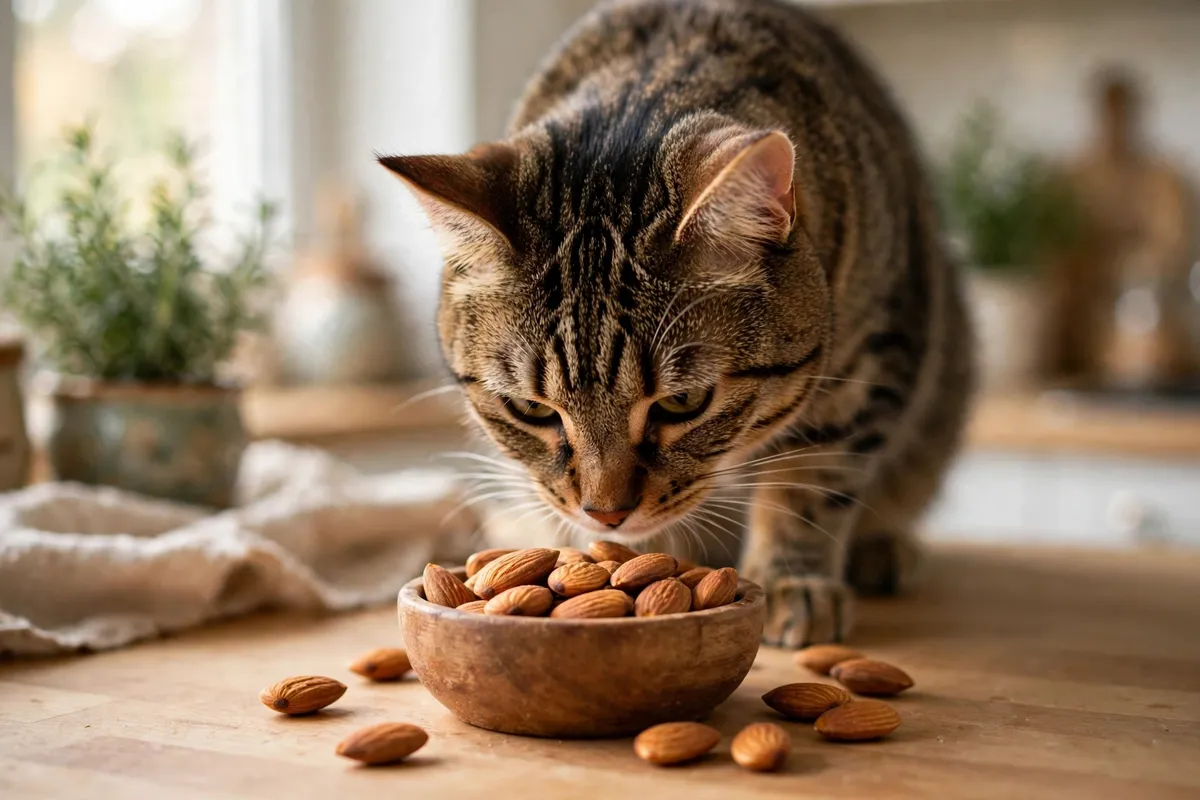
Almonds are not directly toxic to cats the way some other nuts are, but that does not make them a good snack. A single plain, unsalted almond, shelled and crushed, is unlikely to harm a healthy adult cat — yet almonds are high in fat, hard enough to choke on or crack a tooth, and almost always sold salted, roasted in oil, or coated in flavors a cat should never eat. So the short answer is: proceed with caution, and most of the time it is simpler not to share them at all.
This guide explains the difference between sweet and bitter almonds, why fat and the hard shell matter more than the nut itself, which almond products are off-limits, and what to do if your cat has already eaten some.
The Verdict: Can Cats Eat Almonds?
Verdict: CAUTION. Sweet almonds — the kind sold in supermarkets — are not directly toxic to cats, and a tiny piece of a plain, unsalted almond is unlikely to cause harm. But almonds are very high in fat for their size, hard enough to be a choking hazard, and usually sold with salt, sugar, or flavorings that upset a cat's stomach.
Share almonds only as plain, unsalted, shelled nuts, crushed into small pieces, and only very occasionally. Flavored almonds, chocolate-covered almonds, and bitter almonds are never safe to share.
Sweet Almonds vs Bitter Almonds: The Difference That Matters
Not all almonds are the same, and the difference is important. Sweet almonds are the almonds you buy in shops and bake with. They are the ones this article is about, and they are not directly toxic to cats. Bitter almonds are a different variety that contains amygdalin, a compound that can release cyanide when eaten. Bitter almonds are not sold as a snack in most countries, but they do turn up in some baking extracts, marzipan, and traditional recipes.
Bitter almonds should never be given to a cat, and neither should bitter almond extract or foods made with it. If you bake with almond extract, keep the bottle and any batter well away from your cat, and never let your cat lick a spoon that has touched it. When in doubt about which kind of almond you have, do not share it.
Why Almonds Are Risky for Cats
Almonds carry three separate risks, and none of them is about poison. The first is fat. Almonds are one of the fattiest nuts, and a cat's small body does not need that extra fat. A few almonds add a surprising number of calories, and rich, fatty foods are a common trigger for vomiting, diarrhea, and stomach upset in cats. For a cat that is already overweight or prone to digestive trouble, even a small amount can cause a bad day.
The second risk is choking. A whole almond is smooth, hard, and oval — exactly the wrong shape for a cat's mouth. A cat that tries to swallow one whole can choke, and one that crunches down hard can crack a tooth. The papery skin is not dangerous on its own, but the shell is sharp and fibrous and should never be eaten. The third risk is what goes on the almond. Most almonds people actually eat are salted, honey-roasted, smoked, or coated in chili, garlic, or barbecue seasoning — and garlic in particular is toxic to cats, while salt and chili irritate the gut.
Are Almonds Safe for Cats?
Plain, unsalted, shelled almonds, crushed into small pieces, are safe in tiny amounts for a healthy adult cat. Whole almonds are never safe, because of the choking risk. Salted, honey-roasted, smoked, chocolate-covered, or flavored almonds are not safe to share — the coatings are the problem, not the almond itself.
Almond milk and almond butter are not good alternatives either. Sweetened almond milk adds sugar a cat does not need, and almond butter is concentrated fat, often with added salt. For more on which everyday foods are genuinely dangerous, see our guide to human foods that are poisonous to cats, and our guide to whether cats can eat peanuts, which follows the same plain-and-tiny rule.
How Much Almonds Can a Cat Eat?
If you share almonds at all, keep it to one almond, shelled and crushed into small pieces, offered occasionally — not daily, and never a handful. Remove the shell completely, crush the nut, and offer one small piece at a time so you can watch how your cat handles it.
Watch your cat over the next day. If you see vomiting, soft stools, or a skipped meal, their stomach did not appreciate it, and almonds should stay a one-time experiment. And if your cat shows no interest at all, that is fine too — no cat needs almonds, and a cat that ignores them is making the sensible choice. A complete, balanced cat food already covers everything your cat needs.
Can Kittens Eat Almonds?
No — kittens should not eat almonds. The choking risk from a whole hard nut is higher in small kittens, their stomachs are more sensitive to fat and salt, and they have no nutritional need for almonds at all. A kitten's growth depends on a complete kitten food, and nuts only take up room in a tiny stomach that needs proper nutrition.
Wait until your cat is an adult before offering even a single crushed piece of plain almond, and even then, keep it rare. If your kitten is fascinated by the almond bowl, keep the bowl well out of reach.
What Happens If My Cat Eats Almonds?
If the almond was plain, unsalted, and crushed, almost certainly nothing. Salted or flavored almonds are more likely to cause vomiting, diarrhea, and extra thirst over the next few hours — uncomfortable, but usually passing within a day. A cat that ate several almonds may have a sore stomach and skip its next meal.
The serious case is a swallowed whole almond. Watch for pawing at the mouth, gagging, retching, drooling, or difficulty breathing — signs of choking or a nut stuck in the throat that need immediate veterinary attention. A nut swallowed without choking usually passes through, but call your vet if your cat seems uncomfortable, stops eating, or vomits repeatedly. If your cat ate bitter almonds or chocolate-covered almonds, call your vet right away and bring the packaging if you can.
What to Do If Your Cat Already Ate Almonds
Work through these steps:
- Take the almonds away so your cat cannot eat more, and check what kind they were — plain, salted, flavored, chocolate-covered, or bitter — and whether the nut was whole or in its shell.
- Check for choking signs first. Pawing at the mouth, gagging, or distress means a nut may be stuck — call your vet or an emergency clinic immediately.
- Offer fresh water and let your cat drink freely, especially if the almonds were salted or flavored.
- Watch for 24 hours. Mild soft stools or one vomit usually settle on their own.
- Call your vet right away if you see choking signs, repeated vomiting, refusal to drink, weakness, or if your cat ate bitter almonds, chocolate-covered almonds, a large amount of salted almonds, or if the eater was a kitten.
Never try to make your cat vomit at home unless your vet specifically tells you to. For more food guidance, browse the full Cat Food section on the Purrfect Paws homepage.
Frequently Asked Questions
Are almonds safe for cats?
Plain, unsalted almonds, shelled and crushed into small pieces, are safe in tiny amounts for a healthy adult cat. Whole almonds are a choking risk, and salted, flavored, or chocolate-covered almonds are not safe to share.
Can kittens eat almonds?
No. Kittens should not eat almonds — the choking risk is higher in small kittens, and their digestion is more sensitive to fat and salt. Wait until your cat is an adult and keep portions tiny.
What happens if my cat eats almonds?
A small piece of plain, unsalted almond usually causes no trouble. Salted or flavored almonds can cause vomiting, diarrhea, and extra thirst. A swallowed whole almond is the serious case — watch for gagging, pawing at the mouth, or difficulty breathing and call your vet immediately.
How much almonds can a cat eat?
One almond, shelled and crushed into small pieces, offered occasionally, is plenty. Serve only plain, unsalted almonds, and never offer almonds daily or as a regular treat.
Can cats eat bitter almonds?
No. Bitter almonds contain a compound that can release cyanide and are never safe for cats. Keep bitter almonds, bitter almond extract, and foods made with them well away from your cat.