Can Cats Eat Anchovies?
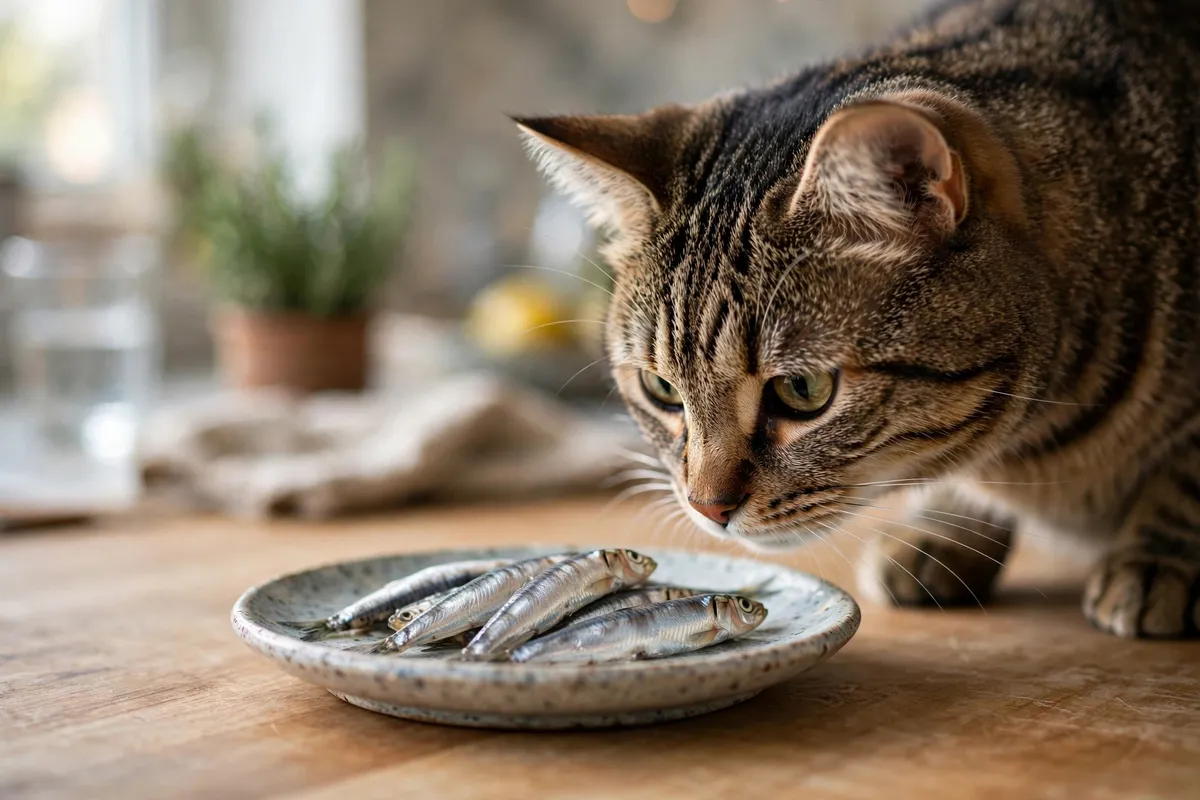
Yes — but only the right kind, in the right amount. A small piece of fresh, plain, cooked anchovy is usually fine as an occasional treat for a healthy adult cat. But the anchovies most of us meet — the salty fillets on pizza or in pasta sauce — are a different food, and not safe to share. The honest verdict is caution: the fish is not the problem, the salt is.
Cats love the smell of anchovies — many owners have had a cat appear out of nowhere the moment a tin is opened. This guide explains which anchovies are safe, how much is too much, and what to do if your cat eats the salty kind.
Is Anchovy Safe for Cats? The Short Answer
Anchovies are small oily fish, rich in protein and omega-3 fatty acids that cats genuinely benefit from. A fresh anchovy cooked plainly — no salt, no oil, no garlic, no seasoning — is a perfectly reasonable occasional treat. The trouble is how anchovies are usually sold: most tins and jars hold fillets packed in salt or brine, carrying far more sodium than a cat's small body can handle.
One salty fillet is a tiny snack for a person, but for a cat weighing a fraction of what you do, it delivers a much bigger dose of salt relative to body size. That is why anchovies sit in the "sometimes, carefully" category, not the "yes, freely" one.
Fresh Anchovies vs. Salt-Packed Anchovies: Two Very Different Foods
Not all anchovies are the same, and the label tells you everything. Here is how the common types compare for cats:
- Fresh anchovies, cooked plain. The safest option. Grill, bake, or steam them with nothing added, let them cool, and remove any small bones. A small piece now and then is fine for most healthy adult cats.
- Anchovies canned in water, rinsed. Acceptable if they are truly low-sodium and you rinse them well under running water first. Check the label — if salt is listed, rinse thoroughly and keep the portion tiny.
- Anchovies canned in oil. Less ideal — the extra oil adds unneeded fat and calories, and the fillets are usually still salted. Drain and rinse first.
- Salt-packed anchovies. Avoid these. They are cured in salt and are far too salty for a cat, even in small amounts.
- Pizza and pasta anchovies. Avoid these too — they often come with garlic, onion, or chili, which are harmful to cats on their own.
- Anchovy paste. Skip it — concentrated, heavily salted, and often seasoned with garlic.
Rule of thumb: if it tastes too salty for you to eat plain, do not give it to your cat — and anything off a pizza or out of a pasta sauce is seasoned food, not plain fish.
Why Salt Is the Real Problem for Cats
Cats are small animals with small kidneys, not built to process large amounts of sodium. A healthy cat eating a balanced commercial cat food already gets all the salt it needs. Extra salt from foods like anchovies can cause excessive thirst and urination, and vomiting or diarrhea if your cat eats a lot at once.
Eating a large amount of very salty food can cause salt poisoning, a veterinary emergency. Warning signs include vomiting, diarrhea, extreme thirst, lethargy, trembling, and in severe cases seizures. One anchovy is unlikely to do this, but several salty fillets stolen off a pizza could — and that is exactly the scenario most owners worry about.
Can Kittens Eat Anchovies?
Kittens should not eat anchovies. A kitten's digestive system and kidneys are still developing, and its small body weight means even a modest amount of salt hits much harder than it would in an adult. Kittens also have very specific nutritional needs, and their growth depends on a complete and balanced kitten food — not treats borrowed from your plate.
If your kitten is fascinated by the smell of fish, that curiosity is normal — but the answer is still to wait. Once your cat is an adult, a tiny piece of plain cooked anchovy now and then is a reasonable treat; until then, stick to kitten food and kitten treats.
How Much Anchovy Can a Cat Eat?
For a healthy adult cat, think of anchovy as a rare garnish, not a meal or a regular snack. One small plain cooked anchovy, offered occasionally rather than every day, is a sensible limit. Treats of all kinds should stay a small share of your cat's daily food, with the bulk of nutrition coming from a complete and balanced cat food.
Preparation matters as much as portion. Serve anchovies cooked and plain — no salt, butter, garlic, onion, lemon, or hot sauce — remove any visible bones, and let the fish cool completely. Never serve them straight from a salty tin, and never offer the brine from the jar.
What Happens If My Cat Eats Anchovies?
It depends entirely on which anchovies and how many. A small piece of fresh, plain, cooked anchovy will almost certainly cause no trouble at all. A few licks of a salty pizza anchovy will usually cause nothing worse than a very thirsty cat that drinks a lot of water and visits the litter box more often.
Eating several salt-packed fillets is where problems begin: vomiting, diarrhea, loss of appetite, lethargy, or wobbliness in the hours afterward. Most mild cases settle on their own, but do not take chances if symptoms are strong or do not fade. Cats with kidney disease, heart disease, or high blood pressure should skip salty foods entirely — ask your vet about safe fish treats instead.
What to Do If Your Cat Already Ate Anchovies
If your cat has just stolen anchovies off your plate, stay calm and work through these steps:
- Take the food away. Remove any remaining anchovies, pizza, or pasta so your cat cannot eat more.
- Check what kind they were. Fresh and plain is low-risk. Salt-packed, pizza, or paste anchovies are the ones to worry about, especially if your cat ate several.
- Offer fresh water. Put down a clean bowl of fresh water and let your cat drink as much as it wants. Do not force water into your cat's mouth.
- Watch for 24 hours. Look for vomiting, diarrhea, excessive thirst, lethargy, or loss of appetite. A single vomit followed by a return to normal is usually not an emergency, but repeated vomiting is.
- Call your vet promptly if needed. If your cat ate a large amount, is vomiting repeatedly, seems weak or wobbly, or has kidney disease, call your vet. Tell the vet what kind of anchovies they were and roughly how many your cat ate.
Never try to make your cat vomit at home unless your vet tells you to, and never give milk to settle the stomach — most adult cats are lactose intolerant.
Safer Fish Options Your Cat Will Love
If your cat adores fish, several options are easier to serve safely: plain cooked sardines (in water, not oil or tomato sauce), small pieces of cooked cod or salmon, and canned tuna in water as an occasional treat — though tuna should not become a daily habit because of its mercury content. For everyday feeding, a good-quality commercial cat food with fish as a main ingredient gives your cat the flavor it craves with the right balance of nutrients. Explore more in our guides to sardines and tuna for cats, plus the full Cat Food section on the Purrfect Paws homepage.
Frequently Asked Questions
Is anchovy safe for cats?
Fresh, plain, cooked anchovy is usually safe in tiny amounts for a healthy adult cat. Salt-packed anchovies, pizza anchovies, and anchovy paste are not safe because of their high salt content and seasonings.
Can kittens eat anchovies?
No. Kittens should not eat anchovies. Their kidneys are still developing and their small body weight makes them far more sensitive to salt. Wait until your cat is an adult, and ask your vet first.
What happens if my cat eats pizza anchovies?
A small taste usually causes nothing worse than extra thirst. Several salty fillets can cause vomiting, diarrhea, and lethargy. Offer fresh water, watch for 24 hours, and call your vet if symptoms are strong or do not fade.
How much anchovy can a cat eat?
One small plain cooked anchovy, offered occasionally, is a sensible limit for a healthy adult cat. Treats should stay a small share of your cat's daily food, with most nutrition coming from a complete and balanced cat food.
Are anchovies in oil safe for cats?
They are less ideal than fresh anchovies. The oil adds unnecessary fat and calories, and the fillets are usually still salted. If you use them, drain and rinse them well first and keep the portion tiny.