Can Cats Eat Bacon?
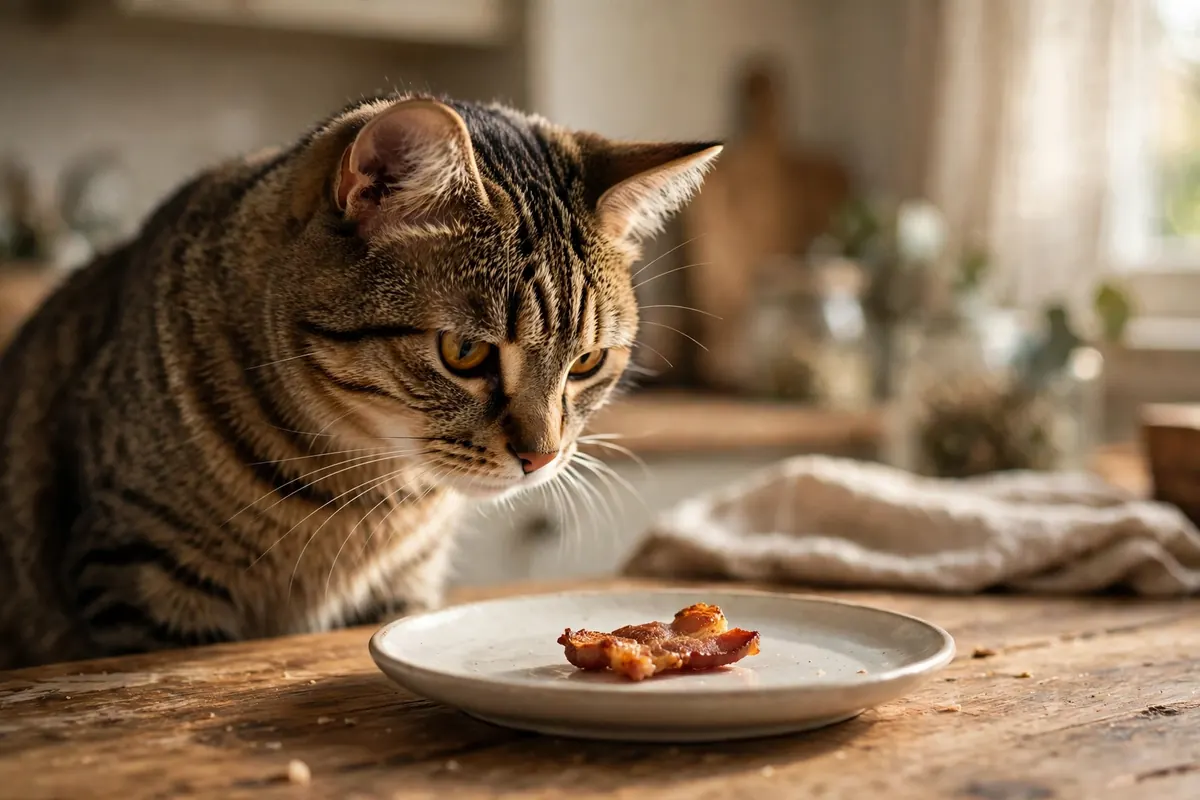
The Short Answer: Caution — Not Toxic, But Far Too Salty and Fatty
Can cats eat bacon? Technically yes, but they should not eat it as a routine food. Bacon is not poisonous to cats, so a tiny taste is unlikely to cause an emergency. The problem is that bacon is cured in salt and loaded with fat, and both are bad for cats. A small lick or a crumb-sized taste once in a blue moon is one thing; a strip of bacon, or a regular bacon habit, is quite another.
Bacon grease is the worst form of all: it is almost pure fat and salt, and it can trigger vomiting, diarrhea, and, in some cats, pancreatitis. Keep reading to learn why bacon is such a poor choice for cats, what to do if your cat already ate some, and which safer treats to offer instead.
Is Bacon Safe for Cats?
Bacon is not toxic to cats, but it is not safe as a food. The two problems are salt and fat. Bacon is cured with salt and often sugar, and a single strip can contain a large amount of sodium relative to a cat's tiny body. Bacon is also very high in fat, and cats do not handle large amounts of fat well.
“Low-sodium” bacon is still salty by cat standards, and turkey bacon is not a safe swap either — it is usually cured and seasoned the same way. There is no version of bacon that is a good cat food. Our cat food safety guide covers the full list of foods that can harm cats.
Why Bacon Is So Bad for Cats: Salt and Fat
Salt is the first problem. A cat needs only a small amount of sodium each day, and a single strip of bacon can contain several times that amount. Too much salt can cause extreme thirst, frequent urination, vomiting, and diarrhea. In large amounts it can lead to salt poisoning, which affects the nervous system and needs urgent care. Cats with kidney disease or heart problems are at even greater risk from salty foods.
Fat is the second problem. Bacon is roughly half fat, and a cat's digestive system is not built for rich, greasy meals. A fatty meal can cause stomach upset, vomiting, and diarrhea within hours. In some cats, a very fatty meal can also trigger pancreatitis, a painful inflammation of the pancreas that can make a cat seriously ill and often needs vet treatment. That risk is one more reason bacon should never be a regular treat.
Bacon Grease Is the Worst Form
Bacon grease is the most dangerous form of bacon for a cat. It is the fat that cooks out of the strips, concentrated into a pool of salty liquid fat. Some people pour it over cat food as a flavor booster, but that is a bad idea: it is almost pure fat, it is full of salt, and it can coat a cat's stomach and trigger vomiting or diarrhea very quickly.
Cats are sometimes drawn to bacon grease because it smells strongly of meat, and a cat that licks a pan or a plate can take in a surprising amount. If your cat licks bacon grease, watch for vomiting, loose stools, and loss of appetite over the next day, and call your vet if the symptoms last or your cat stops eating.
Can Kittens Eat Bacon?
No, kittens should not eat bacon. A kitten is much smaller than an adult cat, so even a tiny piece of bacon delivers a far larger dose of salt and fat relative to its body weight. Kittens also have sensitive stomachs, and rich, greasy food is more likely to cause diarrhea and vomiting in a young cat.
Kittens need complete and balanced kitten food for healthy growth. Human foods like bacon add salt and fat without the nutrients a kitten needs. If you want to reward your kitten, use a small treat made for kittens instead.
What Happens If My Cat Eats Bacon?
It depends on how much your cat ate. A tiny crumb is unlikely to cause any problem, though it is still not a good habit. A whole strip of bacon is more likely to cause vomiting, diarrhea, and heavy drinking within a few hours. If your cat drank bacon grease, the symptoms can be stronger and may include repeated vomiting, belly pain, and refusal to eat.
The signs to watch for are vomiting, diarrhea, extreme thirst, lethargy, and a painful or tense belly. If your cat vomits more than once, refuses food for more than a day, or seems weak or unsteady, call your vet the same day.
How Much Bacon Can a Cat Eat?
As little as possible — ideally none. If you insist on sharing, a crumb-sized taste, smaller than your little fingernail, once in a very long while, is the absolute most. A full strip of bacon is far too much for a cat, and bacon should never be a daily or weekly treat.
Treats of any kind should stay under 10 percent of your cat's daily calories, and bacon is a poor use of that allowance. A small piece of plain cooked chicken gives your cat the meaty taste it wants without the salt and fat, so choose that instead.
What to Do If Your Cat Ate Bacon
If your cat stole some bacon, stay calm and follow these steps:
- Take the bacon away. Remove the plate, packet, or pan so your cat cannot eat any more.
- Check how much was eaten. Note whether it was a crumb, a strip, or bacon grease, and roughly when your cat ate it.
- Offer fresh water. Make sure your cat has clean water nearby and can drink freely.
- Do not induce vomiting. Never try to make your cat vomit at home unless your vet tells you to.
- Watch for symptoms. Look for vomiting, diarrhea, belly pain, extreme thirst, or lethargy over the next 24 hours, and call your vet if any appear or your cat stops eating.
Safe Alternatives to Bacon
If your cat begs for bacon at breakfast, it is the meaty smell it wants, not the salt. Offer a small piece of plain cooked chicken or turkey instead — no skin, no seasoning, no sauce. A small piece of plain cooked fish is another good option, offered only occasionally.
Cats are obligate carnivores, so meat belongs at the center of their diet, but it should be plain, lean meat in a complete cat food — not salty, fatty bacon from the frying pan.
Bacon may smell irresistible to your cat, but it is one of the worst treats you can offer: very salty, very fatty, and with bacon grease the most dangerous form of all. A tiny rare taste is unlikely to cause an emergency, but bacon should never be a routine food. Offer plain cooked chicken instead, and keep the bacon on your own plate.
Can cats eat bacon?
Bacon is not toxic, but it is very salty and fatty, so cats should not eat it as a routine food. A tiny rare taste is unlikely to cause an emergency, but bacon is a poor treat.
Is bacon safe for cats?
No, bacon is not a safe food for cats. It is cured in salt and high in fat, which can cause vomiting, diarrhea, and, in some cats, pancreatitis.
Can cats eat bacon grease?
No. Bacon grease is the worst form of bacon — almost pure fat and salt — and it should never be poured over cat food or left where a cat can lick it.
Can kittens eat bacon?
No. Kittens are smaller and more sensitive to salt and fat, so bacon is not suitable for them. Use kitten food and kitten treats instead.
What happens if my cat eats bacon?
A tiny crumb may cause no trouble, but a strip of bacon can cause vomiting, diarrhea, and extreme thirst. Bacon grease can cause stronger symptoms, including belly pain and loss of appetite.
How much bacon can a cat eat?
Ideally none. At most a crumb-sized taste on a very rare occasion. A full strip is far too much, and bacon should never be a regular treat.