Can Cats Eat Blackberries?
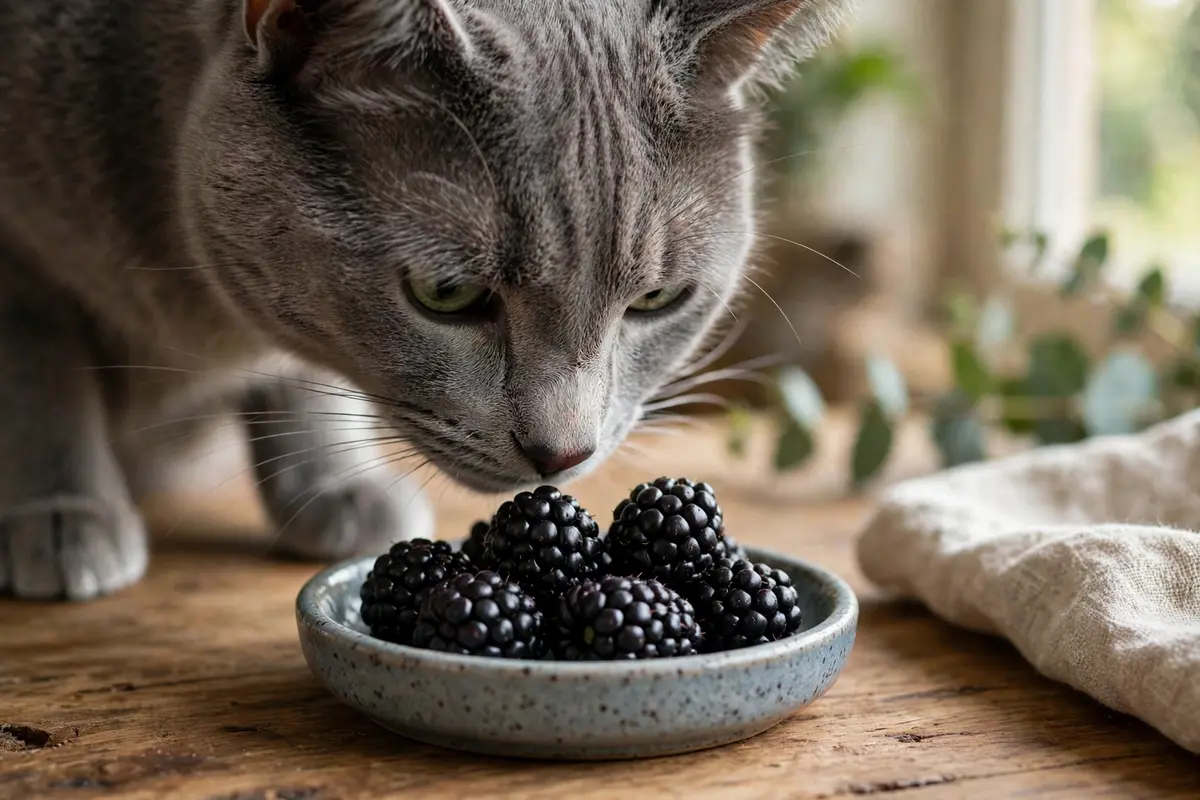
Yes, cats can eat blackberries — in small amounts, and only when they are fresh and washed. Like their raspberry cousins, blackberries are non-toxic to cats, and one or two berries make a safe occasional treat for a healthy adult cat. The handling is almost identical: wash them, check for stems, keep the portion tiny, and serve them plain.
The main differences from raspberries are practical, not nutritional. Blackberries are bigger, their seeds are firmer, and their stems and caps are tougher — so the seed and stem check matters a little more. Get those details right, keep the portion to a berry or two, and blackberries are a perfectly fine rare treat.
Are Blackberries Safe for Cats?
Blackberries are not toxic to cats. They are not on any list of dangerous fruits — that list is headed by grapes and raisins, which can damage a cat's kidneys — and veterinary sources generally treat blackberries the same way as raspberries: safe in moderation, with the emphasis firmly on moderation.
Nutritionally, a blackberry offers vitamin C, vitamin K, manganese, and fiber, plus the deep purple pigments that act as antioxidants. The berry's real appeal is as enrichment — a new smell, a soft texture, a small novelty in an otherwise meat-based diet.
Blackberries do contain natural sugars, though less than many fruits, and that is why the portion stays small. A berry or two adds negligible sugar; a handful every day would add up for a small animal and could contribute to weight gain and dental problems over time. Treats of every kind should stay under about 10 percent of daily calories, and fruit is no exception.
The Seed and Stem Check
Before a blackberry reaches your cat, give it a quick once-over. Rinse it under cool water to remove soil, pesticides, or handling residue, then pull off the green stem and leafy cap. Blackberry stems are tougher than raspberry stems and more likely to irritate a stomach or pose a choking risk, so this step is not optional.
Check the berry itself, too. A ripe blackberry should be fully dark, soft, and plump — unripe red or hard berries are tart and harder to digest, so skip those. Blackberry seeds are small and firm, and while a seed or two inside a berry is not a danger, a cat that gulps food can struggle with a whole firm berry. For gulpers, squash the berry or cut it in half so the seeds are exposed and the piece is smaller.
Discard any berry that is moldy, squashed beyond recognition, or past its best. Blackberries spoil quickly, and moldy fruit can upset a stomach or worse. Fresh, ripe, washed, stem-free — that is the whole checklist, and it takes about ten seconds.
How Much Blackberry Can a Cat Eat?
One or two berries, once or twice a week, is plenty. Blackberries are larger than raspberries, so one large berry is already a generous treat for a cat — there is no need to offer more, and offering more only increases the chance of a soft stool or an upset stomach.
As with any new food, start small. Offer half a berry or a single small one the first time, and watch your cat for the rest of the day: normal appetite, normal litter box, no vomiting. If all is well, you can repeat the treat occasionally. If your cat's stomach reacts, blackberries go on the skip list — individual sensitivities vary, and a generally safe food does not suit every cat.
Cats with diabetes should skip blackberries unless their vet specifically approves a small amount. Diabetic diets depend on tight sugar control, and even fruit sugars count. Cats with sensitive stomachs or those recovering from vomiting or diarrhea should also wait until they are fully back to normal before trying any new treat.
How to Serve Blackberries Safely
Serve blackberries fresh and plain, at room temperature. A whole washed berry in your cat's bowl is fine for a careful eater; a squashed or halved berry is better for a cat that inhales food.
Only fresh berries count. Dried blackberries are concentrated sugar, blackberry jam and jelly are mostly sugar with added sweeteners, and blackberry-flavored desserts, yogurts, and drinks can contain ingredients that are genuinely harmful to cats, including xylitol in some products. If it comes from a jar or a packet, it is not the same food as the berry.
Throw away uneaten pieces rather than leaving them in the bowl. Cut or squashed berries spoil fast at room temperature, and a cat returning to an old berry hours later is asking for stomach trouble. Fresh each time, small each time, and then done.
Can Kittens Eat Blackberries?
Kittens should stick to kitten food. Their growth depends on precisely balanced nutrition, and treats of any kind only dilute that balance. There is also a practical reason: a whole blackberry is relatively large for a kitten's mouth, and the firm seeds add a choking risk that is not worth taking for a food the kitten does not need.
Once a cat is an adult, a single berry as a rare treat is reasonable. The kitten months pass quickly, and there will be plenty of time later for berry tastings. If a kitten has already eaten a small piece with no ill effects, there is no need to panic — just save future berries for adulthood.
What Happens If My Cat Eats Too Many Blackberries?
A cat that raids a punnet will most likely face a short bout of stomach upset: soft stool, diarrhea, or occasional vomiting as the gut reacts to the sugar and fiber load. This usually settles within a day once the fruit has passed, provided the cat keeps drinking water and eating normally otherwise.
The situation is more serious if your cat ate a sweetened blackberry product rather than plain berries. Jam, jelly, and some baked goods may contain xylitol or large amounts of sugar, and concentrated xylitol is a genuine emergency for cats. If your cat ate a product listing xylitol, call your vet right away and bring the packaging if you can.
Watch the litter box and the food bowl after any fruit accident. A single soft stool that firms up again is not a crisis, but ongoing diarrhea, repeated vomiting, or a cat that stops eating and drinking needs veterinary attention rather than another day of watching.
When to Call the Vet
Call your vet if vomiting or diarrhea lasts more than 24 hours, if you see blood in vomit or stool, or if your cat becomes lethargic, hides, or refuses food and water. Call promptly, too, if your cat ate jam, jelly, syrup, or any product listing xylitol or another sweetener.
Cats with diabetes, chronic kidney disease, or ongoing stomach problems deserve a quicker call than a healthy cat, because even a small dietary upset can matter more for them. When in doubt, a short phone call to your vet costs nothing and beats guessing — vets would always rather hear about a possible problem early than late.
Do Cats Actually Need Blackberries?
No. Cats are obligate carnivores, and a complete, balanced cat food already gives them everything they need. Blackberries add nothing essential, and no cat will be healthier for eating them. Their value is enrichment: a new smell, a soft texture, a shared moment in the kitchen.
That perspective keeps portions honest. If your cat enjoys a berry now and then, one or two a week is a lovely extra. If your cat sniffs it and walks away, nothing is lost — offer a piece of plain cooked chicken instead, which your cat's biology actually values. Either way, fruit stays a footnote to a meat-based diet, not a feature of it.
Are blackberries toxic to cats?
No. Fresh blackberries are non-toxic to cats. The safe portion is one or two berries, once or twice a week, served fresh, washed, and stem-free.
Do I need to remove blackberry seeds?
The seeds inside a berry are small and not toxic, but firm seeds can be a choking risk for cats that gulp food. Squash or halve the berry for gulpers.
Can cats eat blackberry jam?
No. Jam and jelly are mostly sugar and may contain sweeteners that are dangerous to cats. Offer only fresh, plain blackberries.
Can kittens eat blackberries?
Kittens should stick to kitten food. Save fruit treats for adulthood, when a single berry as a rare treat is reasonable.
What if my cat eats a lot of blackberries?
Expect possible soft stool or vomiting for a day. If symptoms last more than 24 hours, or your cat stops eating or drinking, call your vet.