Can Cats Eat Blueberries? Vet Answer
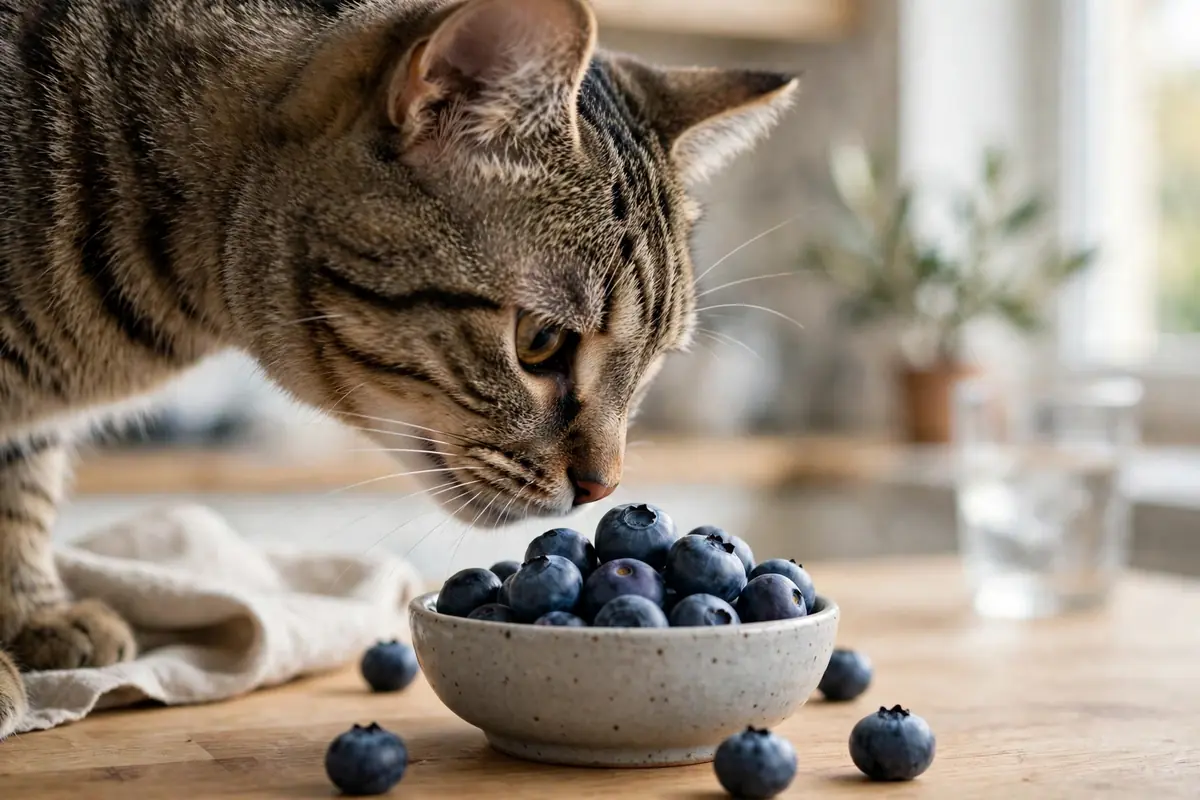
Yes, cats can eat blueberries — in moderation, and only when they are fresh, washed, and plain. Blueberries are not toxic to cats, and most vets agree that a couple of berries as an occasional treat are fine for a healthy adult cat. That short answer comes with a few important conditions, though: the portion must stay small, the berries must be served safely, and sweetened or dried blueberry products do not count. This guide covers exactly how many blueberries a cat can eat, how to serve them, the risks to watch for, and when to skip fruit entirely.
Remember where fruit sits in a cat's diet: cats are obligate carnivores, built to get nutrition from animal protein, not fruit. Blueberries will never be an essential food and should never replace a complete, balanced cat food — think of them as a fun, occasional extra.
Are Blueberries Safe for Cats?
Fresh blueberries are considered safe for cats by most veterinarians. Unlike grapes and raisins, which are genuinely dangerous for cats, blueberries contain no known toxin that harms felines. A healthy adult cat that eats one or two fresh berries is very unlikely to come to any harm, and many cats enjoy batting them around the floor before deciding whether to eat them at all.
That said, "safe" does not mean "ideal for every cat." Cats with sensitive stomachs, diabetes, or a prescription diet should not get fruit treats without checking with their vet first, since even a small amount of natural sugar can matter for a carefully controlled diet.
What Is Inside a Blueberry? The Nutrition in Plain Language
Blueberries have a good reputation in human nutrition, and the same qualities that make them popular with people apply in a small way to cats. They are mostly water, which helps with hydration, and they contain fiber, which supports normal digestion in small amounts. They also provide vitamin C, vitamin K, and manganese, plus plant compounds called antioxidants that help protect cells from everyday damage.
For a cat, though, the benefit is modest: a cat's digestive system is not designed to extract much nutrition from fruit, and two or three tiny berries contain only a trace of vitamins. Think of blueberries as a harmless, low-calorie treat rather than a health supplement — a high-quality complete cat food is where the real difference is made, as our cat food guides explain.
One genuine upside is the calorie count: a single blueberry contains roughly one calorie, so a couple of berries will not derail a weight-management plan the way a fatty meat treat might.
How Many Blueberries Can a Cat Eat?
For most healthy adult cats, two to three blueberries once or twice a week is a sensible limit. Smaller cats should get fewer — one or two berries at a time is plenty — while a large, active cat can handle three without issue. There is no benefit to giving more, and larger amounts increase the chance of stomach upset.
All treats combined should stay under about ten percent of your cat's daily calories — a rule most vets agree on. If your cat already gets commercial treats or dental chews, count blueberries within that same allowance, not on top of it.
When you first offer blueberries, start with just one berry and watch your cat for the next day. A single-berry test reveals a sensitive stomach safely; if all goes well, you can offer two or three next time.
How to Serve Blueberries Safely
- Wash them thoroughly. Rinse fresh blueberries under cool running water and pat dry, to remove dirt and pesticide residue.
- Serve them fresh and at room temperature. Frozen berries must be fully thawed first — frozen berries are hard and slippery, a choking hazard.
- Cut or halve them for safety. A whole berry is round and smooth and can slip down the wrong way; halving or lightly crushing each berry removes most of the choking risk.
- Mash them for kittens, seniors, and cats with dental problems. A mashed berry mixed into wet food is far easier to manage than a whole berry.
- Offer them plain — nothing added. No sugar, no cream, no yogurt topping, no honey. The berry on its own is the treat. Anything added to it only introduces ingredients a cat does not need.
- Remove uneaten berries. Do not leave berries in the bowl for hours, especially in warm weather, or your cat may eat spoiled fruit later.
Risks of Blueberries for Cats: Choking, Stomach Upset, and Sugar
The main risks are practical rather than toxic. The first is choking: whole, round berries can lodge in a small throat, especially if a cat gulps food, and kittens and seniors with dental issues are at highest risk — which is why halving or mashing berries is such a simple, effective precaution.
The second risk is stomach upset. Blueberries contain fiber and natural sugars that a cat's gut is not used to handling in quantity, so a handful at once can cause vomiting or diarrhea even in a cat that tolerates one or two berries fine.
The third risk is sugar. A single berry is low in sugar, but it adds up in dried or sweetened products and matters for cats with diabetes or weight problems — for those cats, skipping blueberries entirely is often the simplest choice.
Blueberry Products to Avoid: Sweetened, Dried, and Baked
Not everything with "blueberry" on the label is safe for cats. The fresh berry is the only form most vets would call suitable, and these versions should stay out of your cat's bowl:
- Sweetened dried blueberries. Most snacking dried blueberries are sweetened with sugar or juice concentrate and sometimes coated in oil — drying concentrates the sugar.
- Blueberry muffins, pancakes, and baked goods. These contain flour, butter, and sugar, and sometimes xylitol — highly toxic to pets — or chocolate. Never offer baked goods deliberately.
- Blueberry jam, jelly, and preserves. These are essentially concentrated sugar with a little fruit, and sugar-free versions may contain sweeteners dangerous for pets.
- Blueberry yogurt and flavored yogurts. Flavored yogurts combine two problems for cats: added sugar or sweeteners, and dairy, which many cats cannot digest well. Plain yogurt is a different matter, covered in our guide to whether cats can eat yogurt, but blueberry-flavored yogurt is best avoided.
- Trail mix and granola containing blueberries. These often include raisins, chocolate, nuts, or xylitol-sweetened pieces. Raisins are dangerous for cats, so keep such mixes well away.
The rule is simple: if the blueberries have been sweetened, dried with additives, baked into something, or mixed with other ingredients, they are no longer a cat treat. Stick to fresh, plain berries.
Signs to Stop and Call the Vet
Stop offering blueberries and call your veterinarian if you notice any of the following after your cat eats them:
- Vomiting more than once, or diarrhea lasting longer than a day.
- Choking, gagging, or difficulty breathing — seek immediate veterinary help.
- Swelling of the face or mouth, excessive drooling, or intense itching.
- Lethargy, refusal to eat or drink, or hiding for an extended period after eating berries.
- Blood in vomit or stool, or signs of abdominal pain such as crouching or crying.
If your cat ate a sweetened or baked blueberry product containing xylitol or chocolate, do not wait for symptoms — call your vet or an emergency clinic right away and tell them exactly what your cat ate and roughly how much. Quick action matters far more with those ingredients than with plain berries.
For most cats, blueberries will simply be a harmless curiosity — sniffed, batted, maybe eaten, then forgotten in favor of dinner.
Frequently Asked Questions
Can cats eat blueberries every day?
Blueberries are best as an occasional treat: two or three fresh berries once or twice a week is plenty. Daily fruit adds unnecessary sugar and can crowd out balanced nutrition.
Can kittens eat blueberries?
Kittens should stick to complete kitten food. A tiny taste of mashed blueberry is unlikely to harm an older kitten, but it is not needed, so wait until adulthood and check with your vet first.
Can cats eat frozen blueberries?
Frozen blueberries are safe only once fully thawed and soft. Frozen berries are hard and slippery, which makes them a choking risk, and very cold food can upset a cat's stomach. Thaw them, wash them, and cut or mash them before serving.
Are dried blueberries safe for cats?
Most dried blueberries for people are sweetened, coated in oil, or mixed with other fruits, and drying concentrates the sugar. Fresh berries are always the safer option.
My cat ate a blueberry muffin — should I worry?
A small bite of a plain blueberry muffin is unlikely to cause serious harm, but muffins contain sugar, butter, flour, and sometimes xylitol or chocolate, which are unsafe for cats. Watch for vomiting or diarrhea, and call your veterinarian if your cat ate a large amount or the muffin contained xylitol or chocolate.