Can Cats Eat Yogurt? The Dairy Truth
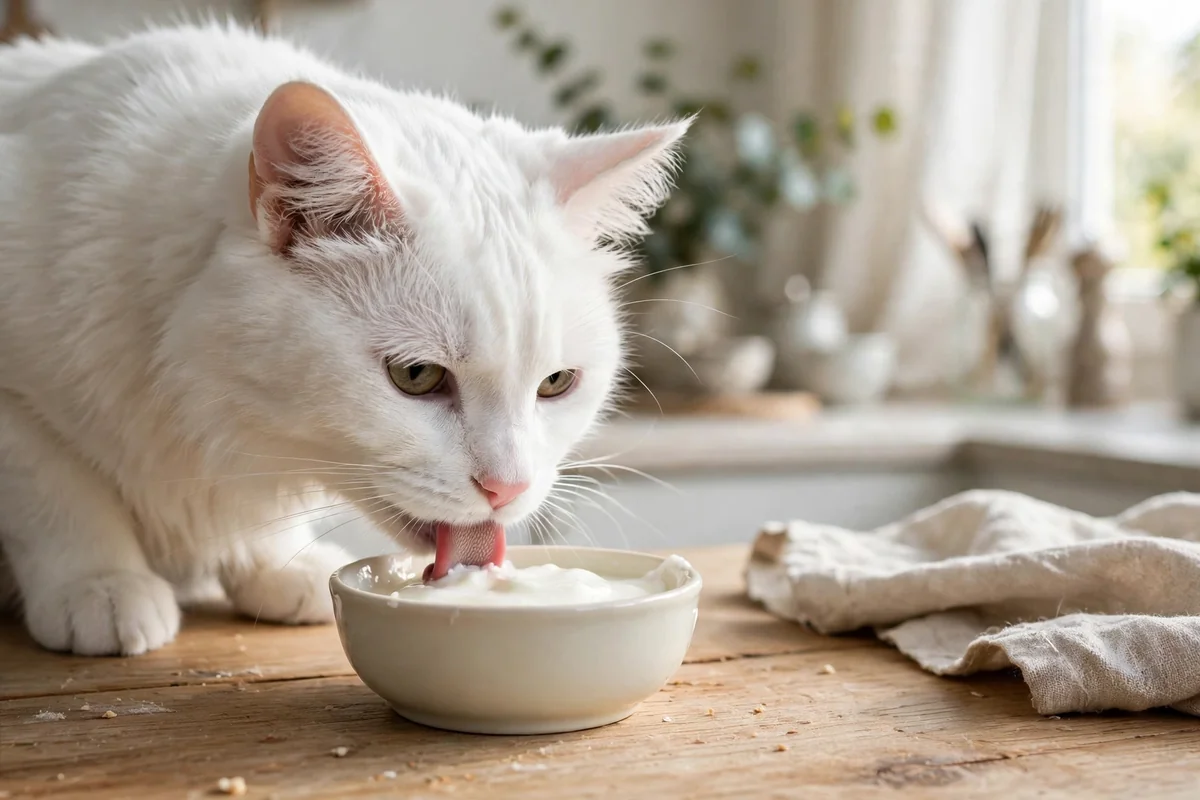
Cats can eat yogurt — but only plain, unsweetened yogurt, and only in very small amounts. That is the short answer, and it comes with a bigger truth underneath it: most adult cats are lactose intolerant, which means their bodies struggle to digest the natural sugar in milk and dairy products. A teaspoon of plain yogurt may be perfectly fine for one cat and cause a day of stomach upset in another. This guide explains the dairy truth in plain terms: which yogurt is safe, why flavored yogurt is dangerous, how much to offer, and when to skip dairy entirely.
The classic image of a cat lapping a saucer of milk is misleading. Kittens can digest their mother's milk, but most cats gradually lose the enzyme that breaks down lactose as they grow up. Dairy should therefore be an occasional exception, not a normal part of a cat's diet — a complete, balanced cat food already provides everything your cat needs.
Plain Unsweetened Yogurt Only: The One Safe Kind
If you are going to offer yogurt at all, it must be plain and unsweetened. That means the ingredient list should be short — milk and live cultures, ideally — with no added sugar, no fruit puree, no honey, no flavoring, and no sweeteners of any kind. Plain yogurt, whether regular or Greek-style, is the only form most vets would consider acceptable as an occasional treat for a healthy adult cat.
Greek yogurt has a small advantage: straining removes much of the whey, and with it some lactose, so it tends to be easier on sensitive stomachs. It is still dairy, though, so the same tiny-portion rule applies. Avoid "light" or "diet" yogurts, which often contain artificial sweeteners.
Why Most Cats Struggle with Dairy: Lactose Intolerance Explained
Lactose is the natural sugar in milk, and digesting it requires an enzyme called lactase. Kittens produce plenty of lactase while nursing, but after weaning, production usually drops sharply. Undigested lactose then travels to the large intestine, where gut bacteria ferment it — producing gas and drawing water into the bowel, which causes the familiar symptoms.
Signs of lactose intolerance are easy to recognize: soft stools or diarrhea, gas, bloating, and sometimes vomiting, usually within a few hours of eating dairy and clearing up within a day. A small number of cats keep producing enough lactase into adulthood, which is why one cat can lick a yogurt lid with no ill effects while another gets an upset stomach.
Yogurt is somewhat easier to digest than milk because its live cultures consume some lactose during fermentation — which is why a teaspoon of plain yogurt is often tolerated by cats who cannot handle milk. It is a difference of degree, not a free pass. For more on milk, see our guide to whether cats can drink milk.
Why Flavored, Sweetened, and Xylitol Yogurt Is Dangerous
Flavored yogurt is where a mostly harmless treat turns into a genuine risk. The problems stack up quickly:
- Added sugar. Fruit-flavored yogurts are loaded with sugar, adding empty calories and dental risk. Cats do not need sugar in any form.
- Xylitol and other artificial sweeteners. This is the most serious danger: xylitol (also listed as birch sugar or E967) is highly toxic to pets, and even small amounts can cause a rapid blood-sugar drop, collapse, and liver damage. Sugar-free and "light" yogurts are the most likely to contain it.
- Chocolate and coffee flavors. Chocolate contains theobromine, toxic to cats, and coffee flavors contain caffeine, which cats are sensitive to.
- Fruit pieces and purees. Some fruits used in flavored yogurts, such as grapes, are toxic to cats. Even safe fruits add unneeded sugar and acidity.
- Artificial colors and flavorings. These add nothing useful and can irritate sensitive stomachs.
How Much Yogurt Can a Cat Eat? Small Portion Guidance
For a healthy adult cat, about one teaspoon of plain, unsweetened yogurt once or twice a week is plenty — a taste, not a serving. Smaller cats should get less. Yogurt should count toward the daily treat allowance, which most vets agree should stay under about ten percent of daily calories.
Serve yogurt at room temperature in a shallow dish, and do not leave it sitting out — dairy spoils quickly, especially in warm weather.
The first time you offer yogurt, give just a tiny dab and watch your cat for 12 to 24 hours. Loose stools, gas, or vomiting mean dairy is not for them — believe them and stop. Tolerance can also change with age or illness, so keep watching over time.
The Probiotic Angle: Helpful, But Keep It Cautious
You may have heard yogurt is good for cats because it contains probiotics — live bacteria that support gut health. The live cultures in yogurt, such as Lactobacillus, are the bacteria that ferment milk into yogurt, and some veterinarians do suggest small amounts as a gentle option for mild digestive upset. But the evidence for yogurt as a probiotic treatment in cats is limited.
Yogurt is not a substitute for veterinary care. A cat with ongoing diarrhea or vomiting needs a diagnosis — the cause could be parasites, food allergy, or inflammatory bowel disease — and masking symptoms with yogurt could delay proper treatment. Talk to your vet before trying any probiotic.
If your vet recommends a probiotic, they will usually suggest a product made specifically for cats, with studied strains and doses. Think of plain yogurt as an occasional treat that happens to contain live cultures — not as medicine.
Better Alternatives to Yogurt for Cats
If your cat loves licking creamy textures but does not tolerate yogurt well, there are safer ways to give them the same satisfaction:
- Cat-specific milk treats. Lactose-free milk formulated for cats is much gentler than regular milk or yogurt, but still offer it only in small amounts, occasionally.
- Plain wet food as a treat. A spoonful of regular wet food or a meat-based treat paste gives a creamy experience without any dairy — the simplest, safest swap.
- Bone broth made for cats. Unsalted, onion-free pet bone broth can be poured over food — but check labels, since human broths often contain onion, garlic, or salt.
- Cat-safe probiotic products. A veterinary probiotic paste or powder made for cats is more targeted than yogurt, without the lactose problem.
- Frozen treats in summer. Lactose-free cat milk frozen in an ice cube tray can be a cooling summer enrichment, offered under supervision.
For most cats, the honest answer is that they do not need yogurt at all. A good complete cat food, fresh water, and the occasional meat-based treat cover everything.
When to Skip Dairy Entirely
Skip yogurt and all dairy if any of the following apply to your cat:
- Your cat has already reacted to dairy. Vomiting, diarrhea, or gas after milk, cheese, or yogurt is a clear signal. Do not keep testing — the answer is already in.
- Your cat has a chronic digestive condition. Cats with inflammatory bowel disease, chronic diarrhea, or food allergies should not get dairy without explicit veterinary approval.
- Your cat is on a prescription diet. Prescription diets are carefully balanced, and extras like yogurt can undermine that balance. Check with your vet first.
- Your cat is a kitten. Kittens need complete kitten food for growth, and their digestive systems are still developing. Orphaned kittens needing milk replacement should get a kitten milk replacer from a vet, never cow's milk or yogurt.
- Your cat is diabetic or overweight. The sugar in dairy, even the small amount in plain yogurt, is an unnecessary addition for cats managing weight or blood sugar.
- Your cat takes medication that interacts with dairy. Some drugs are absorbed less effectively with calcium-rich foods. Ask your vet before mixing medicine with yogurt.
When in doubt, the safest choice is simply not to offer dairy. Your cat will not miss what they never had, and a meat-based treat will make them just as happy — with far less risk of a messy aftermath.
Frequently Asked Questions
Can cats eat Greek yogurt?
Plain, unsweetened Greek yogurt is generally the best choice, because straining removes much of the whey and some lactose. Portions should still stay tiny — about a teaspoon — and occasional only.
Can cats eat flavored yogurt?
Flavored yogurt is best avoided: it usually contains added sugar, fruit purees, and sometimes artificial sweeteners. Xylitol in particular is highly toxic to pets.
How much yogurt can a cat eat?
A teaspoon of plain, unsweetened yogurt once or twice a week is plenty for most adult cats. Yogurt should count toward the daily treat allowance, which should stay under about ten percent of daily calories. More than a small taste increases the chance of stomach upset.
Can kittens eat yogurt?
Kittens should not be given yogurt; they need complete kitten food. Orphaned kittens needing milk replacement should get a kitten milk replacer from a vet, never cow's milk or yogurt.
What should I do if my cat eats yogurt with xylitol?
Contact your veterinarian or an emergency clinic right away, even if your cat seems fine. Xylitol can cause a rapid drop in blood sugar and liver problems in pets, and early treatment matters. Tell the vet the brand, the amount eaten, and when it happened.