Can Cats Eat Butter?
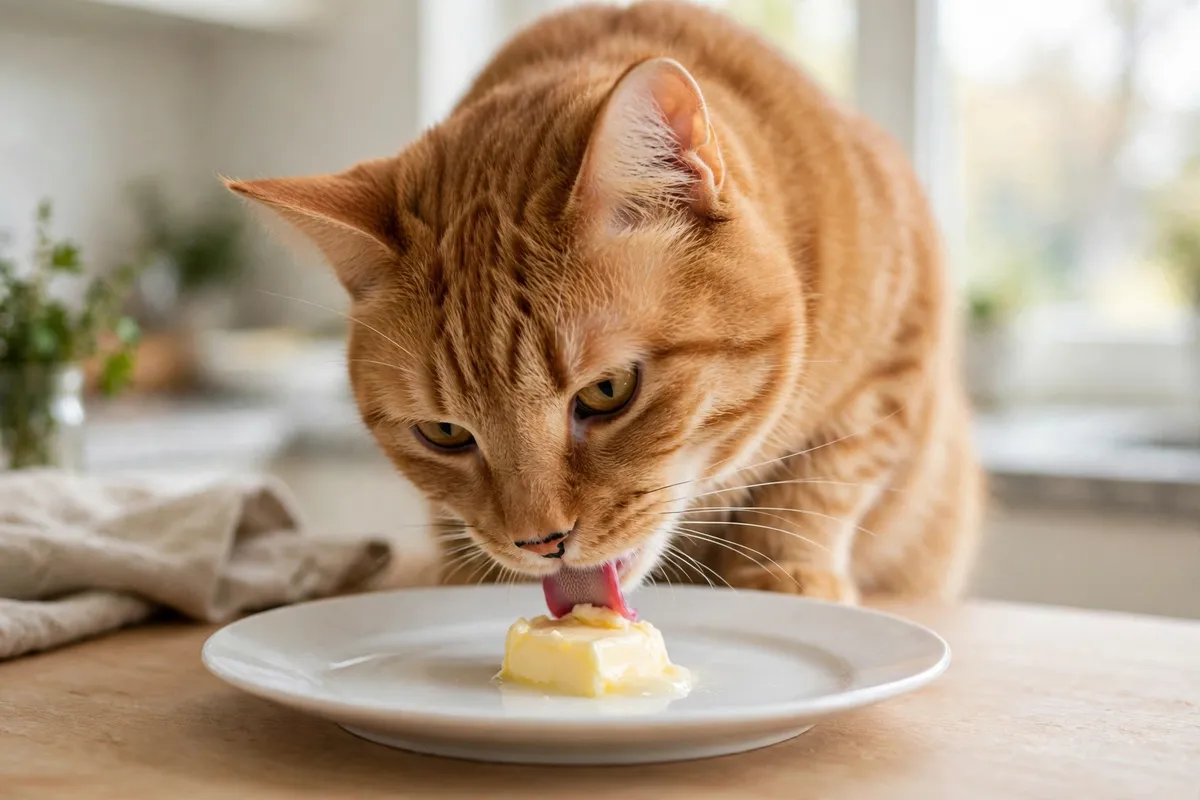
Yes, in the smallest possible sense — a tiny lick of butter will not poison your cat. But that is where the good news ends. The verdict on butter for cats is caution: butter is not toxic, yet it is almost pure fat made from dairy, and it offers your cat nothing it needs. A cat that licks a little butter off a knife once in a while will almost certainly be fine. A cat that gets butter every day, or eats a whole pat at once, risks an upset stomach, weight gain, and in the worst case a painful inflammation of the pancreas.
Butter is one of those foods cats seem strangely drawn to — many owners have watched a cat lick a butter dish or steal butter off toast. Cats are attracted to fat, and butter smells rich and creamy. But liking something and needing it are very different things, and this guide explains exactly where the line sits.
Is Butter Safe for Cats? The Short Answer
Butter is not poisonous to cats. There is no toxin in it that will harm your cat on contact, and a single small lick is not an emergency. What makes butter a problem is its composition: it is roughly four-fifths fat, with the rest mostly water and a little milk protein and lactose. A cat's digestive system can handle some fat, but a concentrated lump of it is a shock to the stomach — and the pancreas, the organ that produces the enzymes needed to digest fat, can become inflamed if it is overloaded.
That is why vets describe butter as a food to avoid rather than a food to fear. The risk is not one lick; it is the habit. A daily butter treat adds a surprising number of calories to a small animal's diet, and over weeks and months those calories show up as extra weight. Overweight cats face higher risks of diabetes, joint problems, and liver disease, so a "harmless" daily treat can quietly become a real health problem.
Why Cats Love Butter (and Why That Does Not Make It Good for Them)
Cats are obligate carnivores, which means their bodies are built to run on animal protein and fat — so it makes sense that a rich, fatty food like butter smells wonderful to them. Fat carries flavor, and a cat's nose is far more sensitive than ours. A pat of butter left on the counter is, to a cat, an irresistible invitation.
But a cat's taste for fat evolved for hunting small prey, not for eating dairy products made for humans. Wild prey is lean compared with a block of butter, and a cat's pancreas is sized for that kind of diet. When a cat eats a large amount of pure fat in one go, the pancreas has to work far harder than usual — and sometimes it becomes inflamed instead. This condition, called pancreatitis, is painful and can be serious. Not every cat that eats butter will develop it, but fatty meals are a known trigger, and butter is one of the fattiest foods in an ordinary kitchen.
Butter and Dairy: The Lactose Problem
Butter is a dairy product, and most adult cats are lactose intolerant. Kittens produce lactase, an enzyme that lets them digest their mother's milk, but production drops sharply as they grow up. By adulthood, most cats cannot digest lactose properly — and butter still contains a small amount of lactose, plus milk proteins some cats are sensitive to.
Butter is actually lower in lactose than milk or cream, which is one reason a tiny lick often causes no visible problem. But "lower" is not "none," and a cat that is very sensitive to dairy can still get soft stools or diarrhea from a larger serving. If your cat regularly gets diarrhea after dairy foods, butter included, that is your cat telling you dairy does not agree with it — stop offering it. Read more about the dairy question in our guides to whether cats can drink milk and whether cats can eat cheese, and the whole Cat Food section on the Purrfect Paws homepage.
Can Kittens Eat Butter?
No, kittens should not eat butter. A kitten's digestive system is still developing, and its nutritional needs are very specific — every bite should come from a complete kitten food or a treat made for kittens. Butter adds fat and calories without the protein, vitamins, or minerals a growing kitten needs, and a fatty food is more likely to upset a sensitive young stomach.
Kittens are also more vulnerable to a rich meal: vomiting and diarrhea dehydrate a small kitten far faster than an adult cat, so a food that risks an upset stomach is one to skip entirely. If your kitten is fascinated by the butter dish, enjoy the curiosity from a distance and keep the dish out of reach.
How Much Butter Can a Cat Eat?
The honest answer is that the safest amount is none — but if your cat has already developed a butter-licking habit, the realistic limit is a tiny lick, very occasionally, never as a daily routine. Think of a smear on the tip of a knife, not a pat on a plate. Do not spread butter on your cat's food, let your cat lick the butter dish, or use it to hide medicine unless your vet has suggested it.
Some owners use a little butter to help a pill slide down, and vets do sometimes suggest a small amount of fat for that purpose — but only in tiny quantities, and only when the vet has approved it. If you need to give your cat medication, ask your vet about pill pockets or other options made for cats. They work better, and they do not come with a side of pancreatitis risk.
What Happens If My Cat Eats Butter?
A small lick will usually cause nothing at all. A larger amount — a whole pat, or butter licked from a dish — commonly causes vomiting, diarrhea, or soft stools within a few hours, with a cat that seems uncomfortable and off its food. These signs usually pass within a day.
The more serious concern is pancreatitis, which tends to show up after a large fatty meal. The warning signs include repeated vomiting, a painful or tense belly, lethargy, loss of appetite, and sometimes diarrhea. Pancreatitis is painful and needs veterinary care — it is not something to wait out at home. Cats who are already overweight, or who have had pancreatitis before, are at higher risk, so for those cats even a moderate amount of butter is a bad idea.
What to Do If Your Cat Already Ate Butter
If your cat has just eaten butter, stay calm and follow these steps:
- Remove the butter. Take the dish, wrapper, or toast away so your cat cannot eat more.
- Note how much they ate. A lick is low-risk. A whole pat, or butter eaten together with other fatty foods, is worth a call to your vet.
- Offer fresh water. Put down a clean bowl of fresh water. Do not force your cat to drink.
- Watch for 24 to 48 hours. Look for vomiting, diarrhea, belly pain, lethargy, or refusal to eat. Pancreatitis signs can take a little while to appear, so keep watching even if the first day seems fine.
- Call your vet if you are worried. Call promptly if your cat vomits repeatedly, seems in pain, refuses food for more than a day, or has a history of pancreatitis or obesity. Tell the vet how much butter your cat ate and when.
Do not try to make your cat vomit at home, and do not give milk to settle the stomach — most adult cats are lactose intolerant, and milk will only add to the upset.
Frequently Asked Questions
Is butter safe for cats?
Butter is not toxic, but it is not a good food for cats. It is almost pure fat with some dairy, so a tiny lick is usually harmless while regular or large amounts can cause vomiting, diarrhea, weight gain, and pancreatitis.
Can kittens eat butter?
No. Kittens' digestive systems are still developing, and butter adds fat and calories without the nutrition a growing kitten needs.
What happens if my cat eats a lot of butter?
Usually vomiting and diarrhea. A large fatty meal can also trigger pancreatitis — repeated vomiting, belly pain, and lethargy — which needs veterinary care.
Can I use butter to hide my cat's pill?
Only if your vet has suggested it, and only in a tiny amount. Safer options made for cats, such as pill pockets, exist — ask your vet before using butter for medication.
Is butter or margarine worse for cats?
Both are poor choices. Butter is pure dairy fat; margarine is processed vegetable fat, often with additives and extra salt. Neither belongs in a cat's diet — keep both out of reach.