Can Cats Eat Cottage Cheese?
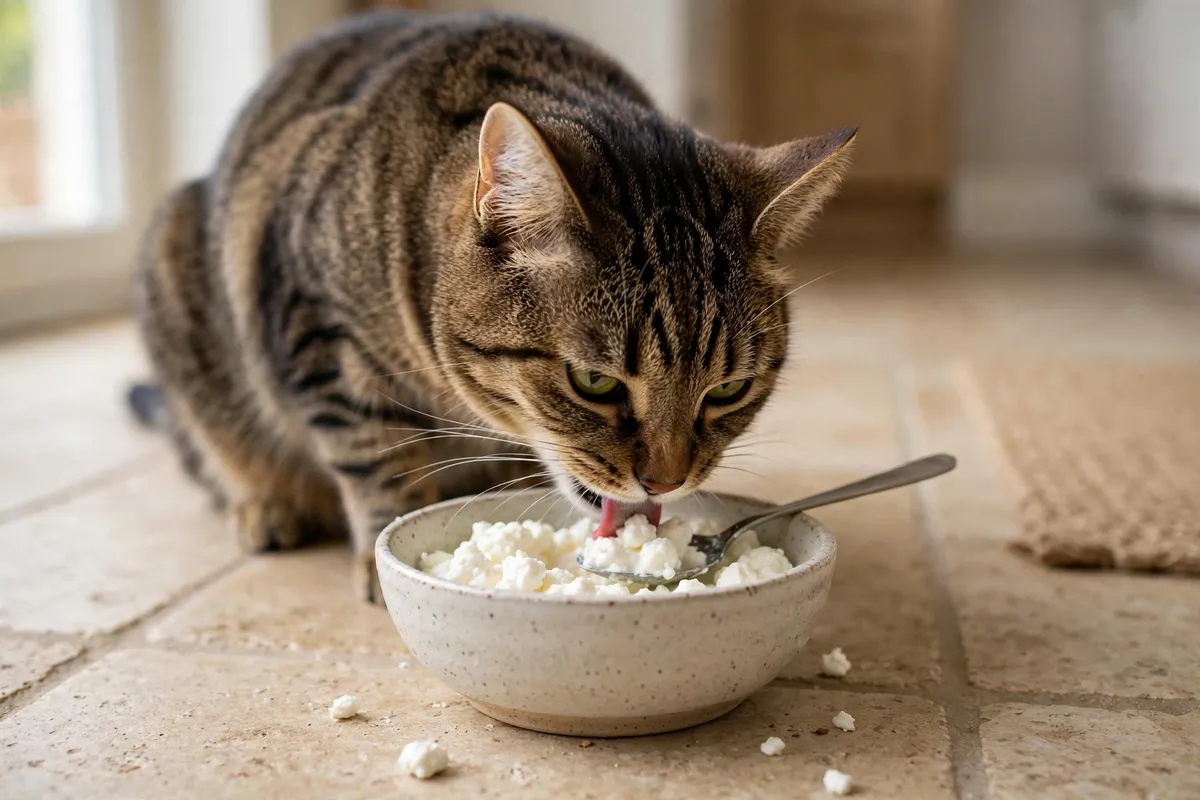
Yes — in small amounts, cottage cheese is one of the better dairy treats you can offer a cat. The verdict is caution: it is lower in lactose than most cheeses, reasonably high in protein, and not toxic in any way. A teaspoon-sized serving now and then is usually fine for a healthy adult cat. But it is still dairy, still contains fat and salt, and most adult cats are lactose intolerant — so the portion cap matters, and it is not an everyday food.
That makes cottage cheese an interesting exception. Hard cheeses like cheddar are high in fat and salt, soft cheeses can be very rich, and many are simply too much for a small cat's stomach. Cottage cheese is gentler than all of them — which is why it keeps coming up in conversations about cat treats. This guide explains why it is the least-bad cheese, how much is safe, and when to skip it entirely.
Is Cottage Cheese Safe for Cats? The Short Answer
Cottage cheese is safe for most healthy adult cats in small amounts. It is a fresh, unripened cheese made from curdled milk, and culturing breaks down much of the lactose — so a cat's stomach has far less milk sugar to deal with than it would with a glass of milk. It is also a good source of protein, the nutrient cats need most.
That said, "safe in small amounts" is doing a lot of work. Cottage cheese still contains lactose, fat, and sodium, and it is not a complete food — a treat, not a meal, never a replacement for your cat's regular food. Cats with dairy sensitivity, kidney disease, or weight problems should skip it, or only have it with a vet's approval. If your cat has never had it before, start with a tiny taste and watch for stomach upset over the next day.
Why Cottage Cheese Is the Least-Bad Cheese for Cats
Most cheeses are a poor match for cats for three reasons: lactose, fat, and salt. Cottage cheese scores better than most on all three. As a fresh cheese rather than an aged one, much of its lactose has already been broken down during culturing, leaving it lower in lactose than milk, cream, or soft cheeses. Its fat content is moderate — especially in low-fat varieties — compared with rich cheeses like brie or cheddar. And while it does contain some salt, a small serving keeps the sodium dose modest.
Compare that with the alternatives. Hard cheddar is high in fat and salt and still carries a meaningful amount of lactose. Cream cheese is very high in fat. Blue cheese contains cultures that can be risky for cats, and flavored cheeses often include garlic, onion, or chili. Cottage cheese has none of those problems — plain, mild, and relatively light. That is why vets asked about cheese for cats often point to cottage cheese first, if they point to any cheese at all. For the full cheese picture, see our guides to whether cats can eat cheese and whether cats can drink milk, and the whole Cat Food section on the Purrfect Paws homepage.
Can Kittens Eat Cottage Cheese?
Kittens should not eat cottage cheese. Even though kittens digest lactose better than adult cats, their nutritional needs are very specific — every bite should come from a complete kitten food or a treat made for kittens. Cottage cheese adds protein, but not the balanced vitamins and minerals a growing kitten needs, and it can still upset a sensitive young stomach.
There is also a practical reason to wait: kittens are small, and even a teaspoon of cottage cheese is a relatively large treat for them. For a special snack, choose a treat made for kittens and save the cottage cheese for adulthood. Once your cat is grown, a tiny taste is a reasonable way to find out whether it agrees with them.
How Much Cottage Cheese Can a Cat Eat?
Think teaspoon, not tablespoon. For a healthy adult cat, a teaspoon-sized serving — roughly a small dollop — offered occasionally is a sensible limit, enough to enjoy the taste without loading up on lactose, fat, and salt. Offer it plain, with nothing added, and do not make it a daily habit.
A few practical tips make the serving safer. Choose plain cottage cheese with no added fruit, chives, onion, garlic, or flavorings — those additions are unnecessary or actively harmful to cats. Low-fat varieties are better than full-fat ones, cutting the fat without changing the taste much. Check the label for sodium too: some brands are much saltier than others, so the lower-sodium option is kinder for your cat. If your cat eats the whole teaspoon happily with no stomach upset over the next day, you can offer the same small amount again — but resist the urge to increase the portion just because your cat wants more.
What Happens If My Cat Eats Cottage Cheese?
For most healthy adult cats, a small serving causes no trouble at all. A larger serving, or a cat very sensitive to dairy, is more likely to cause soft stools, diarrhea, or gas within a few hours. These signs usually pass within a day.
The main thing to watch for is a pattern. If your cat gets diarrhea every time it eats cottage cheese — or any dairy — its stomach does not tolerate dairy well, and the kindest choice is to stop offering it. Cats with kidney disease should also be cautious, since cottage cheese contains sodium and phosphorus, which matter for kidney health. If your cat ate cottage cheese mixed with onion, garlic, or other flavorings, call your vet — those ingredients are harmful to cats on their own, whatever the cheese underneath.
What to Do If Your Cat Already Ate Cottage Cheese
If your cat has just eaten cottage cheese, there is usually nothing to worry about — but work through these steps to be sure:
- Check what kind it was. Plain cottage cheese in a small amount is low-risk. Flavored varieties with onion, garlic, or chives are worth a call to your vet.
- Note how much they ate. A teaspoon is fine; a whole tub is a lot of dairy, fat, and salt for a small cat, and deserves a vet call.
- Offer fresh water. Put down a clean bowl of fresh water and let your cat drink freely.
- Watch for 24 hours. Look for vomiting, diarrhea, gas, lethargy, or loss of appetite. Mild, one-off stomach upset that settles quickly is usually not an emergency.
- Call your vet if needed. Call promptly if your cat ate a large amount, ate flavored cottage cheese with onion or garlic, is vomiting repeatedly, or has kidney disease or another health condition. Tell the vet what your cat ate and roughly how much.
Do not try to make your cat vomit at home, and do not give milk to settle the stomach — most adult cats are lactose intolerant, and more dairy will only make things worse.
Healthier Treats Than Cottage Cheese
Cottage cheese is the least-bad cheese, but it is still a dairy treat — and there are better options for a special snack. A small piece of plain cooked chicken or turkey is a lean, high-protein treat most cats love. A bite of plain cooked egg is another good choice. For fish lovers, a small piece of plain cooked cod or sardine offers protein and omega-3s without the dairy. Commercial cat treats are also reliable, since they are portioned and balanced for feline nutrition. Cottage cheese can stay in the rotation as an occasional change of pace — just keep the teaspoon rule, keep it plain, and let your cat's regular food do the real work.
Frequently Asked Questions
Is cottage cheese safe for cats?
Yes, in small amounts. Cottage cheese is lower in lactose than most cheeses, high in protein, and not toxic — a teaspoon-sized serving now and then is usually fine for a healthy adult cat.
Can kittens eat cottage cheese?
No. Kittens need the balanced nutrition of a complete kitten food, and cottage cheese can upset a sensitive young stomach.
How much cottage cheese can a cat eat?
A teaspoon-sized serving, offered occasionally, is a sensible limit for a healthy adult cat. Do not make it a daily habit, and always serve it plain.
Is cottage cheese better than cheddar for cats?
Yes. Cottage cheese is lower in lactose and usually lower in fat than hard cheeses like cheddar, with no risky cultures or flavorings. It is the gentlest cheese choice for cats, though the portion still matters.
What happens if my cat eats too much cottage cheese?
A large serving can cause soft stools, diarrhea, or gas, especially in a lactose-intolerant cat, usually passing within a day. Call your vet if your cat ate flavored cottage cheese with onion or garlic, or is vomiting repeatedly.