Can Cats Eat Cranberries?
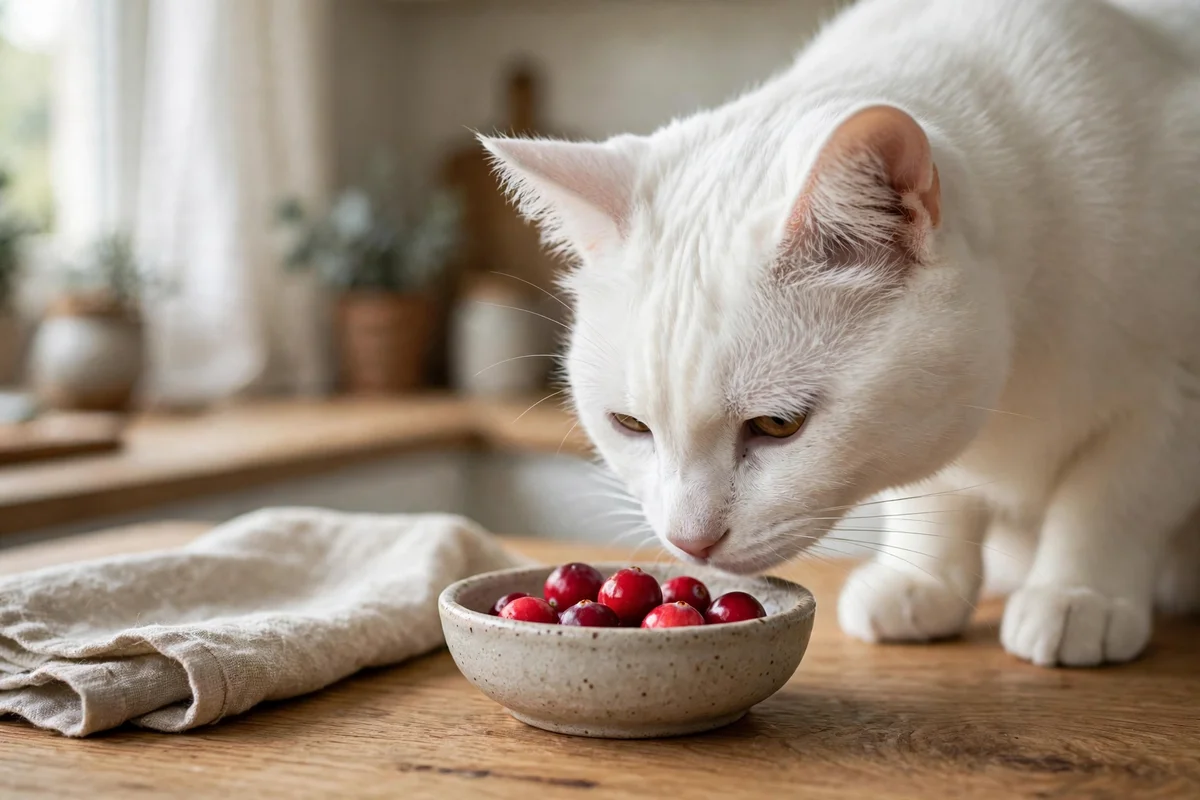
Yes, cats can eat cranberries — but only fresh, plain, unsweetened cranberries, in small amounts. That qualifier is the whole answer, because the cranberries most people have at home are not the plain kind: dried cranberries are usually coated in sugar, cranberry sauce is loaded with it, and cranberry juice is mostly sweetened water.
A few fresh cranberries, washed and cut small, make a safe occasional treat for a healthy adult cat. They are tart, low in sugar, and non-toxic — but their tartness means many cats will sniff them and walk away, and that is a perfectly fine outcome.
Are Cranberries Safe for Cats?
Fresh cranberries are not toxic to cats. They are sometimes recommended in small amounts for urinary tract support, because cranberries contain compounds that can make it harder for certain bacteria to cling to the bladder wall — though the evidence in cats is modest, and cranberries are never a treatment for a urinary infection on their own.
Nutritionally, a fresh cranberry offers vitamin C, vitamin E, fiber, and antioxidants, with very little natural sugar compared with most fruits. That low-sugar profile is genuinely good news for a cat treat. But cats are obligate carnivores and do not need fruit nutrients, so cranberries are a novelty, not a health strategy — and any cat with a urinary problem needs a vet, not a bowl of berries.
The safety of cranberries depends entirely on the form. Fresh, plain berries are safe. Dried cranberries are usually sweetened — some brands are more than half sugar by weight — and that turns a safe berry into a sugar bomb. Cranberry sauce, cranberry juice cocktail, and cranberry-flavored products are worse again, with added sugar, sweeteners, or other ingredients that have no place in a cat's diet.
Why Dried Sweetened Cranberries Are Out
Dried cranberries look harmless — small, red, and fruity — but check the packet and you will usually find sugar or fruit juice concentrate listed, often as the main ingredient after the berry itself. A small handful of sweetened dried cranberries can contain more sugar than a cat should have in a week of treats, and that sugar load can cause vomiting, diarrhea, and, over time, weight gain and dental problems.
Some dried fruit products also contain preservatives such as sulfur dioxide, and some trail mixes that include cranberries also include raisins — which are genuinely dangerous to cats, since the same unknown toxin as in grapes can damage their kidneys. That combination makes trail mix a double hazard: sweetened cranberries plus potentially toxic raisins.
The rule is simple: if the cranberries came from a packet, a sauce boat, or a juice bottle, they are not the plain berry, and they do not go to your cat. Fresh cranberries only, washed, cut small, and plain. If you cannot find fresh ones, skip cranberries altogether — your cat loses nothing.
How Much Cranberry Can a Cat Eat?
Two or three small fresh cranberries, once or twice a week at most, is plenty — and many cats will eat fewer than that, because fresh cranberries are very tart. Cut each berry in half or quarters: whole cranberries are round, firm, and just the right size to be gulped, so cutting them removes the choking risk and makes the portion smaller.
Offer a single piece the first time and watch your cat for the rest of the day. Normal appetite, normal litter box, no vomiting or soft stool means the treat agreed with them. Tartness alone can put some cats off, and a cat that spits a cranberry out is not being fussy — it is making a reasonable judgment about a very sour berry.
Cats with diabetes should skip cranberries unless their vet approves them, and even then only the fresh, unsweetened kind. The fresh berry itself is low in sugar, but diabetic diets need tight control, and a vet's guidance matters more than a general rule. Cats with sensitive stomachs should also wait until they are fully settled before trying any new treat.
How to Serve Cranberries Safely
Wash fresh cranberries under cool water, pick out any soft, shriveled, or moldy berries, and cut the good ones in half or quarters. Serve them plain and at room temperature — no sugar, no honey, no cooking them into anything. Raw and plain is the only version that counts.
Do not offer cranberry sauce, even homemade sauce made with less sugar: it is still concentrated sugar, and it often contains orange zest or other ingredients that are not cat-friendly. Do not offer cranberry juice, juice cocktail, or dried cranberries, sweetened or unsweetened — unsweetened dried berries are still concentrated and tough to digest, and sweetened ones are sugar bombs.
Throw away uneaten pieces. Cut cranberries spoil quickly at room temperature, and a cat returning to an old piece hours later is asking for stomach trouble. Fresh each time, small each time, and then done.
Can Kittens Eat Cranberries?
Kittens should stick to kitten food. Their growth depends on precisely balanced nutrition, and tart fruit is a poor addition to a young, sensitive stomach. There is also a practical reason: whole cranberries are round and firm, and a kitten's small mouth makes the choking risk higher than it is for an adult.
Once a cat is an adult, a piece or two of fresh cranberry as a rare treat is reasonable. The kitten months pass quickly, and there will be plenty of time later for a cautious taste. If a kitten has already eaten a small piece with no ill effects, there is no need to panic — just save future berries for adulthood.
What Happens If My Cat Eats Too Many Cranberries?
Too many fresh cranberries usually mean a short bout of stomach upset: soft stool, diarrhea, or occasional vomiting as the gut reacts to the tartness and fiber. This generally settles within a day once the berries have passed, provided the cat keeps drinking water and eating normally otherwise.
The situation is more serious if your cat ate sweetened dried cranberries, cranberry sauce, or a product containing xylitol. A large sugar load can cause vomiting and diarrhea, and concentrated xylitol is a genuine emergency for cats. If your cat ate anything listing xylitol, call your vet immediately and bring the packaging if you can.
Also be careful if your cat raided a trail mix or a fruitcake: those often contain raisins alongside cranberries, and raisins are toxic to cats even in small amounts. If raisins may have been eaten, call your vet right away — do not wait for symptoms.
When to Call the Vet
Call your vet if vomiting or diarrhea lasts more than 24 hours, if you see blood in vomit or stool, or if your cat becomes lethargic, hides, or refuses food and water. Call immediately if your cat may have eaten raisins, a product listing xylitol, or a large quantity of sweetened cranberry products.
Cats with urinary problems deserve a special note: cranberries are sometimes talked about as urinary support, but they are not a treatment. If your cat is straining to urinate, passing blood, or visiting the litter box constantly, that is a veterinary matter — sometimes an emergency, especially in male cats — and no berry will fix it.
Do Cats Actually Need Cranberries?
No. Cats are obligate carnivores, and a complete, balanced cat food already gives them everything they need. Cranberries add nothing essential, and their urinary reputation is modest and unproven in cats. Their value is as a rare, low-sugar novelty — and many cats will decline them on tartness alone, which is fine.
If your cat enjoys a piece or two now and then, that is a lovely extra. If your cat sniffs a cranberry and walks away, nothing is lost — offer a piece of plain cooked chicken instead, which your cat's biology actually values. Either way, fruit stays a footnote to a meat-based diet.
Are cranberries toxic to cats?
No. Fresh, plain cranberries are non-toxic to cats. The safe portion is two or three small berries, cut up, once or twice a week at most.
Can cats eat dried cranberries?
No. Most dried cranberries are coated in sugar, making them sugar bombs, and some contain preservatives. Only fresh, unsweetened cranberries count.
Can cats drink cranberry juice?
No. Cranberry juice cocktail is mostly sweetened water, and even pure juice is far too tart and concentrated for a cat's stomach.
Can kittens eat cranberries?
Kittens should stick to kitten food. Save fruit treats for adulthood, when a piece or two of fresh cranberry as a rare treat is reasonable.
Do cranberries help a cat's urinary tract?
The evidence in cats is modest, and cranberries are never a treatment for a urinary infection. A cat with urinary symptoms needs a vet, not berries.