Can Cats Eat Garlic?
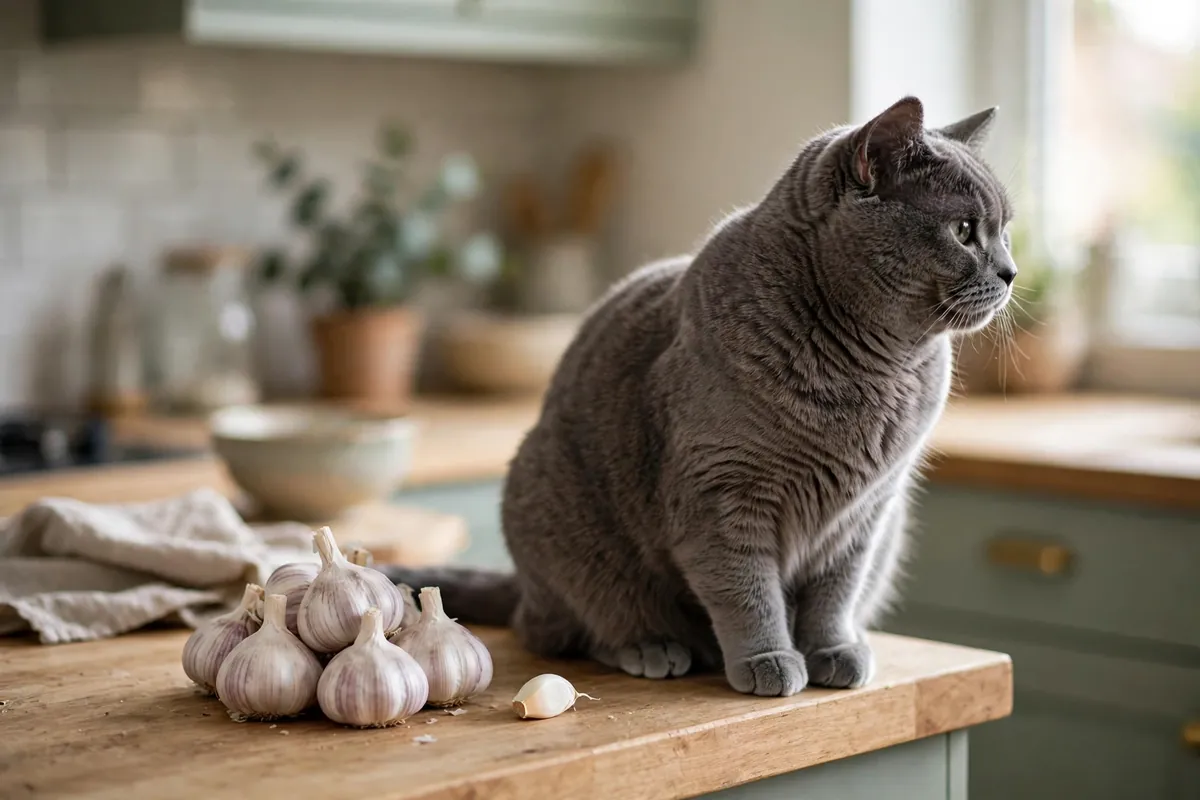
The Short Answer: No — Garlic Is Toxic to Cats
No. Garlic is toxic to cats, and there is no safe amount to offer. Garlic damages a cat's red blood cells and can cause anemia, and it is more concentrated than onion, so a smaller amount can do the same damage. You may have heard that a tiny bit of garlic is fine, or even good, for cats — that is a myth. Repeated small doses add up over time, quietly damaging red blood cells until your cat becomes unwell. Keep reading for why the "small amount is fine" idea is wrong, what the warning signs look like, and what to do if your cat eats garlic.
Is Garlic Safe for Cats?
No, garlic is not safe for cats in any form. Fresh garlic, cooked garlic, garlic powder, garlic salt, and garlic oil are all toxic. Cooking does not make garlic safe — the harmful compounds survive heat — and neither does drying it into a powder. A cat's body cannot break these compounds down the way a human body can, so they attack the red blood cells.
Garlic is part of the Allium family, along with onion, chives, leeks, and shallots, and all of them share the same problem. Garlic is the most concentrated of the family, which means it takes less garlic than onion to cause the same damage. That is why a clove of garlic, or even a spoonful of garlic sauce, deserves a call to the vet.
Why Is Garlic Toxic to Cats?
Garlic contains sulfur compounds that damage a cat's red blood cells. When these compounds enter the bloodstream, they break down the red blood cells in a process called oxidative damage. The damaged cells cannot carry oxygen properly, and the body removes them faster than it can replace them.
The result is anemia — too few healthy red blood cells — and it can develop slowly. A cat can seem fine on the day it eats garlic and become unwell days later, as the damaged cells are cleared away. Cats are more sensitive to this damage than dogs, which is why even small amounts matter.
The "Small Amount Is Fine" Myth
The most dangerous idea about garlic is that a little bit is harmless. Some owners add a small amount of garlic to their cat's food, believing it helps with fleas or worms. It does not — there is no evidence that garlic works as a flea treatment for cats, and the risk is real.
The problem with small amounts is that the damage adds up. Each dose harms a few more red blood cells, and the body needs time to replace them. A cat given garlic regularly may not show symptoms for weeks, because the damage builds slowly, and by the time the cat looks unwell, the anemia is already serious. The safe amount of garlic for a cat is none.
Can Kittens Eat Garlic?
No. Kittens should never eat garlic in any form. A kitten is smaller and still developing, so the same amount of garlic that might only worry an adult cat can be a bigger problem for a kitten. A kitten has fewer red blood cells to spare, and its liver is less able to handle harmful compounds.
Keep garlic away from kittens completely, including foods that contain garlic powder or garlic flavoring. Some meat-based baby foods contain garlic or onion powder, and owners sometimes offer them to kittens — always read the label first. When in doubt, stick to food made for kittens, and ask your vet before sharing any human food.
What Happens If My Cat Eats Garlic?
A cat that eats garlic may show stomach upset first — vomiting, diarrhea, drooling, or a loss of appetite. The more serious signs come from the damage to the red blood cells: weakness, lethargy, pale gums, a faster heartbeat, and trouble breathing. Some cats hide and stop eating, which is easy to mistake for a cat having a quiet day.
Symptoms may not appear right away. Stomach upset can show up within a day, but the signs of anemia often take a few days to develop. That is why you should not wait for symptoms before calling the vet. If you know your cat ate garlic, call your vet the same day and describe how much and in what form.
How Much Garlic Can a Cat Eat?
No amount of garlic is safe for a cat. There is no safe portion, no safe form, and no safe frequency. A single small taste is unlikely to cause serious harm in a healthy adult cat, but it is still worth a call to your vet, because you cannot tell from the outside how much damage has been done.
The danger is in repetition. A cat that gets a lick of garlic sauce today, a bite of seasoned meat tomorrow, and a taste of marinade the next day is building up damage with every exposure. Because garlic is more concentrated than onion, it takes less of it to add up. That is why the answer is not "a little is fine" but "none at all".
Where Garlic Hides: Foods to Check
Most garlic poisoning in cats comes from foods that contain garlic as an ingredient, not from a clove on the counter. Garlic powder is one of the most common seasonings in human food, and it appears in sauces, marinades, spice blends, stock cubes, soup, ready meals, and takeaway food.
Read the label every time before sharing human food with your cat. Look for garlic, garlic powder, garlic salt, and garlic extract. Check spice blends and seasoning mixes too — garlic powder is often listed near the end of the ingredients, where it is easy to miss. If the label lists garlic in any form, do not offer the food to your cat, even if the garlic is only a small part of the recipe.
Be careful with foods cooked with garlic and then removed, and with "garlic flavor" on a label — the harmful compounds have already soaked into the food, and garlic flavor usually means garlic powder or extract was used. The same caution applies to some natural pet products: a few flea and worm remedies contain garlic, and they should never be given to cats without your vet's approval.
What to Do If Your Cat Eats Garlic
If your cat eats garlic, call your vet right away — do not wait for symptoms. Tell them what your cat ate, how much, what form it was in, and when it happened. Your vet may ask you to bring your cat in, or may ask you to watch for symptoms at home.
Do not try to make your cat vomit at home unless your vet tells you to. Home remedies can do more harm than good. Keep your cat calm, offer fresh water, and keep any packaging or leftovers so you can tell the vet exactly what was eaten. If your cat shows pale gums, weakness, or trouble breathing, treat it as an emergency.
Safe Treats Instead of Garlic-Flavored Food
Cats do not need garlic, and they do not miss it. If you want to share a treat, offer plain cooked chicken, a small piece of cooked fish, or a cat-safe vegetable such as a few shreds of romaine lettuce or a small piece of cooked pumpkin. Keep the treat plain — no seasoning, no sauce, no garlic or onion.
For flavor, cats respond to the smell of warm meat and fish, not to seasoning. A little warm, plain chicken is far more exciting to a cat than a seasoned dish, and it carries none of the risk. Keep treats small and occasional, and let your cat's regular cat food do the real nutritional work. For more ideas, see our Cat Food guides and the Purrfect Paws home page.
Garlic is toxic to cats in every form, and the "small amount is fine" idea is a myth — repeated small doses damage red blood cells over time until your cat becomes anemic. Garlic hides in sauces, spice blends, and ready meals, so read labels and keep seasoned human food out of your cat's bowl. If your cat eats garlic, call your vet the same day.
Can cats eat garlic?
No. Garlic is toxic to cats in every form — fresh, cooked, powdered, or as an oil. It damages red blood cells and can cause anemia.
Is garlic safe for cats in small amounts?
No. Small amounts are not safe, because the damage adds up over time. Regular small doses can lead to anemia even when a single taste seems harmless.
Can kittens eat garlic?
No. Kittens are more vulnerable because of their small size and developing bodies. Keep garlic and garlic powder away from them completely.
What happens if a cat eats garlic?
Stomach upset such as vomiting or diarrhea may come first, followed by signs of anemia — pale gums, weakness, and lethargy — which can take days to appear. Call your vet the same day.
Is garlic powder toxic to cats?
Yes. Garlic powder is just as toxic as fresh garlic, and it is one of the most common hidden sources, found in sauces, spice blends, and ready meals.
What should I do if my cat eats garlic?
Call your vet right away and describe what your cat ate and how much. Do not try to make your cat vomit at home unless your vet tells you to.