Can Cats Eat Avocado?
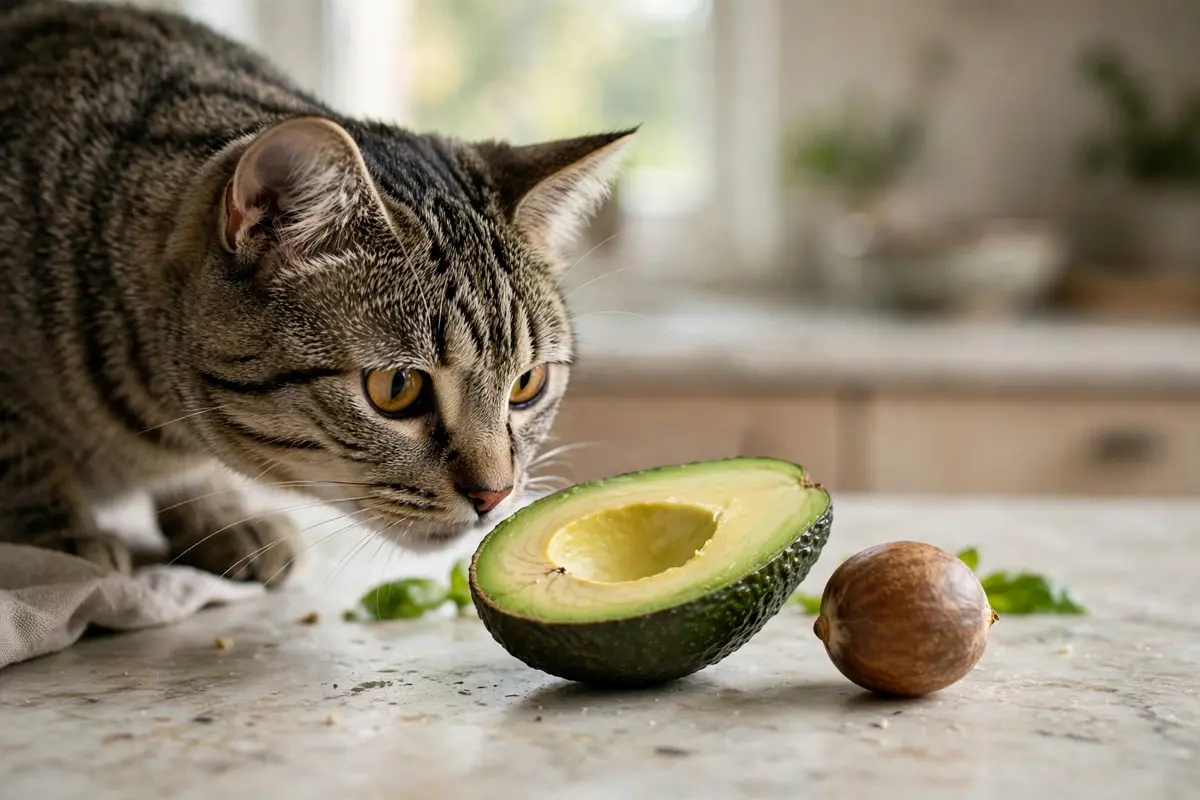
No, cats should not eat avocado. The ASPCA lists avocado as toxic to cats, and the verdict from most veterinarians is clear: keep it off your cat's menu entirely. Avocado contains a compound called persin, concentrated in the skin, pit, and leaves, that can make cats seriously ill. The flesh itself is where the disagreement lives — some sources call a small taste low-risk, while others point out that the ASPCA's toxic listing covers the whole fruit.
Avocado is everywhere in human kitchens right now, so it is easy to see why cat parents ask the question. But cats are obligate carnivores, built to run on animal protein and fat, not plant foods. Avocado adds no nutrition a cat cannot get better from its regular food, and it carries risks that other fruits simply do not.
Why Is Avocado Unsafe for Cats?
The main concern is persin, a natural toxin found in avocado trees. Persin is present throughout the plant, but it is most concentrated in the leaves, bark, skin, and pit. In birds, horses, and livestock, persin poisoning can be severe, causing fluid to build up around the heart and lungs. Cats and dogs are generally less sensitive than birds, but the ASPCA still lists avocado as toxic to cats, and most veterinary guidance treats it as a food to avoid.
In cats, eating avocado can cause vomiting, diarrhea, and stomach pain. Larger amounts, or eating the skin and pit, raise the risk of more serious problems, including difficulty breathing and fluid collecting around the heart. There is also a mechanical danger: the pit is large, hard, and slippery, and a cat that swallows one whole can develop a blockage in the gut, which is a surgical emergency. Avocado leaves are toxic too, so keep indoor plants out of reach.
The Flesh Debate: Is the Soft Part Safe?
Here is where honest sources part ways, and you deserve the full picture. The flesh of a ripe avocado contains much lower levels of persin than the skin, pit, or leaves. Some veterinary toxicology references describe small amounts of avocado flesh as unlikely to cause serious poisoning in cats and dogs. Other veterinary organizations, including the ASPCA, do not make that distinction and list avocado as toxic to cats without carving out an exception for the flesh.
So what should a careful cat parent do with that disagreement? Weigh what is at stake against what is gained. Avocado flesh is extremely high in fat, and even a small portion adds a lot of calories, which can trigger stomach upset and, in a cat prone to weight gain or pancreatitis, more serious trouble. It offers no vitamin or mineral that a complete cat food does not already provide, so the cautious choice is to skip it.
Guacamole Is Even Riskier Than Plain Avocado
If plain avocado is a no, guacamole is a hard no. Store-bought and homemade guacamole almost always contains ingredients that are dangerous to cats on their own. Onion and garlic are toxic to cats and can damage their red blood cells, even in small amounts. Salt in larger quantities can cause salt poisoning, lime juice is acidic and irritating, and chili peppers can cause severe stomach upset. A spoonful of guacamole combines several risks at once, and the avocado base makes it no better.
Guacamole often sits out at parties, where a cat can help itself while nobody is watching. Keep bowls on high surfaces and clear them away promptly. If your cat licks guacamole, treat it as an avocado exposure plus a possible onion or garlic exposure, and call your vet.
What Happens If My Cat Eats Avocado?
A single small lick of ripe avocado flesh may cause no symptoms at all, or a bout of vomiting or loose stool within a few hours. Many cats recover on their own with fresh water and plain meals, but watch your cat closely for at least a day after any exposure.
Call your vet promptly if your cat ate the pit, skin, or leaves, ate a large amount of flesh, or ate guacamole. Also call right away if you notice repeated vomiting, diarrhea that lasts more than a day, drooling, weakness, difficulty breathing, or a refusal to eat or drink. A swallowed pit is an emergency even before symptoms appear, because a blockage can develop over hours.
Can Kittens Eat Avocado?
No. A kitten's small body means even a small amount of persin or fat hits harder, and a kitten's gut is far more sensitive to rich, fatty foods than an adult cat's. Kittens are also enthusiastic chewers who may swallow a piece of pit or skin, and a pit that might pass through a large adult cat can easily block a kitten's narrow gut.
Kittens need a kitten-formulated food and nothing else while they grow. There is no developmental stage at which avocado becomes a good idea for a cat — this is a lifelong no, not a wait-until-adult situation.
What to Do If Your Cat Eats Avocado
Stay calm and act in this order. First, remove any remaining avocado, pit, skin, or guacamole from your cat's reach. Second, check what was eaten and how much — flesh only, or pit and skin as well — and whether it was plain avocado or guacamole with onion and garlic. Third, call your vet or an emergency animal poison line and describe exactly what happened. The part eaten matters more than the amount: flesh alone is usually a monitor-at-home situation, while pit, skin, leaves, or guacamole deserves a prompt call.
While you wait for advice, offer fresh water and keep your cat's meals plain and light. Do not try to induce vomiting at home unless a veterinarian tells you to — forcing vomiting can do more harm than good, especially if a pit is involved. Do not give milk, oil, or home remedies. If your vet asks you to bring your cat in, bring a sample of what was eaten if you safely can.
Safe Treats to Offer Instead of Avocado
Your cat does not need avocado to enjoy a treat. A bite of plain cooked chicken or turkey, a small piece of cooked salmon, or a few licks of plain pumpkin puree are all better choices, and small pieces of blueberry, seedless watermelon, or banana are safe in moderation. Commercial cat treats are the simplest option — portioned, balanced, and designed for a cat's digestion. Keep treats to about ten percent of daily calories.
The honest answer on avocado is a clear no. The ASPCA lists it as toxic, persin is concentrated in the skin, pit, and leaves, the flesh is debated but high in fat and offers nothing a cat needs, and guacamole adds onion and garlic to the mix. Keep avocado, pits, and guacamole out of your cat's reach, and if your cat does eat some, note which part and how much, then call your vet.
Can cats eat avocado?
No. Avocado is unsafe for cats — the ASPCA lists it as toxic because of persin, concentrated in the skin, pit, and leaves. The safest choice is to offer none at all.
Is avocado flesh safe for cats?
Vets disagree. The flesh contains far less persin than the skin or pit, and some sources call small amounts low-risk, but the ASPCA still lists avocado as toxic to cats.
Is guacamole dangerous for cats?
Yes — guacamole is riskier than plain avocado because it often contains onion, garlic, salt, lime juice, and chili, all of which are harmful to cats on their own.
What happens if my cat eats avocado?
A small taste of flesh may cause no symptoms or mild vomiting and diarrhea. Eating the pit can block the gut, and larger amounts raise the risk of breathing difficulty. Call your vet if your cat ate pit, skin, or a large amount.
Can kittens eat avocado?
No. Kittens are smaller and far more sensitive to toxins and choking hazards. Avocado is a lifelong no for cats of any age.
What should I do if my cat eats avocado?
Remove the rest, note which part was eaten and how much, and call your vet — right away if it was the pit, skin, or guacamole.