Can Cats Eat Grapefruit?
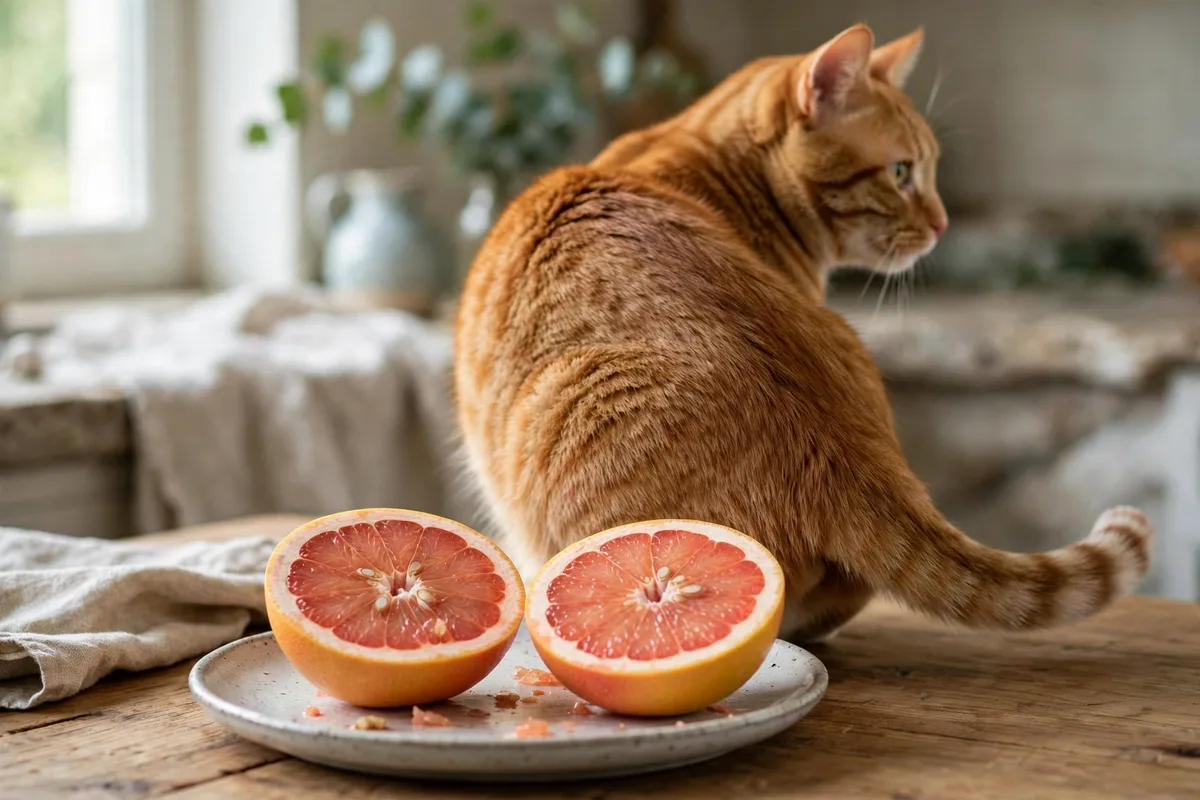
No, cats should not eat grapefruit. Grapefruit is unsafe for cats, and it carries an extra warning that other citrus fruits do not: compounds in grapefruit can interfere with how medicines are broken down, which matters a great deal for a cat on long-term medication. On top of that, grapefruit contains the same citrus essential oils and acids that make all citrus risky for cats, concentrated worst in the peel, pith, and seeds.
Most cats turn away from grapefruit on their own — the smell is strong, bitter, and unappealing to a feline nose — and that instinct is worth trusting. Cats are obligate carnivores, built to run on animal protein, and grapefruit offers them nothing they need. When a fruit combines gut irritation, nervous-system risk, and a medication interaction, the honest answer is a simple, permanent no.
Why Is Grapefruit Unsafe for Cats?
Grapefruit contains essential oils — including limonene — plus citric acid and related compounds that cats handle poorly. Cats lack some of the liver enzymes that other animals use to break down these plant compounds, which is one reason citrus hits them harder than it hits humans or dogs. Eating grapefruit can cause vomiting, diarrhea, drooling, and stomach pain, and larger amounts or concentrated oils can cause weakness, trembling, difficulty walking, or collapse.
The peel, pith, and seeds concentrate the risk. Grapefruit peel is thick and rich in essential oils, the bitter white pith is harsh on the stomach, and the large seeds add a choking hazard. Grapefruit juice is no safer: it is acidic and sugary, and it delivers the irritating compounds and the medication-interacting compounds in liquid form. Grapefruit-flavored products, grapefruit oil, and citrus-scented cleaners deserve the same caution.
The Medication Warning: Grapefruit's Extra Risk
Grapefruit is famous in human medicine for interacting with drugs: compounds called furanocoumarins can block enzymes in the gut and liver that break down many medicines, which means a drug can build up to higher levels than intended — or, for some drugs, work less well. That interaction is well documented in people, and the same enzyme-blocking effect is a real concern for cats on medication, even though feline-specific dosing studies are limited.
The practical message is straightforward. If your cat takes any long-term medication — for thyroid disease, heart disease, blood pressure, seizures, anxiety, or anything else — grapefruit is doubly off the menu, and you should mention any accidental exposure to your vet promptly, because it could affect how that day's dose behaves. Even for a cat on no medication, the citrus oils and acids alone are enough to rule grapefruit out. The medication angle simply turns a no into an emphatic no.
Hidden Grapefruit Exposures to Watch For
The most common grapefruit accident is a segment or half left on a breakfast table, a peel in an open kitchen bin, or grapefruit juice in a glass that a cat investigates. Grapefruit halves are large and stable, which makes them easy for a cat to nose into, and the thick peel is an appealing object to bat and chew. Keep grapefruit in a closed container in the fridge, dispose of peels in a closed bin, and never leave a grapefruit half unattended on a table a cat can reach.
Grapefruit-scented household products are a quieter exposure. Grapefruit oil in cleaning sprays, air fresheners, potpourri, and some pet shampoos can irritate cats through skin contact or inhalation, and cats groom themselves, so anything on their fur ends up ingested. If you use grapefruit-scented products, keep cats out of the room until surfaces are dry, and never use citrus essential oils directly on a cat or its bedding.
Symptoms of Grapefruit Trouble in Cats
After eating grapefruit, watch for drooling, vomiting, diarrhea, stomach gurgling, or a refusal to eat — the usual signs of gut irritation, often appearing within a few hours. For a small nibble of flesh, these usually resolve on their own with fresh water and plain meals, but they are still a sign the food disagreed with your cat. If your cat is on medication, mention the exposure to your vet even if no symptoms appear, because of the interaction risk.
More serious signs need a vet right away: weakness, trembling, difficulty walking, collapse, skin irritation after contact with grapefruit oil, or vomiting and diarrhea that last more than a day or include blood. Concentrated grapefruit oil exposure is more dangerous than a nibble of flesh and should always be treated as urgent. Call your vet or an emergency animal poison line and describe exactly what was eaten or contacted and how much.
Can Kittens Eat Grapefruit?
Absolutely not. Kittens are smaller, more sensitive to toxins, and more likely to chew on novel objects like peels. Kittens should stick to kitten food, full stop. There is no age at which grapefruit becomes a good idea for a cat — this is a lifelong no, not a wait-until-adult situation.
What to Do If Your Cat Eats Grapefruit
Stay calm and remove any remaining grapefruit, peel, or pith from your cat's reach so it cannot eat more. Note what was eaten and how much — flesh, peel, seeds, or juice — and, importantly, whether your cat takes any medication, because that detail changes how urgently your vet will want to hear from you. For a small nibble of flesh in a cat on no medication with no symptoms, monitoring at home with fresh water and plain meals is usually reasonable, but call your vet if you are unsure.
Call your vet or an emergency animal poison line right away if your cat ate peel or a larger amount, contacted concentrated grapefruit oil, takes any medication, or shows vomiting, diarrhea, weakness, or trembling. Do not try to induce vomiting at home unless a vet tells you to, and do not offer milk or home remedies. If your vet asks you to bring your cat in, bring a sample of what was eaten if you safely can.
Grapefruit is a clear no for cats, with an extra reason on top: citrus oils and acids irritate the gut and nervous system, the peel and pith concentrate the risk, and grapefruit compounds can interfere with medicines. That combination leaves no case for serving it. Keep grapefruit, peels, and grapefruit-scented products out of your cat's reach, tell your vet about any accidental exposure if your cat takes medication, and choose a safer treat instead.
Can cats eat grapefruit?
No. Grapefruit is unsafe for cats — citrus essential oils and acids irritate the gut and nervous system, and the peel, pith, and seeds are the worst parts.
Why is grapefruit worse than other citrus for cats on medication?
Grapefruit compounds can block enzymes that break down many medicines, so a drug can build up to higher levels than intended. Cats on medication should never be given grapefruit.
Is grapefruit juice safe for cats?
No. Grapefruit juice is acidic and delivers both the irritating compounds and the medication-interacting compounds in liquid form.
Are grapefruit peels dangerous for cats?
Yes. The thick peel is rich in citrus essential oils and is the most dangerous part of the fruit. Keep peels in a closed bin.
What should I do if my cat eats grapefruit?
Remove the rest, note what and how much was eaten and whether your cat takes medication, and call your vet if peel or a large amount was involved or your cat is medicated.
Can kittens eat grapefruit?
No. Kittens are smaller and more sensitive to toxins. Grapefruit is a lifelong no for cats of any age.