Can Cats Eat Ice Cream?
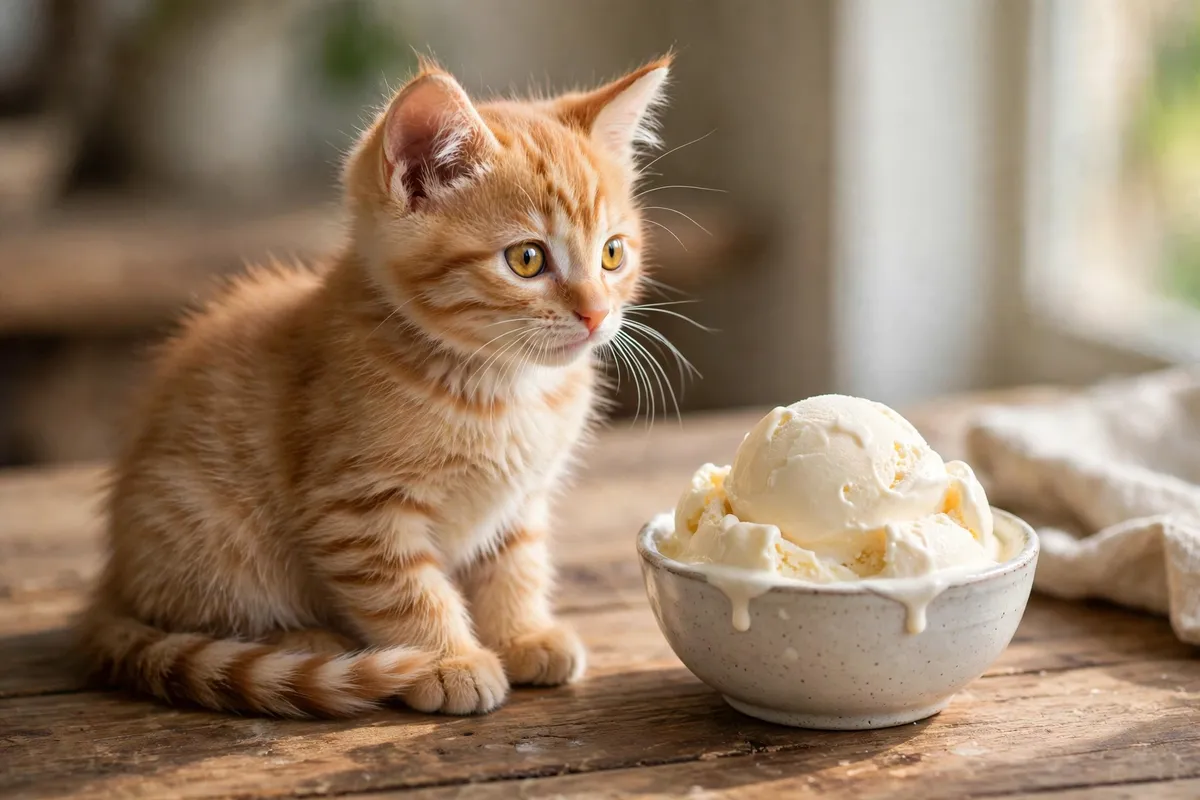
Yes, most healthy adult cats can have a tiny lick of plain ice cream without coming to harm — but ice cream is a caution food, not a safe treat. Most adult cats are lactose intolerant, so the milk and cream can upset their stomach, and the sugar and fat add nothing your cat needs. An occasional tiny taste of plain ice cream is usually fine, but a bowl is too much, and sugar-free ice cream can be genuinely dangerous.
In this guide, we explain why ice cream is tricky for cats, which types carry the most risk, how much is too much, and what to do if your cat gets into a tub when you are not looking. We also cover the hidden danger most owners miss completely: sugar-free ice cream sweetened with xylitol.
The Verdict: Can Cats Eat Ice Cream?
Verdict: CAUTION. Plain ice cream is not toxic to cats in tiny amounts, but it is not a good food for them either. A teaspoon-sized lick of plain vanilla ice cream, offered once in a while, is unlikely to hurt a healthy adult cat. That is the most ice cream should ever be — a rare, tiny taste, never a regular snack and never a bowlful.
Dairy-free ice cream made from coconut or oat milk is usually a better choice, because it skips the lactose problem, but it is still sugary and fatty, so the same tiny-portion rule applies. Sugar-free ice cream is the one type to keep completely away from cats, because some sugar-free products contain xylitol, a sweetener that is dangerous for pets.
Why Ice Cream Is Hard on Cats
The first problem is lactose. Kittens produce plenty of lactase, the enzyme that digests milk sugar, but most cats produce far less of it as adults. That is why so many adult cats are lactose intolerant: milk, cream, and ice cream can ferment in the gut and cause gas, soft stools, or diarrhea a few hours after eating.
The second problem is sugar. Cats have no real need for sugar, and they cannot even taste sweetness the way we do — it only adds empty calories that contribute to weight gain. The third problem is fat: ice cream is rich and fatty, and rich foods can trigger stomach upset and, in sensitive cats, inflammation of the pancreas.
The Hidden Danger: Sugar-Free Ice Cream and Xylitol
Xylitol, also sold as birch sugar, is a sugar substitute used in many sugar-free and "keto" ice creams, as well as in sugar-free gum, mints, and peanut butter. In dogs, xylitol is known to be highly toxic. In cats, the effects are less studied, but veterinarians advise treating it as dangerous for cats too — there is no safe dose to experiment with.
Xylitol hides in plain sight: labels may list it as xylitol, birch sugar, birch bark extract, or E967. Products marketed as "sugar-free," "no sugar added," "keto-friendly," or "diabetic-friendly" are the most likely to contain it. The rule is straightforward: if a tub says sugar-free and you cannot confirm the sweetener, keep it away from your cat entirely.
Is Ice Cream Safe for Cats?
Plain vanilla ice cream is the least risky flavor, and even that is only safe in a tiny amount for a healthy adult cat. Chocolate ice cream is out — chocolate contains theobromine, which cats cannot process well. Coffee and mocha flavors are out because caffeine is a problem, and flavors with nuts, raisins, or cookie dough add choking hazards and ingredients that are toxic or hard to digest.
Frozen yogurt is not a safer swap: it is usually lower in fat but still contains lactose and just as much sugar, and sugar-free frozen yogurt carries the same xylitol risk. Dairy-free ice creams made from coconut, oat, or almond milk avoid the lactose issue, which makes them the gentlest option — but always check the label for xylitol first, and keep the portion just as small.
Can Kittens Eat Ice Cream?
No — kittens should not have ice cream at all. Kittens have small, sensitive stomachs and very specific nutritional needs, and ice cream gives them sugar and fat while taking up room meant for kitten food. Even though kittens digest lactose better than adults, the sugar and richness can still cause diarrhea, and diarrhea dehydrates a small kitten fast.
If your kitten is begging while you eat ice cream, offer a kitten-appropriate treat instead, or simply let them sniff the spoon and move on. There is no age at which ice cream becomes a good idea — at most, a healthy adult cat can have a rare tiny taste. Kittens do not need it, and they will not miss it.
How Much Ice Cream Can a Cat Eat?
If you decide to share, keep it to a teaspoon-sized lick of plain vanilla ice cream, once in a while — not daily, and never a bowl. Let a small spoonful soften slightly first, and serve it in their own bowl rather than letting them eat from your tub.
Watch what happens over the next 12 to 24 hours. If your cat develops soft stools, gas, or vomiting after even a small taste, their stomach does not tolerate dairy, and ice cream should stay off the menu. Many cats show no interest in ice cream at all once they taste it — cats cannot taste sweetness — so if yours walks away, let them.
What Happens If My Cat Eats Ice Cream?
For most cats, eating a small amount of plain ice cream leads to nothing worse than mild stomach upset: a bit of gas, a soft stool, or a single episode of vomiting within a few hours. These signs usually pass on their own within a day. Offer fresh water and their normal food, and skip any more treats until their stomach settles.
The picture changes if the ice cream was sugar-free or chocolate. After xylitol, watch for vomiting, weakness, wobbliness, or collapse — treat these as an emergency and call your vet immediately. After chocolate ice cream, watch for restlessness, vomiting, and rapid breathing. A large amount of any ice cream, or ice cream eaten by a kitten, a senior, or a cat with a health condition, is also a reason to call your vet.
What to Do If Your Cat Already Ate Ice Cream
Stay calm and work through these steps:
- Take the bowl away so your cat cannot keep eating, and note how much is missing.
- Check the tub and the flavor. Was it plain vanilla, or sugar-free, chocolate, coffee, or nut-flavored? Look for xylitol, birch sugar, or E967 on the label.
- Do not try to make your cat vomit. Never induce vomiting at home unless your vet specifically tells you to.
- Offer fresh water and let your cat rest. Skip the next treat and feed their normal food when they are ready.
- Watch for 24 hours. Mild soft stools or one vomit usually settle on their own.
- Call your vet right away if the ice cream was sugar-free or chocolate, if your cat ate a large amount, if your cat is a kitten, or if you see weakness, wobbliness, repeated vomiting, or refusal to drink.
For more dairy guidance, see our guides to whether cats can drink milk and whether cats can eat cheese, or browse the full Cat Food section on the Purrfect Paws homepage.
Frequently Asked Questions
Is ice cream safe for cats?
Plain ice cream in a tiny amount is usually tolerated by healthy adult cats, but it is not recommended — most adult cats are lactose intolerant, and ice cream is sugary and fatty. Sugar-free ice cream is the real danger: some brands contain xylitol, which is toxic to pets.
Can kittens eat ice cream?
No. Kittens should not have ice cream. Their small stomachs are sensitive, the sugar and richness can cause diarrhea, and diarrhea dehydrates kittens quickly. Stick to food made for kittens.
Can cats eat vanilla ice cream?
Plain vanilla is the least risky flavor, because it avoids chocolate, coffee, nuts, and raisins. Even so, only a teaspoon-sized lick once in a while for a healthy adult cat — and if your cat gets soft stools afterward, skip it in future.
What happens if my cat eats ice cream?
Most cats get mild stomach upset — gas, a soft stool, or a single vomit — which passes within a day. Sugar-free ice cream with xylitol or chocolate ice cream is more serious: watch for weakness or wobbliness and call your vet immediately.
Can cats eat dairy-free ice cream?
Dairy-free ice cream made from coconut or oat milk avoids the lactose problem, so it is gentler on the stomach. It is still sugary and fatty, so keep the portion tiny and always check the label for xylitol first.