Can Cats Eat Limes?
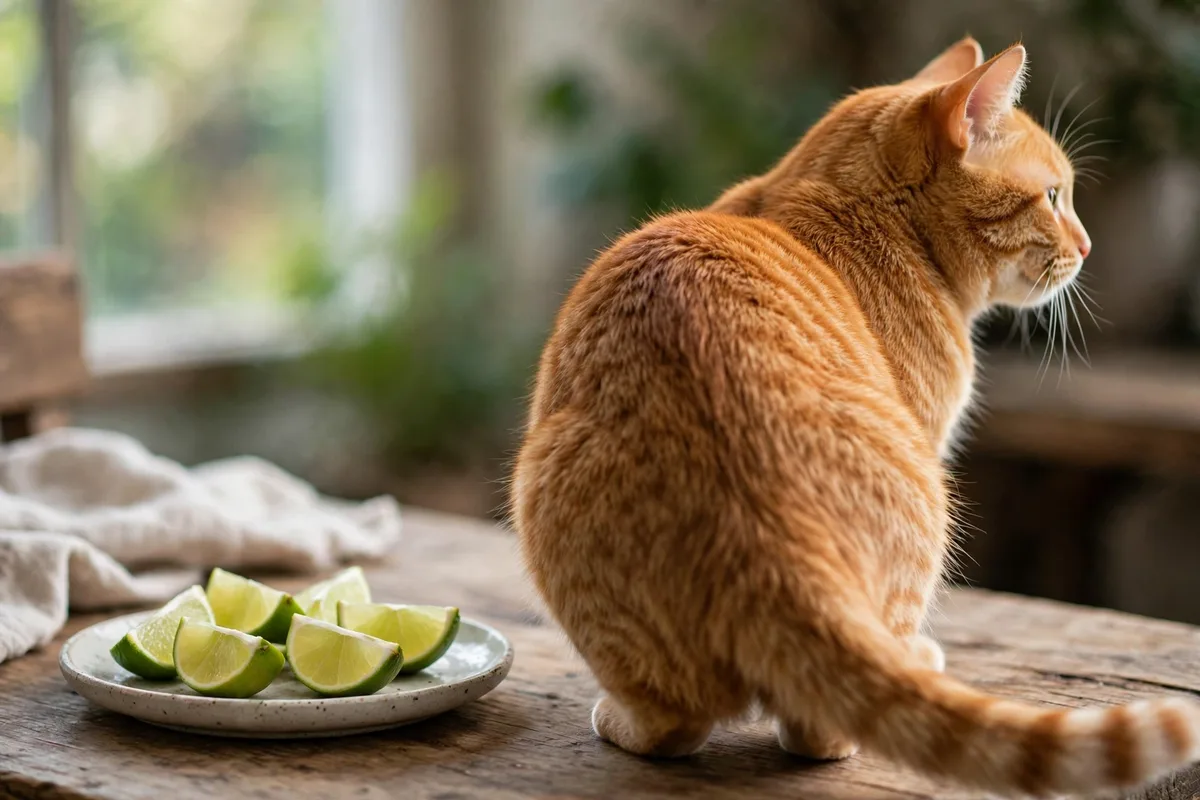
No, cats should not eat limes. Limes are unsafe for cats, for the same reasons lemons and oranges are: citrus essential oils and acids that irritate a cat's gut and nervous system, concentrated worst in the peel. The flesh, the juice, the seeds, and the peel are all off the menu, and lime-flavored products and lime-scented household items deserve the same caution.
Limes earn a special warning for one practical reason: they show up as garnishes. A lime wedge perched on the rim of a drink glass, squeezed into a dish, or left on a bar counter is exactly the kind of small, accessible object a curious cat investigates — and a cat that bats a wedge onto the floor and chews it gets a concentrated dose of citrus oils from the peel. Cats are obligate carnivores, built to run on animal protein, and a lime offers them nothing but irritation. Keep limes out of reach, garnish included.
Why Are Limes Unsafe for Cats?
Limes contain essential oils — including limonene and linalool — plus citric acid and related compounds that cats handle poorly. Cats lack some of the liver enzymes that other animals use to break down these plant compounds, which is one reason citrus hits them harder than it hits humans or dogs. Eating lime can cause vomiting, diarrhea, drooling, and stomach pain, and larger amounts or concentrated oils can cause weakness, trembling, difficulty walking, or collapse.
The peel is the worst part, as with all citrus: it is richest in essential oils, and a cat that chews a peel gets the most concentrated dose the fruit can offer. The flesh is extremely acidic, which alone is enough to upset a cat's stomach, and the seeds add a choking hazard. Lime juice is no safer — it is acidic, and it delivers the irritating compounds without any of the fiber. Lime-flavored drinks, cocktails, and cooking sauces that contain lime juice or zest should be kept away from cats too.
The Garnish Accident: How Cats Usually Meet Limes
Unlike oranges, which most people keep in a fruit bowl, limes usually enter a home as a garnish or an ingredient — and that is precisely when accidents happen. A lime wedge on a drink glass is at cat-nose height on a coffee table. A squeezed wedge tossed into a kitchen bin is retrievable by a determined cat. A slice left on a cutting board while dinner is served is an invitation to a counter-surfer.
The fix is simple but requires a habit change: treat lime wedges like medication, not decoration. Keep drinks with lime garnishes out of a cat's reach, dispose of squeezed wedges in a closed bin immediately, and wipe down cutting boards and counters after cooking with lime. If guests are over, a quick word — that citrus is bad for the cat — prevents the well-meaning guest who offers the cat a taste of their drink.
Lime Oil and Lime-Scented Products
Concentrated lime oil is more dangerous than the fruit itself. Essential oils are concentrated plant chemistry, and a few drops of lime oil contain far more of the irritating compounds than a whole lime. Never apply lime oil, citrus essential oil, or lime-scented flea products directly to a cat, its bedding, or its food and water bowls.
Household products deserve the same caution. Lime-scented cleaning sprays, air fresheners, potpourri, candles, and some pet shampoos can irritate cats through skin contact or inhalation, and cats groom themselves, so anything on their fur ends up ingested. If you use lime-scented cleaners, keep cats out of the room until surfaces are completely dry, rinse food and water bowls before refilling them, and store essential oils in closed containers a cat cannot knock over.
Symptoms of Lime Trouble in Cats
After eating lime, watch for drooling, vomiting, diarrhea, stomach gurgling, or a refusal to eat — the usual signs of gut irritation, often appearing within a few hours. For a small nibble of flesh, these usually resolve on their own with fresh water and plain meals, but they are still a sign the food disagreed with your cat, and a repeat exposure is not worth testing.
More serious signs need a vet right away: weakness, trembling, difficulty walking, collapse, skin irritation after contact with lime oil, or vomiting and diarrhea that last more than a day or include blood. Concentrated lime oil exposure is more dangerous than a nibble of flesh and should always be treated as urgent. Call your vet or an emergency animal poison line and describe exactly what was eaten or contacted and how much.
Can Kittens Eat Limes?
Absolutely not. Kittens are smaller, more sensitive to toxins, and more likely to chew on novel objects like garnish wedges or to walk through spilled liquids and groom them off. Kittens should stick to kitten food, full stop. There is no age at which limes become a good idea for a cat — this is a lifelong no, not a wait-until-adult situation.
What to Do If Your Cat Eats Lime
Stay calm and remove any remaining lime, peel, or lime-scented product from your cat's reach so it cannot eat or contact more. Note what was involved and how much — flesh, peel, juice, garnish wedge, or oil — because that detail helps your vet judge the risk. If your cat walked through lime oil or a lime-scented cleaner, you can gently wipe its paws and fur with a damp cloth to reduce grooming exposure, but do not bathe a distressed cat unless your vet advises it.
Call your vet or an emergency animal poison line right away if your cat ate peel or a larger amount, contacted concentrated lime oil, or shows vomiting, diarrhea, weakness, or trembling. Do not try to induce vomiting at home unless a vet tells you to, and do not offer milk or home remedies. If your vet asks you to bring your cat in, bring the product packaging if you safely can.
Limes are a clear no for cats. Citrus oils and acids irritate the gut and nervous system, the peel concentrates the risk, and the garnish habit makes accidental exposure more likely than with other citrus. Keep lime wedges, peels, and lime-scented products out of your cat's reach — garnish included — and choose a safer treat instead. Most cats will turn away from citrus on their own; trust that instinct.
Can cats eat limes?
No. Limes are unsafe for cats — citrus essential oils and acids irritate the gut and nervous system, and the peel is the worst part.
Is lime juice safe for cats?
No. Lime juice is extremely acidic and delivers the irritating compounds in liquid form. Never add lime juice to a cat's food or water.
Are lime wedges in drinks dangerous for cats?
Yes. A garnish wedge is at cat height, easy to bat onto the floor, and chewing the peel delivers a concentrated dose of citrus oils. Keep garnished drinks away from cats.
Is lime oil dangerous for cats?
Yes, very. Essential oils are concentrated, and lime oil is far more dangerous than the fruit itself. Never apply lime oil to a cat or its bedding.
What should I do if my cat eats lime?
Remove the rest, note what and how much was eaten, and call your vet if peel or a large amount was involved, or if vomiting, diarrhea, weakness, or trembling appears.
Can kittens eat limes?
No. Kittens are smaller and more sensitive to toxins. Limes are a lifelong no for cats of any age.