Can Cats Eat Liver?
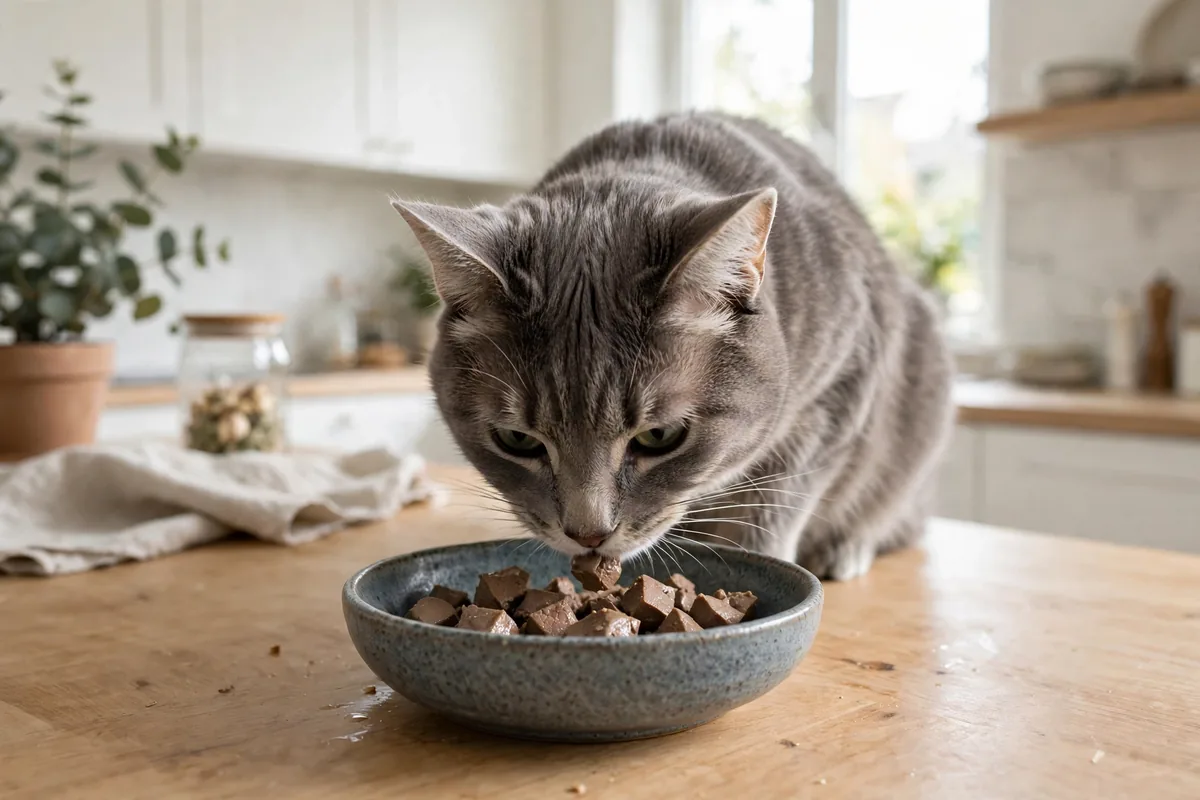
The Short Answer: Yes — But Only a Little, Cooked Plain, and Rarely
Yes, cats can eat liver, but only in very small amounts and only when it is cooked plain. Liver is one of the richest foods a cat can eat, and that richness is both the reason it is useful and the reason it needs care. A teaspoon-sized piece, once in a while, is a safe treat for most healthy adult cats.
The key point is vitamin A. Liver holds a large amount of it, and while cats need vitamin A, too much over time can be harmful. That is why liver is a caution food, not a forbidden one and not an everyday one.
Is Liver Safe for Cats?
Liver is safe for cats in tiny, cooked portions. It is rich in protein and in nutrients cats use, and many commercial cat foods contain a small amount of liver. A small taste of cooked liver can be a welcome change for a cat that enjoys meat.
The risk comes from the amount and the frequency, not from a single small piece. Liver is far richer in vitamin A than ordinary muscle meat. Raw liver should never be offered, because it can carry bacteria, and liver cooked with seasoning, onion, garlic, butter, or sauce should be avoided too. Plain, cooked liver, in a tiny portion, is the only form to share. Our cat food safety guide covers the full list of foods that can harm cats.
Why Vitamin A Makes Liver Different
Cats must get vitamin A from food, because their bodies cannot make it from plant sources. Their regular, balanced cat food already contains the amount they need. Liver adds a large extra dose on top, and vitamin A is stored in the body, so extra amounts can build up over time.
When too much vitamin A builds up, it can affect a cat's bones and joints, causing stiffness, pain, and changes in how bones grow. This does not happen from one small piece. It happens when a cat eats liver often, or in large amounts, over weeks and months.
Beef, Chicken, and Lamb Liver: Which to Offer
Beef liver, chicken liver, and lamb liver are all fine for cats in the same tiny, cooked portions. The rules do not change with the animal: cook it plain, serve a teaspoon-sized piece, and offer it rarely. Chicken liver is smaller and softer, so it is easier to cut into a tiny piece.
Whatever liver you choose, cook it fully, with no salt, seasoning, onion, garlic, butter, or oil, and let it cool before serving. Never offer raw liver, liver pate, or liver in a seasoned dish.
Can Kittens Eat Liver?
Kittens should only have a very tiny taste of plain, cooked liver, if any at all. Their bodies are still growing, and their bones and joints are more sensitive to extra vitamin A than an adult cat's. A kitten's regular kitten food already contains the nutrients it needs, so liver adds nothing it is missing.
If you do offer a taste, keep it smaller than a pea, with no seasoning, and only once in a while. Ask your vet first if your kitten is very young or has a health problem. For most kittens, it is simplest to skip liver until they are grown.
What Happens If My Cat Eats Liver?
If the liver was a small piece, cooked plain, nothing bad should happen — your cat will simply have enjoyed a rich treat. If your cat ate a large piece, or liver with seasoning, watch for stomach upset: vomiting, diarrhea, or a reduced appetite over the next day are the most common signs.
The deeper concern is not a single meal but a habit. A cat that eats liver every day, or in large amounts, can slowly take in too much vitamin A, and over time that can lead to bone and joint problems, stiffness, and pain. If the liver was seasoned with garlic or onion, call your vet the same day.
How Much Liver Can a Cat Eat?
For a healthy adult cat, about a teaspoon-sized piece of cooked liver, once a week at most, is a safe limit. Think of liver as a rare extra, not a meal and not a daily treat. As a rough guide, liver should stay under about 5 percent of the diet, and most cats do best when it is far less than that.
Treats should stay under 10 percent of your cat's daily calories, and liver counts toward that limit. If your cat already eats a food that lists liver, be even more careful. When in doubt, offer less, offer it less often, and ask your vet.
What to Do If Your Cat Ate Liver
If your cat ate liver, stay calm — a small, plain, cooked piece is nothing to worry about. Follow these steps:
- Check what kind it was. Note whether the liver was plain and cooked, or raw, seasoned, or eaten in a large amount.
- Take away the rest. Remove the plate or leftovers so your cat cannot eat any more liver.
- Offer fresh water. Make sure your cat has clean water nearby.
- Do not induce vomiting. Never try to make your cat vomit at home unless your vet tells you to.
- Watch for symptoms. Look for vomiting, diarrhea, belly pain, or lethargy over the next day, and call your vet if any appear — the same day if the liver was raw or seasoned with garlic or onion, or if your cat has been eating liver often.
Safe Ways to Serve Liver to Cats
Cook a small piece plain, with no oil, butter, salt, or seasoning, until it is fully cooked through. Let it cool, then cut off a teaspoon-sized piece and offer just that. Offer it as a rare treat on top of your cat's regular food, not as a meal.
Because liver is so rich, a little goes a long way. Do not mix liver into every meal, and do not offer it as a daily supplement — a small amount does the job, and more is not better.
Liver can be a safe treat for cats, as long as it stays small, cooked plain, and rare. Keep to a teaspoon-sized piece, once a week at most, skip the raw and seasoned forms, and your cat can enjoy liver safely.
Can cats eat liver?
Yes, but only in very small amounts. Cooked liver is safe as a rare treat, while raw liver and large or frequent servings should be avoided.
Is liver safe for cats?
Liver is safe in tiny, cooked portions, but it is very rich in vitamin A. Too much liver, eaten too often, can lead to vitamin A toxicity, so keep servings small and rare.
Can cats eat beef liver, chicken liver, or lamb liver?
Yes, beef, chicken, and lamb liver are all fine in the same tiny, cooked portions. The rules are the same for each: cook it plain, serve a teaspoon-sized piece, and offer it rarely.
Can kittens eat liver?
Kittens should only have a very tiny taste of plain, cooked liver, if any at all. Their growing bodies are more sensitive to excess vitamin A, so ask your vet first.
What happens if my cat eats liver?
A small piece of cooked liver usually causes no trouble at all. A large amount, or liver eaten often, can cause stomach upset, and over time excess vitamin A can harm bones and joints.
How much liver can a cat eat?
About a teaspoon-sized piece of cooked liver, once a week at most. Keep liver under about 5 percent of the diet, and treat it as a rare extra, not a regular meal.