Can Cats Eat Mackerel?
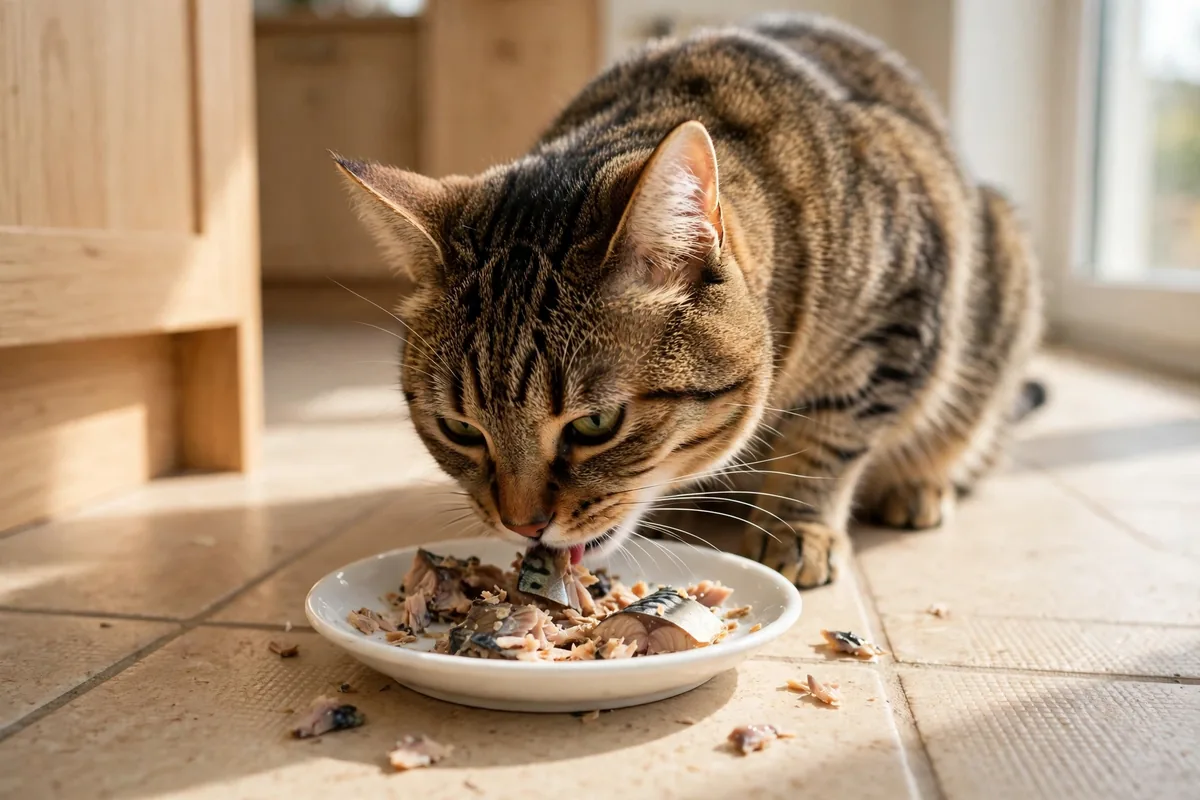
The Short Answer: Yes — Plain Cooked Mackerel, as an Occasional Treat
Yes, cats can eat mackerel. Plain, cooked mackerel with all the bones removed is safe for cats as an occasional treat, and most cats love its strong fishy smell. Mackerel is an oily fish, rich in omega-3 fats that can support skin and coat health — but that richness is also why it should stay a rare treat, not a regular meal.
The limit is mercury. Like other oily fish, mackerel carries more mercury than lean white fish such as cod, and mercury builds up in the body over time, so frequent servings can add up. Keep reading to learn the right portion, how to prepare mackerel safely, and how often to serve it.
Is Mackerel Safe for Cats?
Yes, mackerel is safe for cats when it is cooked plain and served boneless. Mackerel is a complete animal protein, which suits cats as obligate carnivores, and its omega-3 fats are the same healthy fats found in fish oil. A small serving can help cats with dry skin or a dull coat.
Cooking matters. Raw mackerel can carry bacteria and parasites, so always cook mackerel fully before offering any to a cat. Remove the skin and all bones, and keep it plain — no butter, salt, garlic, lemon, or sauces. Skip smoked mackerel, which is salty and often seasoned, and avoid canned mackerel packed in brine or oil. Our cat food safety guide covers the full list of foods that can harm cats.
Omega-3 Benefits vs the Mercury Limit
Mackerel's main selling point is its omega-3 fats. These healthy fats help keep a cat's skin supple and coat shiny, and they support overall health in the same way fish oil does. That is why mackerel shows up in some commercial cat foods.
The catch is mercury. All fish carry some mercury, and oily fish like mackerel carry more than lean white fish. Mercury does not wash out with cooking, and it builds up in the body when fish is eaten often, so frequency matters more than any single serving. Treat mackerel as a weekly treat at most, and lean on white fish like cod or trout for more frequent fish servings.
How to Prepare Mackerel for Cats
Start with a fresh mackerel fillet and cook it plain — bake, steam, or poach it with no oil, butter, salt, or seasoning. Let it cool completely, then flake the meat apart with a fork and check it carefully for bones. Mackerel has a row of fine pin bones along the fillet, so run your fingers through the flakes twice before serving.
Serve the mackerel at room temperature, in small flakes mixed into your cat's regular food or on its own as a treat. If your cat has never had mackerel before, offer just a bite or two first and watch for stomach upset before serving a full portion.
Can Kittens Eat Mackerel?
Yes, kittens can eat mackerel in small amounts, as long as it is plain, cooked, boneless, and cut into tiny flakes. A little mackerel can be a nice introduction to fish for a curious kitten, and its soft texture is easy for small mouths to manage.
Keep the portion very small — a piece about the size of a pea is enough for a kitten — and double-check for bones, since a kitten's throat is even smaller than an adult cat's. Kittens still need a complete and balanced kitten food as the center of their diet, so mackerel should only ever be a tiny extra, never a meal.
What Happens If My Cat Eats Mackerel?
If the mackerel was plain, cooked, and boneless, nothing bad should happen — your cat simply enjoyed a tasty treat. If your cat ate mackerel with bones, watch for coughing, gagging, pawing at the mouth, or trouble swallowing, and call your vet if any of those signs appear.
If your cat ate raw or seasoned mackerel, watch for stomach upset instead: vomiting, diarrhea, or a reduced appetite over the next day are the most common signs. Mackerel seasoned with garlic or onion needs a vet call the same day, since those seasonings can damage a cat's red blood cells.
How Much Mackerel Can a Cat Eat?
For a healthy adult cat, about one tablespoon of cooked, boneless mackerel is a good treat portion, offered once a week at most. Because mackerel is oily and carries more mercury than white fish, the portion should be smaller and less frequent than a serving of trout.
Treats should stay a small part of your cat's daily diet. If your cat is overweight or has a sensitive stomach, ask your vet before offering mackerel, and keep the portion small.
What to Do If Your Cat Ate Mackerel
If your cat ate mackerel, stay calm — in most cases there is nothing to worry about. Follow these steps:
- Check what kind it was. Note whether the mackerel was plain and boneless, or raw, smoked, canned, or seasoned.
- Take away the rest. Remove the plate or leftovers so your cat cannot eat any more, especially bones, skin, or seasoned pieces.
- Offer fresh water. Make sure your cat has clean water nearby.
- Do not induce vomiting. Never try to make your cat vomit at home unless your vet tells you to.
- Watch for symptoms. Look for vomiting, diarrhea, coughing, gagging, or trouble swallowing over the next day, and call your vet if any appear — the same day if the mackerel was seasoned with garlic or onion, or if your cat may have swallowed a bone.
Safe Ways to Serve Mackerel to Cats
The best way to serve mackerel is simple: bake or steam a small fillet plain, with no oil, butter, salt, or seasoning, until it is fully cooked through. Let it cool, flake it apart, remove every bone and the skin, and offer a small portion over your cat's regular food.
Keep mackerel as a rare treat, and always serve it fresh — never leave cooked fish sitting out for hours, and throw away any uneaten portion. Cats are obligate carnivores, so fish belongs in their diet in small, well-prepared portions, and plain mackerel is one of the richest ways to offer it.
Mackerel is safe for cats when it is cooked plain, served boneless, and kept to a small weekly portion. Its strong flavor makes it a favorite with many cats, and the only real work is careful bone removal and keeping the frequency low. Offer it once a week at most, skip the smoked and canned kinds, and your cat can enjoy it safely.
Can cats eat mackerel?
Yes. Plain, cooked mackerel is safe for cats as an occasional treat. Serve it boneless and unseasoned, and keep portions small because mackerel is an oily fish.
Is mackerel safe for cats?
Yes, mackerel is safe when it is cooked plain and served without bones, skin, or seasoning. Its omega-3 fats can support skin and coat health, but it should stay an occasional food because of mercury.
Can kittens eat mackerel?
Yes, kittens can eat tiny pieces of plain, cooked, boneless mackerel. Keep the portion very small — about pea-sized — and offer it only once in a while.
What happens if my cat eats mackerel?
Plain cooked mackerel usually causes no trouble at all. Raw mackerel, bones, or heavily seasoned mackerel can cause vomiting, diarrhea, or a choking hazard.
How much mackerel can a cat eat?
About one tablespoon of cooked, boneless mackerel, once a week at most. Because mercury builds up over time, mackerel should be a rare treat rather than a regular food.
How often can cats eat mackerel?
Once a week at most, in a small portion. Mackerel carries more mercury than white fish like cod, so spacing out servings keeps mercury from building up while your cat still gets the omega-3 benefit.