Can Cats Eat Peanut Butter? Vet Answer
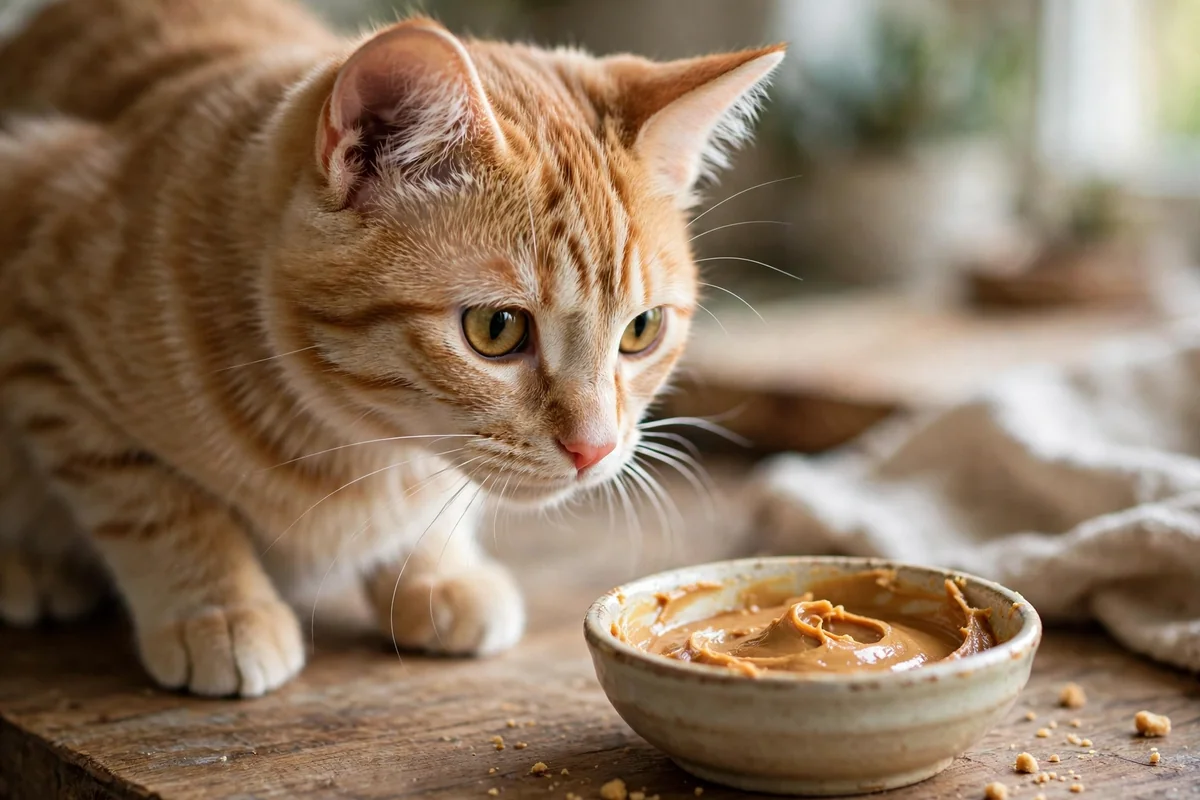
Can cats eat peanut butter? The short answer is yes, but only in tiny amounts, and only the right kind. Plain, unsweetened peanut butter with no added sweeteners is not toxic to cats, but it is also not a food cats need. It is high in fat and calories, many cats are not even interested in it, and one common ingredient — the sweetener xylitol — is genuinely dangerous for pets. So while an occasional tiny lick will not harm a healthy adult cat, peanut butter should never become a regular treat.
In this guide, you will learn exactly which peanut butter is safe, how much is too much, what to do if your cat eats the wrong kind, and which healthier treats are a better choice. If you are exploring what human foods are safe for cats in general, our wider Cat Food guides cover eggs, cheese, and many other everyday foods.
Is Peanut Butter Safe for Cats?
Peanuts themselves are not toxic to cats. Cats are obligate carnivores, so their bodies are built to get nutrition from meat, not from nuts or legumes, but a small taste of plain peanut butter will not poison them. The problems come from what is added to most jars, and from the portion size. Commercial peanut butter often contains added sugar, salt, and hydrogenated oils, none of which do a cat any good, and some "sugar-free" or "light" varieties contain xylitol, which is the real danger.
There is another practical issue: peanut butter is thick and sticky. A large glob can stick to the roof of a cat's mouth or, in rare cases, pose a choking risk, especially for kittens, flat-faced breeds, or cats that gulp their food. That is one more reason to keep any serving to a thin smear rather than a spoonful. If your cat shows no interest — and many do not — do not push it. Disinterest is the easiest outcome of all.
The Xylitol Danger: Always Read the Label
Xylitol, sometimes listed as birch sugar or E967, is a sugar alcohol used to sweeten sugar-free products. In pets, it triggers a rapid release of insulin, which can cause dangerously low blood sugar, weakness, vomiting, seizures, and liver damage. Even small amounts can be serious, and the risk is well documented in dogs; cats are believed to be similarly vulnerable, so the same caution applies.
Before you offer any peanut butter, read the full ingredient list. Safe peanut butter should list peanuts and possibly a little salt — nothing else. Reject any jar that lists xylitol, birch sugar, sorbitol in large amounts, or any sweetener you do not recognise. Natural or "just peanuts" varieties are usually the safest choice. If you are unsure about a brand, skip it; a cat treat is never worth the gamble.
How Much Peanut Butter Can a Cat Have?
If you do offer peanut butter, keep it to a rare, tiny amount: a thin smear on a lick mat or your fingertip, roughly half a teaspoon at most, no more than once in a while. Think of it as a novelty, not a snack. Peanut butter packs around 90 to 100 calories per tablespoon, which is a large share of a cat's daily needs — most adult cats need only about 200 to 250 calories a day — so even a tablespoon can quietly push a cat over its daily limit.
Watch your cat after the first taste. Mild stomach upset, soft stools, or a lack of interest are all reasons to stop. Cats with pancreatitis, obesity, or a sensitive stomach should skip peanut butter altogether, since its high fat content can aggravate those conditions. And remember that treats of all kinds should stay under 10 percent of your cat's daily calories, so peanut butter has to compete with every other treat for that small allowance.
Can Kittens Eat Peanut Butter?
Kittens should not eat peanut butter. Their digestive systems are still developing, they need calorie-dense kitten food designed for growth, and peanut butter offers them nothing they need — only fat and potential stomach upset. The sticky texture is also a bigger risk for a small kitten than for an adult. Wait until your cat is fully grown, and even then, only offer it rarely. For guidance on what kittens should actually eat, see our indoor cat food guide and your veterinarian's feeding advice.
What to Do If Your Cat Eats Peanut Butter
First, stay calm and check the jar. If the peanut butter was plain and unsweetened and your cat ate only a small amount, there is usually no cause for alarm — just watch for vomiting, diarrhoea, or lethargy over the next day and offer fresh water. If your cat ate a large amount, or seems unwell in any way, call your veterinarian for advice.
If the peanut butter contained xylitol, treat it as an emergency. Contact your veterinarian or an emergency pet clinic immediately, and tell them the brand, the ingredients, and roughly how much your cat ate. Do not wait for symptoms to appear, and do not try to make your cat vomit unless your veterinarian specifically tells you to. Quick professional advice makes a real difference in xylitol cases.
Better Treats Than Peanut Butter
Most cats prefer treats that taste like prey, not like a sandwich filling. Small pieces of cooked, unseasoned chicken or turkey, freeze-dried meat treats, or a few pieces of their regular kibble used as a reward are all simpler, safer choices. If your cat enjoys licking, a lick mat smeared with plain wet cat food or a meat-based puree gives the same enrichment without the fat and sugar load of peanut butter. You can compare options in our guide to cats and eggs and our cat feeding portion guide — and the Purrfect Paws homepage has more food and care guides for every stage of cat ownership.
The bottom line is simple: cats can eat peanut butter, but they do not need it, and the wrong jar can hurt them. If you choose to offer it, make it plain, unsweetened, xylitol-free, and tiny — and if in doubt, reach for a meat-based treat instead. Your cat will almost certainly prefer it.
Frequently Asked Questions
Can cats eat peanut butter safely?
Yes, but only in very small amounts and only if it is plain, unsweetened peanut butter with no xylitol. It is best treated as a rare occasional lick, not a regular treat.
Is xylitol in peanut butter dangerous for cats?
Yes. Xylitol, also listed as birch sugar, is toxic to pets and can cause dangerously low blood sugar and liver damage. Always read the ingredient label before offering any peanut butter, and never use a sugar-free variety without checking.
How much peanut butter can a cat have?
No more than a tiny smear — roughly half a teaspoon — and only occasionally. Peanut butter is very high in fat and calories, so larger amounts can upset the stomach and contribute to weight gain.
Can kittens eat peanut butter?
It is best to skip it for kittens. Their digestive systems are still developing and they gain nothing nutritionally from peanut butter, so there is no reason to introduce it early.
What should I do if my cat eats peanut butter with xylitol?
Contact your veterinarian or an emergency pet clinic right away, and tell them the brand and how much was eaten. Do not wait for symptoms to appear, and do not try to make your cat vomit unless your vet tells you to.