Can Cats Eat Quinoa?
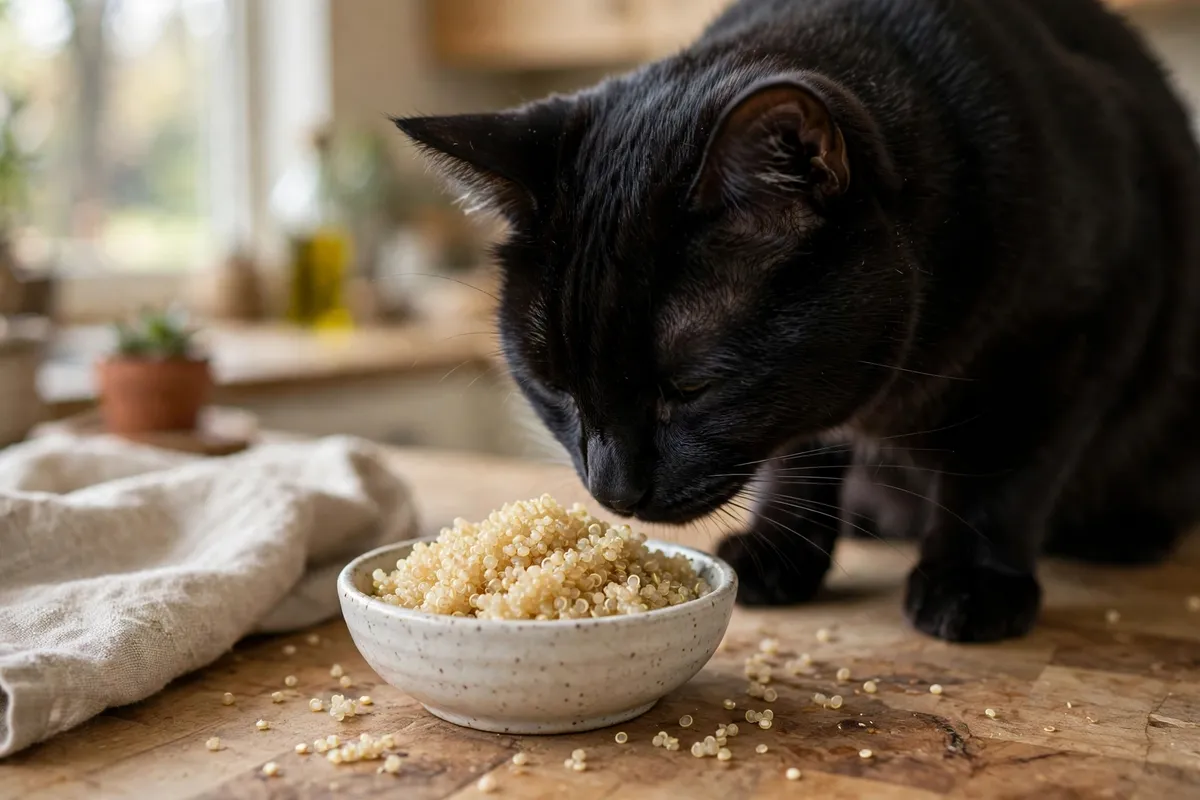
Yes — cats can eat quinoa, and it is one of the safer grains you can share with them. Served cooked plain and in small amounts, quinoa is safe for most healthy adult cats. It is a complete protein, which means it contains all the essential amino acids, and it is naturally gluten-free and easy to digest when prepared properly. The key word is "side dish": cats are obligate carnivores, so grains are an occasional extra, never a replacement for meat.
There are two rules that matter more than anything else with quinoa: rinse it well before cooking, and serve it plain. This guide explains why the rinse matters, how to cook and serve quinoa for your cat, how much is safe, and what to do if your cat gets into a seasoned batch.
The Verdict: Can Cats Eat Quinoa?
Verdict: SAFE — cooked plain, in small amounts. Quinoa is not toxic to cats, and a spoonful of plain, well-cooked quinoa mixed into regular food is fine for a healthy adult cat. It even has more going for it than most grains: a good amino acid profile, fiber, magnesium, iron, and B vitamins, with very little fat.
That said, quinoa is a garnish, not a meal. Your cat gets everything they need from a complete, meat-based cat food, and grains add nothing essential to their diet. Think of quinoa the way you would think of a pinch of parsley on a plate — a harmless extra, not a food group. Offer it once or twice a week at most, and always plain.
What Is Quinoa, and Why Is It Safe for Cats?
Quinoa is the seed of a plant related to spinach and beets, and it has been eaten by people in South America for thousands of years. Unlike most grains, it is a complete protein, meaning it provides all nine essential amino acids in useful amounts. It is also rich in fiber, which supports healthy digestion, and it contains magnesium, iron, and B vitamins.
For cats, the facts are simpler: quinoa contains nothing known to be toxic to cats, it is gluten-free, and when cooked until soft it is easy to digest. White, red, and black quinoa are all the same for your cat — what changes everything is how it is prepared, which brings us to the one step you must never skip.
The One Rule That Matters: Rinse Before Cooking
Quinoa seeds are coated in natural compounds called saponins, which taste bitter and protect the seed from birds and insects. If you cook quinoa without rinsing it first, those saponins stay on the grains — and in a cat's sensitive stomach, they can cause drooling, nausea, and stomach upset.
Rinsing is easy: put the dry quinoa in a fine mesh strainer and run cold water over it for about 30 seconds, swishing it with your fingers, until the water runs clear and the soapy bubbles disappear. Most packaged quinoa is labeled "pre-rinsed," but a quick rinse anyway is cheap insurance, especially when the eater is a cat.
Cook it in plain water only — no chicken broth, no stock cubes, no butter, no oil, and no salt. Broth often contains onion and garlic powder, and stock cubes are far too salty for a cat. Let the quinoa cool to room temperature before serving, and serve it soft and fluffy, never crunchy or undercooked.
Is Quinoa Safe for Cats?
Yes, plain cooked quinoa is safe for cats. The problems start with everything people usually add to it. Quinoa salads are a common trap: they often contain onion, garlic, lemon dressing, nuts, raisins, or feta cheese, any of which can upset a cat's stomach or worse. Restaurant quinoa bowls and takeout sides are seasoned the same way, so never share those.
Quinoa flour and flakes are safe under the same rules — plain and cooked — but there is no reason to seek them out for a cat. If your cat has a known grain sensitivity, check with your vet before offering any new grain, quinoa included.
Can Kittens Eat Quinoa?
Yes, kittens can have a tiny amount of plain cooked quinoa once they are weaned and eating solid food, but there is no reason to make it a habit. A kitten's stomach is small, and every mouthful should count toward growth — kitten food is carefully balanced for that, and quinoa is not. A few soft grains mixed into their food as an occasional taste is fine for a healthy kitten.
Make sure the quinoa is fully cooked and soft, since a kitten's digestive system is still developing. If your kitten has a sensitive stomach or is on a special diet from your vet, skip new foods entirely. And as with adults, the plain-only rule is absolute: no seasoned, broth-cooked, or salad quinoa for kittens.
How Much Quinoa Can a Cat Eat?
A good portion is a teaspoon or two of cooked quinoa, mixed into their regular food, once or twice a week at most. Treats and extras should stay a small part of the daily diet — roughly a tenth or less — and quinoa counts as a treat, even though it is a healthy one. A small spoonful is plenty; a cat-sized serving is not a thing.
If it is your cat's first time trying quinoa, start with just a few grains and watch their stools over the next day. If you see soft stools or a skipped meal, their stomach simply does not want it — and that is fine, because no cat needs quinoa. Never force it, and never use it to replace any part of their normal food.
What Happens If My Cat Eats Quinoa?
If the quinoa was plain, cooked, and rinsed, almost certainly nothing at all. Most cats digest a small amount with no sign they ate anything unusual. If the quinoa was unrinsed, your cat may drool, seem nauseous, or have a soft stool for a day — the bitter saponin coating is the usual cause, and it normally passes without treatment.
Uncooked dry quinoa is harder to digest and may cause vomiting, because the grains can swell and irritate the gut. Seasoned quinoa is the version to watch most closely: if it contained onion or garlic, call your vet for advice. Onion and garlic can damage a cat's red blood cells, and signs such as lethargy or pale gums can show up a day or two later.
What to Do If Your Cat Already Ate Quinoa
Work through these steps:
- Check what kind it was. Plain, rinsed, and cooked? Seasoned, broth-cooked, or from a salad? Dry and uncooked? The answer decides how worried to be.
- Take the rest away so your cat cannot eat more, and offer fresh water.
- If it was plain and cooked, simply watch your cat for the next 24 hours. Mild soft stools usually settle on their own.
- If it was seasoned with onion or garlic, or contained raisins or nuts, call your vet and tell them what was in it and roughly how much your cat ate.
- Call your vet right away if you see repeated vomiting, refusal to eat or drink, weakness, or pale gums — or if the eater was a young kitten.
For most cats, a quinoa incident ends with nothing more than a slightly puzzled owner and a perfectly fine cat. The rinse rule and the plain-only rule are what keep it that way. For more grain guidance, see our guides to whether cats can eat rice and whether cats can eat chicken, or browse the full Cat Food section on the Purrfect Paws homepage.
Frequently Asked Questions
Is quinoa safe for cats?
Yes. Plain, cooked, well-rinsed quinoa is safe for cats in small amounts — it is not toxic, gluten-free, and easy to digest when soft. Avoid seasoned, broth-cooked, or salad quinoa, which often contains onion or garlic.
Can kittens eat quinoa?
Yes, a tiny amount of plain cooked quinoa is fine for a weaned kitten, but it is not necessary. Kitten food should be their main diet, and the quinoa must be fully cooked and soft. Skip it entirely if your kitten has a sensitive stomach.
Do I need to rinse quinoa before giving it to my cat?
Yes — always rinse quinoa under cold water before cooking, even if the packet says pre-rinsed. Quinoa is coated in bitter saponins that can cause drooling and stomach upset in cats.
Can cats eat raw quinoa?
No. Raw or dry quinoa is hard for a cat to digest and may cause vomiting. Always cook quinoa until soft, rinse it first, and let it cool before serving.
How much quinoa can a cat eat?
A teaspoon or two of cooked quinoa, mixed into regular food, once or twice a week is plenty. Treats should stay a small part of the daily diet, and quinoa is a garnish, not a meal.