Can Cats Eat Rice? Vet Answer
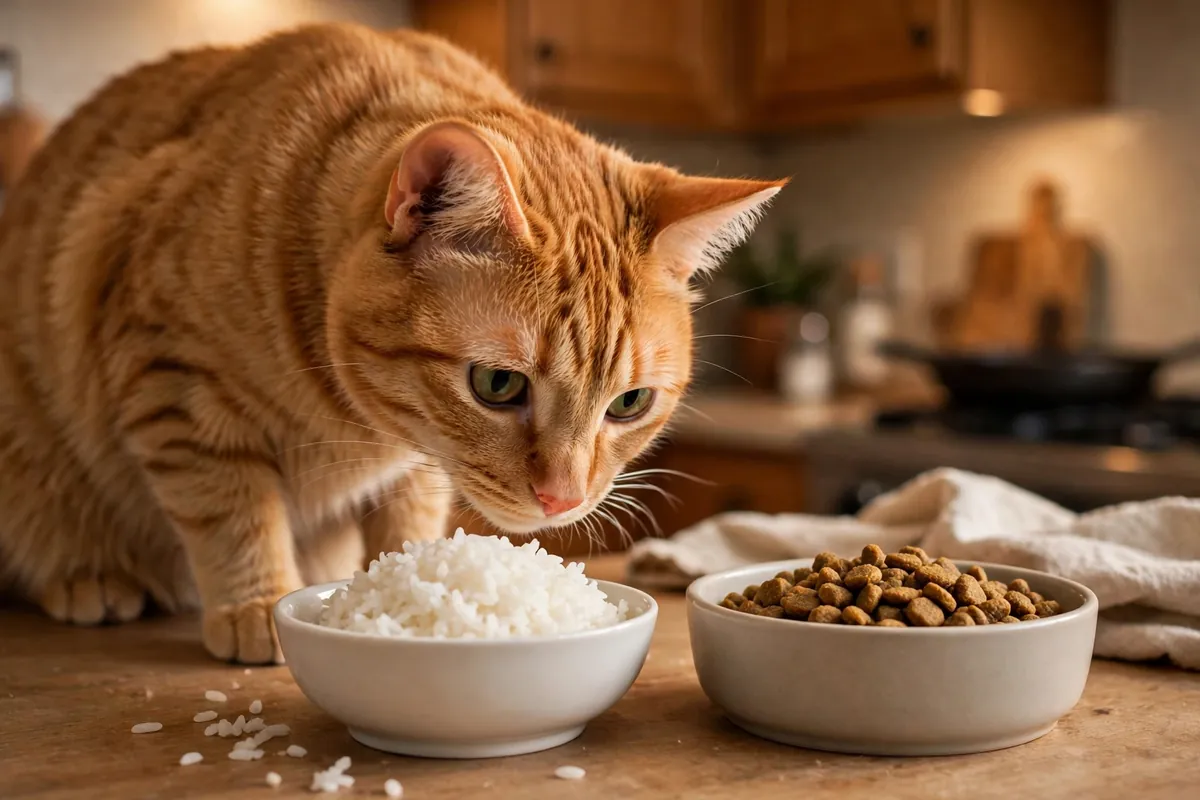
Plain cooked rice is not toxic to cats — but it is nutritionally empty for them, so there is rarely a reason to feed it. Cats are obligate carnivores built to thrive on animal protein, not grains. A small taste of unseasoned white rice will not harm a healthy cat, and veterinarians sometimes use plain rice as part of short-term bland diets for digestive upset. Beyond that, rice offers your cat almost nothing that their regular food does not already provide better.
Still, rice shows up in the kitchen constantly, and curious cats will investigate a bowl of it. This guide explains why rice does so little for cats nutritionally, the difference between white and brown rice, when vets actually recommend it, what to watch out for (including arsenic and seasoning), and which cats should avoid rice entirely — all in line with a balanced approach to cat nutrition.
Why Rice Does Almost Nothing for Cats
Rice is essentially starch: digestible carbohydrate with a little protein, some B vitamins, and trace minerals. Humans and dogs can put that energy to good use. Cats cannot do nearly as much with it. As obligate carnivores, cats evolved eating prey — meat, organs, and bone — and their metabolism is tuned for protein and fat. They have a limited ability to break down and use carbohydrates, and they do not require any dietary carbohydrate at all when their protein needs are met.
A few grains will not hurt your cat. The real issue is substitution: every calorie of rice displaces the animal protein and nutrients — taurine, arachidonic acid, complete protein — that a cat actually needs. Fed regularly, rice-heavy diets can quietly drift toward deficiency. Rice is, at best, harmless filler.
White Rice vs Brown Rice for Cats
If rice is going to be offered at all, plain white rice is the better choice — which surprises people who assume brown rice is always healthier. For cats, the priorities are reversed:
- White rice is easier to digest. The bran and germ are removed, leaving soft starch that passes gently through the digestive tract. That is exactly why veterinarians choose white rice for bland recovery diets.
- Brown rice is harder on digestion. Its extra fiber and tougher outer layer can be more irritating to a sensitive stomach — the opposite of what you want if the goal is gentle food.
- Brown rice can contain more arsenic. Arsenic concentrates in the bran layer that brown rice keeps — one more reason white rice wins the rare times rice is used.
- Neither is nutritious for cats. Brown rice's extra fiber and minerals are advantages in a human diet, not a feline one. A cat gains no meaningful nutritional benefit from either type.
Whichever you use, it must be plain: cooked in water with no salt, butter, oil, broth, or seasoning. Fried rice, rice pilaf, and rice from takeout containers are all off the table because of the fats, salt, onion, and garlic they typically contain.
When Vets Actually Recommend Rice for Cats
For cats with mild, short-term digestive upset, some vets suggest a brief bland diet of plain boiled white rice mixed with a lean, unseasoned protein such as plain boiled chicken breast — something extremely gentle and low-fat to let the gut recover.
Note the caveats, because they matter:
- This is a short-term measure (usually a day or two), not a diet. Bland food is incomplete nutrition by design.
- It should be done under veterinary direction, not started on your own for a cat that is vomiting repeatedly, lethargic, or refusing water — those signs need a vet visit, not a home remedy.
- The protein half of the bland meal matters more than the rice half. Some vets now prefer plain pumpkin purée or a prescription gastrointestinal diet instead, and you should follow your own vet's recommendation.
- After the recovery period, transition back to the cat's normal complete food gradually over a few days rather than switching abruptly.
If your cat's stomach troubles keep returning, the answer is a proper diagnosis, not repeated rounds of rice. Chronic digestive issues deserve a vet workup — the bland diet is a bridge, not a destination.
Rice Safety: Arsenic, Pesticides, and Preparation
Rice is one of the crops most associated with arsenic uptake, because it is grown in flooded fields where arsenic in soil and water is readily absorbed. For humans who eat rice daily, this is a genuine dietary consideration; for a cat that gets a teaspoon of rice on rare occasions, the exposure is negligible. Still, you can minimize it with a couple of easy habits: rinse rice before cooking, cook it in plenty of water and drain the excess (like pasta), and choose rice from reputable sources. These are the same steps recommended for human consumption.
Preparation rules are non-negotiable: rice must be fully cooked (uncooked rice is hard, indigestible, and can swell uncomfortably), served plain at room temperature, and never taken from a dish that contained onion, garlic, butter, or sauces. Leftover rice should be refrigerated promptly and not kept beyond a day or two, since cooked rice can develop bacterial growth if left sitting out — the same food-safety rules apply as for your own plate.
How Much Rice Can a Cat Have?
Think of rice as an occasional extra, not a food group. A teaspoon or two of plain cooked white rice is plenty for the rare situation where it is offered at all. As with all extras, the 10% rule applies: everything outside your cat's balanced diet — rice included — should stay under roughly 10% of daily calories. Our guide to portion sizes for cats explains how to keep treats from creeping into meal territory.
Rice should never become a daily habit or meal replacement — a rice-heavy diet deprives a cat of the animal protein, taurine, and essential fatty acids its heart, eyes, and coat need. If cost is the concern, ask your vet for better ways to manage your cat's food budget.
Which Cats Should Avoid Rice Entirely
Most healthy cats can handle an accidental taste of plain rice, but these cats should avoid it entirely:
- Diabetic cats. Rice is almost entirely starch, which converts to sugar and raises blood glucose. Diabetic cats need carefully managed, low-carbohydrate diets, and starchy extras can interfere with blood sugar control. Always check with your vet before offering any carbohydrate to a diabetic cat.
- Overweight cats. Starchy calories add up fast and provide none of the satiety that protein does, making weight management harder.
- Cats with grain sensitivities. True grain allergies are uncommon in cats, but sensitivities do occur. If rice seems to trigger itching, ear issues, or digestive upset, skip it.
- Cats with kidney disease on prescription diets. These diets are precisely formulated; extras of any kind can undermine them.
- Kittens. Growing kittens need calorie-dense, nutrient-rich food to fuel rapid development. Filling a kitten's small stomach with nutritionally empty rice is the wrong trade.
When you are unsure whether any human food is safe, the default answer should be caution. Our rundown of human foods that are poisonous to cats is a good reference to bookmark, and Purrfect Paws covers plenty of treats that are genuinely good for cats.
Frequently Asked Questions
Is rice toxic to cats?
No. Plain cooked white or brown rice is not toxic to cats. It is simply nutritionally empty for them — cats are obligate carnivores and cannot get much useful nutrition from grains. A small accidental taste is harmless.
Can cats eat brown rice or only white rice?
Cats can technically eat either, but white rice is the better choice when rice is needed at all. It is easier to digest than brown rice, which is why vets favor it in bland recovery diets. Brown rice offers no meaningful nutritional advantage to a cat.
Why do vets recommend rice for sick cats?
Plain boiled white rice is bland, low-fat, and gentle on an irritated stomach, so vets sometimes include it in short-term recovery diets — usually mixed with a lean protein like plain chicken — for cats with mild digestive upset. This is always done under veterinary direction, not as a home remedy.
How much rice can I give my cat?
Rice should be an occasional extra at most — a teaspoon or two of plain cooked rice, and no more than about 10% of daily calories along with all other treats. It should never replace balanced cat food, since rice alone cannot meet a cat's nutritional needs.
Can diabetic cats eat rice?
Cats with diabetes should generally avoid rice. Rice is mostly starch, which raises blood sugar, and diabetic cats need carefully managed, low-carbohydrate diets. Ask your veterinarian before offering any starchy food to a diabetic cat.