Can Cats Eat Raw Dough?
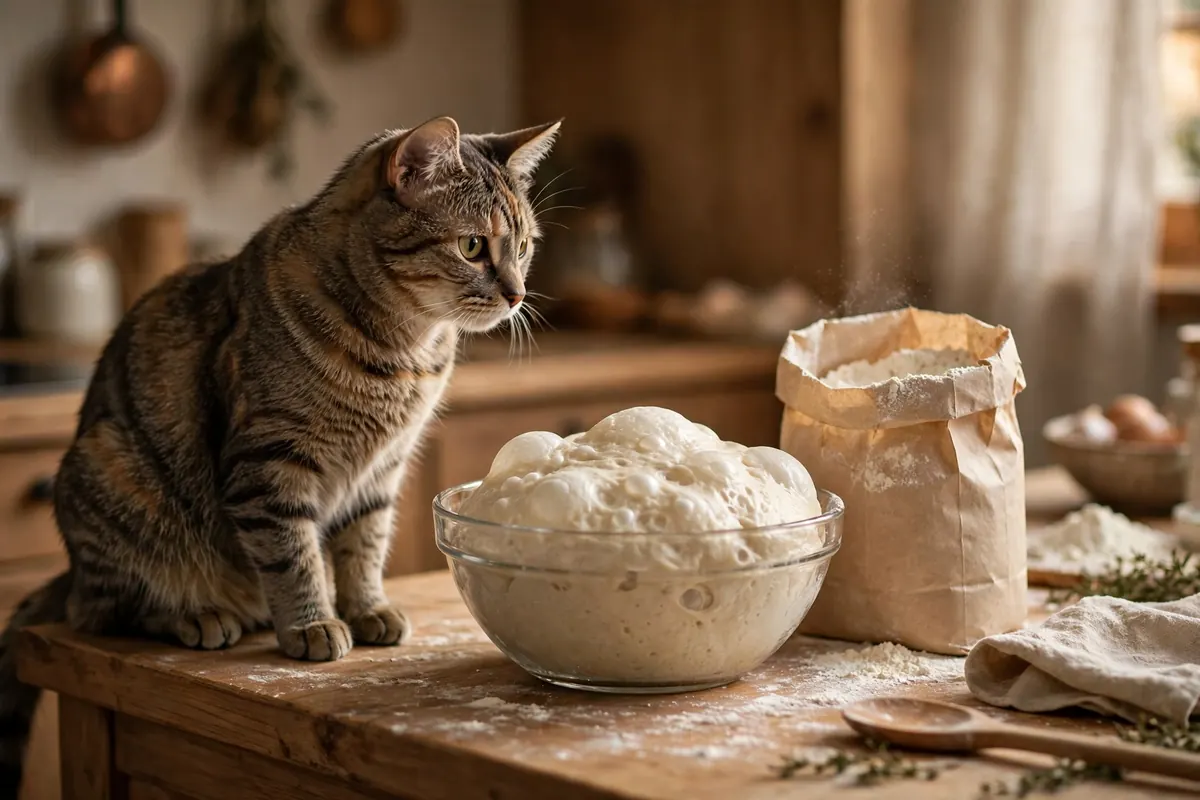
No — cats must never eat raw dough. Raw bread dough contains live yeast, and yeast does not stop working just because it has been swallowed: inside your cat's warm stomach, the dough keeps rising, stretching the stomach and causing painful bloating, while the yeast ferments the sugars in the dough and produces alcohol. Both effects can make a cat seriously ill, and both need veterinary attention.
The most common accident is the home baker's cat: a bowl of dough left rising on the counter, a piece dropped on the floor, a curious paw in the mixing bowl. This guide explains why raw dough is dangerous, how it differs from cooked bread, the signs to watch for, and exactly what to do if your cat has already eaten some.
The Verdict: Can Cats Eat Raw Dough?
Verdict: UNSAFE. Raw dough of any kind — bread dough, pizza dough, roll dough, or cookie dough — is unsafe for cats and must never be fed to them. The live yeast in raw dough keeps working inside the stomach, where the dough rises and stretches the stomach wall, and the fermentation produces alcohol that a cat's small body cannot handle.
Do not let your cat lick a spoon, nibble a dropped piece, or taste dough from the bowl, and never leave dough rising where a cat can reach it. Cooked bread is a different food with a different verdict — but raw dough is always off-limits. If your cat has eaten raw dough, contact your veterinarian or a pet poison helpline immediately.
Why Raw Dough Is Dangerous for Cats
Raw dough is dangerous for two separate reasons, and both happen at the same time. The first is expansion. Bread dough is full of live yeast, and yeast thrives in warmth — and a cat's stomach is warm. Once swallowed, the dough keeps rising, just as it would on your kitchen counter, and the expanding mass stretches the stomach, causing pain, bloating, and in severe cases a twisted or blocked stomach that needs emergency surgery.
The second reason is alcohol. As yeast ferments the sugars in the dough, it produces ethanol — the same alcohol found in beer and wine. A cat that eats raw dough is effectively being dosed with alcohol from the inside, and cats are far more sensitive to alcohol than people are. Even a small amount can cause vomiting, disorientation, and trouble walking, and larger amounts can lead to a dangerous drop in body temperature, slow breathing, and collapse.
Bread Dough, Pizza Dough, and Cookie Dough
Not all dough is the same, and the details matter when you are telling your vet what your cat ate:
- Bread dough and pizza dough. The classic danger — yeast, flour, and water, rising in the stomach and fermenting into alcohol. The bigger the piece, the bigger the problem.
- Cookie dough. Usually contains raw egg as well as flour and sugar, and often chocolate chips or cocoa — so a cat that eats cookie dough may face raw-egg bacteria and chocolate poisoning on top of the dough itself.
- Roll and bun dough. Same yeast risk as bread dough, and often made with milk and butter, which add stomach upset for a lactose-sensitive cat.
- Quick breads and batters. Doughs and batters made with baking powder instead of yeast do not rise in the stomach the same way, but they are still not cat food — raw batter often contains raw egg and sugar, and should be kept away from cats too.
The rule is simple: if it is raw and made to be baked, it is not for your cat.
Is Raw Dough Safe for Cats?
No — raw dough is not safe for cats in any amount, in any form. There is no safe portion and no preparation that makes raw dough harmless, because the yeast is alive until the dough is baked. Even a small piece can start rising and fermenting inside a cat's stomach.
Cooked bread is a different story. A small piece of plain, fully baked bread is not toxic to cats — it is just empty calories, with no nutrition a cat needs. Cooked bread with garlic, onion, raisins, chocolate chips, or seeds is a different matter and should be kept away. If your cat loves the smell of baking, give them a tiny piece of the finished, plain loaf once it is cool — never a taste of the dough. For more on foods that hide dangers, see our guide to human foods that are poisonous to cats.
Can Kittens Eat Raw Dough?
No — kittens must never eat raw dough. A kitten's tiny stomach leaves even less room for dough to expand, and a kitten's small body is far more vulnerable to alcohol poisoning. A kitten that eats raw dough needs veterinary advice the same day, even if it seems fine at first.
Kittens are also the most likely to get into trouble during baking: they climb counters, they bat at anything soft and interesting, and a bowl of dough left to rise is an irresistible target. If you bake with a kitten in the house, keep the dough covered and on a high shelf or inside the oven while it rises, and clean up any dropped pieces immediately.
What Happens If My Cat Eats Raw Dough?
Signs usually appear within a few hours of eating raw dough, and they can come in two waves. The first wave comes from the expanding dough: a swollen, tight belly, retching or vomiting, drooling, restlessness, and a cat that seems uncomfortable and cannot settle. The second wave comes from the alcohol: wobbliness, stumbling, disorientation, unusual sleepiness, vomiting, and in serious cases a drop in body temperature and slow, shallow breathing.
Both waves are serious, and the alcohol signs can be easy to miss in a cat that is already lying still because its stomach hurts. If you know or suspect your cat ate raw dough, call your vet or a pet poison helpline right away — do not wait to see whether symptoms appear, and do not try to treat the alcohol signs at home.
What to Do If Your Cat Already Ate Raw Dough
Act quickly, stay calm, and follow these steps in order:
- Remove the dough immediately. Take away any remaining dough so your cat cannot eat more, and note what kind it was — bread, pizza, or cookie dough — and roughly how much was eaten.
- Call your vet or a pet poison helpline now. Do not wait for symptoms. Give the time of eating, what kind of dough it was, roughly how much, and your cat's age, weight, and any health conditions.
- Do not induce vomiting at home. Never give hydrogen peroxide, salt water, or any home remedy to make your cat vomit. These can cause serious harm, and vomiting should only be induced by a veterinarian when it is safe and appropriate.
- Do not give human medicines. Painkillers such as paracetamol and ibuprofen are toxic to cats and will only add to the problem.
- Follow your vet's instructions. They may ask you to come in for examination and monitoring, even if your cat looks well, and they may need to repeat checks over several hours, because dough can keep expanding and fermenting after it is eaten.
If your regular clinic is closed, call an emergency veterinary clinic or a poison helpline. For more food guidance, browse the full Cat Food section on the Purrfect Paws homepage.
Frequently Asked Questions
Is raw dough safe for cats?
No. Raw dough is unsafe for cats — the yeast keeps working inside the stomach, where the dough rises and stretches the stomach, while fermentation produces alcohol. There is no safe amount, so call your vet immediately if your cat eats any.
Can kittens eat raw dough?
No. Kittens must never eat raw dough — their tiny stomachs leave even less room for dough to expand, and their small bodies are far more vulnerable to alcohol poisoning. A kitten that eats raw dough needs veterinary advice the same day.
What happens if my cat eats raw dough?
Signs usually appear within a few hours: a swollen, tight belly, vomiting, drooling, and restlessness from the expanding dough, followed by wobbliness, disorientation, and unusual sleepiness from the alcohol. Both need a vet visit the same day.
Can cats eat cooked bread?
A small piece of plain, fully baked bread is not toxic to cats, but it is just empty calories with no nutrition a cat needs. Bread with garlic, onion, raisins, or chocolate chips should be kept away. Raw dough, on the other hand, is always unsafe.
How much raw dough is dangerous for a cat?
There is no known safe amount. Even a small piece can expand and ferment inside a cat's stomach, so any amount your cat eats should be treated seriously and checked with a vet right away.