Can Cats Eat Chocolate?
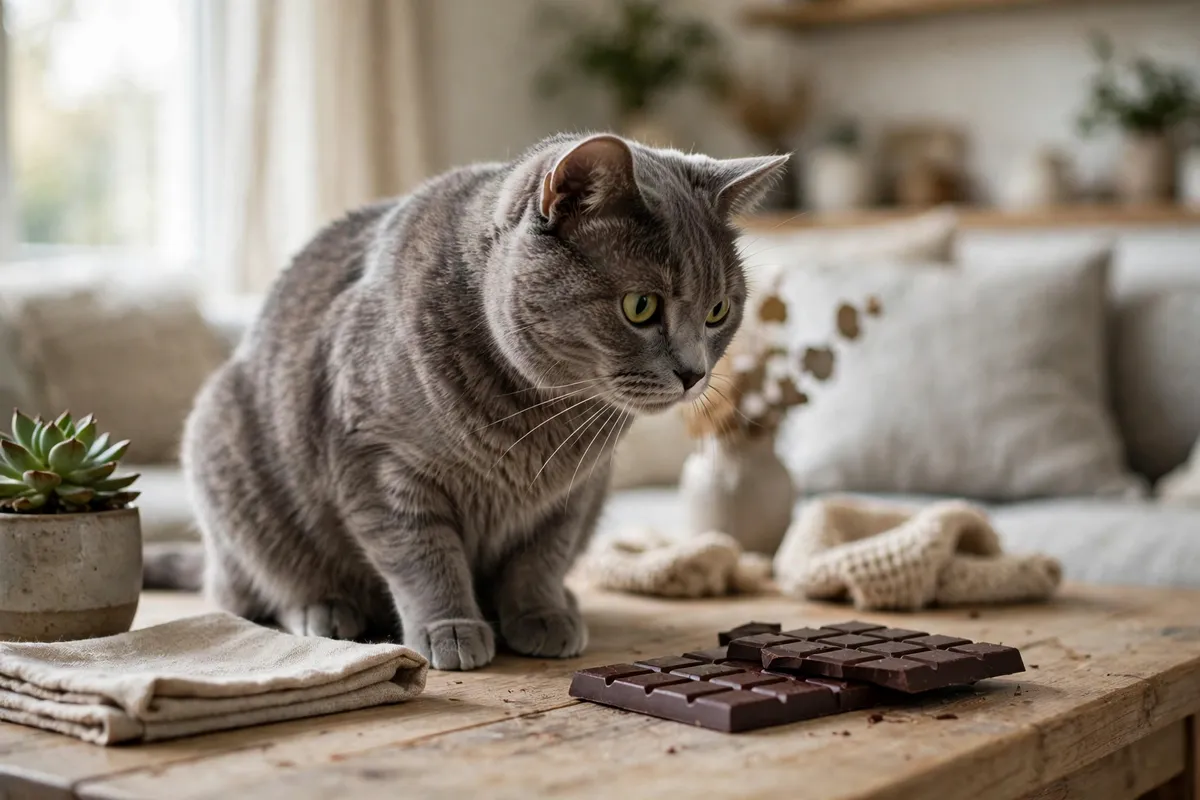
No — cats should never eat chocolate. Chocolate contains theobromine and caffeine, two stimulants that cats cannot process safely, and even a small piece can make a cat ill. Dark chocolate and baking chocolate are the most dangerous because they contain the highest concentration of these compounds, but milk chocolate and white chocolate are not safe either — no type of chocolate belongs in a cat's diet.
This guide explains why chocolate is toxic to cats, how the danger changes with the type of chocolate and the size of your cat, the signs to watch for, and exactly what to do if your cat eats chocolate. It also tackles the white-chocolate myth and covers kittens, who are at greater risk than adult cats.
The Verdict: Can Cats Eat Chocolate?
Verdict: UNSAFE. Chocolate is toxic to cats and should never be offered in any amount, in any form. The theobromine and caffeine in chocolate stimulate a cat's nervous system and heart, and cats break these compounds down far more slowly than people do, so the effects last longer and hit harder in a small animal.
There is no safe portion of chocolate for a cat — not a square, not a chip, not a lick of frosting. If your cat has eaten chocolate, or a food containing it, contact your veterinarian or a pet poison helpline immediately, even if your cat looks fine. Early advice is the single most helpful thing you can do.
Why Chocolate Is Toxic to Cats
Chocolate's danger comes from two related stimulants: theobromine and caffeine. Both are found naturally in cacao, the bean chocolate is made from, and both affect the nervous system and the heart. People process theobromine quickly; cats process it slowly, so it builds up and stays active in their bodies for much longer.
The result is a stimulant overload. A cat that has eaten chocolate may become restless and agitated, vomit, develop diarrhea, drink and urinate more than usual, and show a racing heartbeat. In serious cases, the effects progress to muscle tremors, seizures, and dangerous heart rhythm problems.
Cats are less likely than dogs to seek out chocolate, because they cannot taste sweetness the way people and dogs can. But a cat may still lick chocolate frosting or eat a chocolate biscuit left on a low table out of curiosity — and cats that steal food are often the ones that get into trouble.
How Much Chocolate Is Dangerous for a Cat?
There is no known safe amount of chocolate for a cat, and you should never try to work out a safe dose at home. The danger depends on three things, and all three push the risk in the same direction: a smaller cat, a darker or stronger chocolate, and a larger amount eaten all mean more danger.
The type of chocolate matters most. Baking chocolate and dark chocolate contain the highest concentration of theobromine and caffeine, so a small piece of either is more dangerous than the same amount of milk chocolate. Cocoa powder is also highly concentrated and should be kept well away from cats.
- Baking chocolate and cocoa powder. The most concentrated and the most dangerous — even a small amount warrants an urgent vet call.
- Dark chocolate. Much stronger than milk chocolate; a few squares can be a serious exposure for a small cat.
- Milk chocolate. Less concentrated, but a whole bar or a large portion is still dangerous, and the sugar and fat add stomach upset on top.
- White chocolate. Contains very little theobromine, but it is high in fat and sugar and is not safe as a cat treat — see the white-chocolate myth below.
Tell your vet the type of chocolate, roughly how much was eaten, when it happened, and your cat's age and weight.
Is Chocolate Safe for Cats in Any Amount? The White-Chocolate Myth
No type of chocolate is safe for cats, and the white-chocolate myth is the one that causes the most confusion. White chocolate is made from cocoa butter with almost none of the cacao solids that carry theobromine, so it contains very little of the compound that makes chocolate toxic. That has led some owners to conclude that white chocolate is fine for cats — it is not.
White chocolate is still a rich, fatty, sugary human food with no place in a cat's diet. A cat that eats it can develop vomiting, diarrhea, and stomach pain from the fat and sugar alone. The small theobromine content does not make it a treat — it makes it a slightly less dangerous version of a food your cat should never eat.
The same applies to chocolate-flavoured foods: cake, brownies, biscuits, ice cream, and spread all contain real chocolate, and many also contain sugar, fat, and sometimes xylitol, a sweetener dangerous for pets. If your cat eats any chocolate-flavoured food, treat it as a chocolate exposure and call your vet. For a broader list of foods to keep away from cats, see our guide to human foods that are poisonous to cats.
Can Kittens Eat Chocolate?
No — kittens should never eat chocolate, and they are at greater risk than adult cats. A kitten's body is tiny, so the same piece of chocolate delivers a much larger exposure relative to its weight, and its developing liver and nervous system are more easily overwhelmed by theobromine and caffeine. A piece of chocolate that might cause only mild stomach upset in a large adult cat can cause serious signs in a kitten.
Kittens are also the most likely to get into chocolate by accident, because they climb onto tables and chew anything at nose height — including foil-wrapped Easter eggs and Christmas chocolates left in a low bowl. Keep all chocolate in closed cupboards or high shelves, never in a bowl on a coffee table.
What Happens If My Cat Eats Chocolate?
Signs of chocolate poisoning usually appear within a few hours, though the timing varies with the type and amount eaten. Early signs often involve the stomach and behaviour: vomiting, diarrhea, restlessness, agitation, and drinking and urinating more than usual. A cat may pace, seem unable to settle, or hide and refuse food.
More serious signs reflect the stimulant effect on the heart and nervous system. A racing heartbeat, rapid breathing, muscle tremors, twitching, and seizures are all signs that need emergency veterinary care at once. In the most serious cases, chocolate poisoning can cause dangerous heart rhythm problems and collapse. A cat that seems fine in the first hour is not necessarily safe — signs can develop over several hours.
If your cat ate chocolate along with other ingredients, mention them all to your vet. Our guide to why grapes are toxic to cats explains why hidden ingredients matter so much with toxic foods.
What to Do If Your Cat Already Ate Chocolate
Work through these steps in order:
- Take the chocolate away so your cat cannot eat more, and note the type — baking, dark, milk, or white — and roughly how much was eaten and when. Keep the wrapper or packaging if you can.
- Call your veterinarian or a pet poison helpline immediately. Do not wait for symptoms. Give your cat's age, weight, and any health conditions, plus the type and amount of chocolate.
- Do not try to make your cat vomit at home. Never give hydrogen peroxide, salt water, or any home remedy — these can cause serious harm, and vomiting should only be induced by a veterinarian.
- Do not give human medicines. Painkillers such as paracetamol and ibuprofen are toxic to cats.
- Keep your cat calm and warm in a quiet room and watch their breathing. If your cat has a seizure or collapses, get to an emergency vet immediately.
- Follow your vet's instructions. They may ask you to come in for examination and monitoring, even if your cat looks well.
For more on keeping your cat safe around the kitchen, see our guide to when cat vomiting is a worry, explore the full Cat Food section, and visit the Purrfect Paws homepage for the latest articles.
Frequently Asked Questions
Can cats eat chocolate?
No. Chocolate is toxic to cats because it contains theobromine and caffeine, which cats process very slowly. Never offer chocolate to your cat in any amount or form.
Can kittens eat chocolate?
No. Kittens are at greater risk than adult cats because they are smaller and their bodies are still developing. A small piece of chocolate can cause serious signs in a kitten — keep all chocolate well out of reach.
What happens if my cat eats chocolate?
Signs can include vomiting, diarrhea, restlessness, increased thirst and urination, a racing heartbeat, tremors, and in serious cases seizures and heart rhythm problems. Call your vet immediately, even if your cat looks fine.
How much chocolate can a cat eat?
There is no safe amount of chocolate for a cat. Dark and baking chocolate are the most dangerous, but milk chocolate is toxic too. Any ingestion warrants an immediate call to your vet or a pet poison helpline.
Is white chocolate safe for cats?
No. White chocolate contains very little theobromine, but it is high in fat and sugar and can cause vomiting and stomach pain. It is not a safe treat for cats, and chocolate-flavoured white chocolate products may contain other unsafe ingredients.