Can Cats Eat Rhubarb?
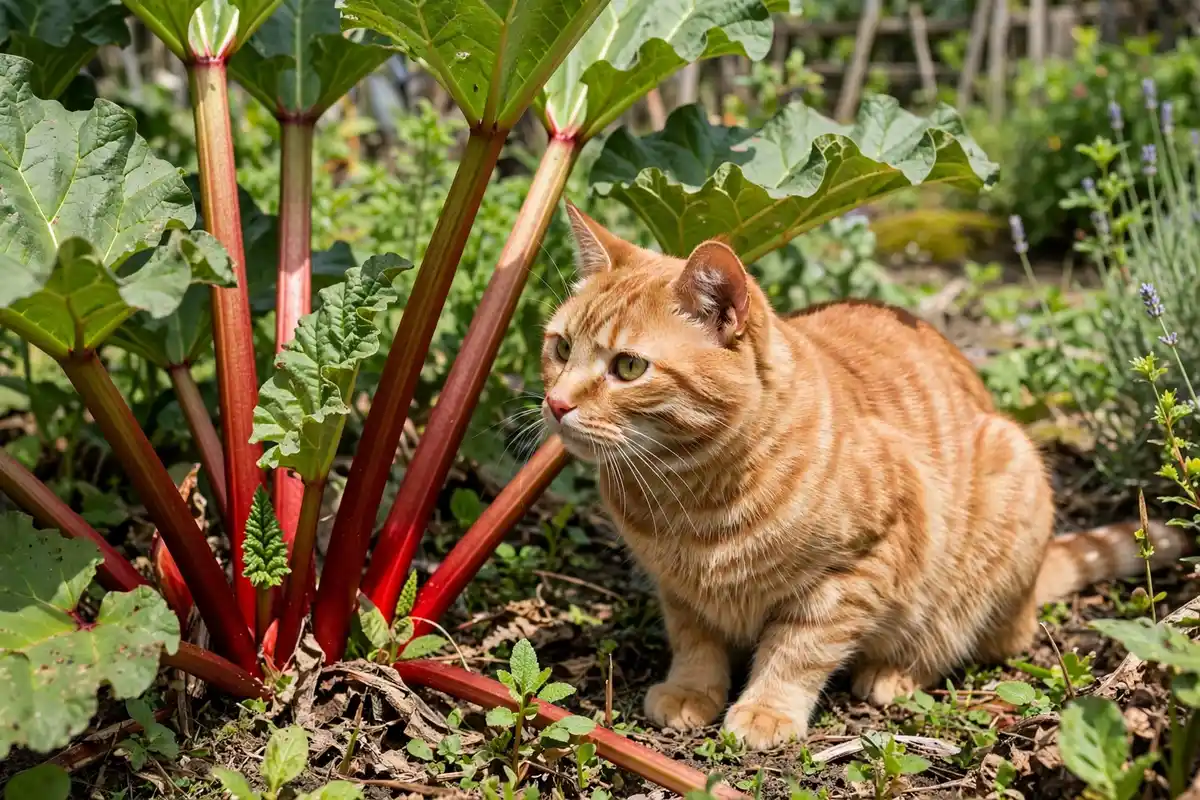
The Short Answer: No, Rhubarb Is Not Safe for Cats
No, cats cannot eat rhubarb. Rhubarb is unsafe for cats because it contains soluble oxalates — natural plant compounds that can irritate the mouth and stomach and, in larger amounts, damage the kidneys. Both the stalks and the leaves are flagged as a problem, and the leaves carry the highest concentration of oxalates. This is one of those foods where there is no safe portion and no safe preparation, so the answer is a clear no.
If your cat has already taken a bite, do not panic, but act quickly. A single small nibble of stalk may only cause drooling or a mild stomach upset, while a larger amount — or any amount of the leaves — is a genuine reason to call your vet straight away. Keep reading for the warning signs, the emergency steps, and how to keep rhubarb out of your cat's reach.
Is Rhubarb Safe for Cats?
Rhubarb is not safe for cats. The plant contains soluble calcium oxalates, the same compounds that make several other common plants dangerous to pets. When a cat chews rhubarb, the oxalate crystals irritate the mouth and throat, and once swallowed they can bind calcium in the body and put strain on the kidneys. Cats are small animals with sensitive kidneys, so a plant that is harmless in a human-sized serving can be a real risk for them.
The leaves are the most dangerous part of the plant, and they should never be within a cat's reach. Gardeners sometimes compost rhubarb leaves or leave trimmed leaves on the ground, and that is exactly how a curious cat gets into trouble. The stalks are less concentrated, but they still contain oxalates and are not safe to feed. Cooking, baking, or sweetening rhubarb does not remove the oxalates, so rhubarb pie, jam, and crumble are unsafe for cats too.
Why Rhubarb Is Dangerous: Oxalates Explained
Oxalates are natural chemicals found in many plants, and most of the time they pass through the body without causing trouble. The problem with rhubarb is the type and the amount. Rhubarb contains soluble oxalates, which dissolve easily and are absorbed into the bloodstream, where they can bind with calcium and form crystals. Those crystals can irritate the kidneys and, in serious cases, interfere with how the kidneys filter waste from the blood.
The first signs usually show up in the mouth and stomach: drooling, pawing at the face, vomiting, or a refusal to eat. With a larger amount, the effects can go further — weakness and trembling as the kidneys come under strain. That is why vets treat rhubarb as a plant to avoid entirely, not one to serve in careful portions.
Stalks vs Leaves: Is Any Part of Rhubarb Safe?
Neither part of rhubarb is safe for cats. The leaves hold the highest level of oxalates and are the part most often linked to serious poisoning, but the stalks are not a safe alternative — they contain the same compounds in lower amounts, and a cat that eats a whole stalk can still become ill. A tiny piece of cooked stalk in a dessert is no better: the answer is still no, and the sugar and butter only add more problems.
Compare rhubarb with a safe vegetable like cucumber, where the only question is portion size. With rhubarb the question is different: the plant itself is the problem, not the amount. If you grow rhubarb, treat the whole plant as off-limits, and do not let the "stalks are the edible part for people" idea fool you into offering a taste.
What Happens If My Cat Eats Rhubarb?
What happens depends on how much your cat ate and which part of the plant it was. A small nibble of stalk often leads to drooling, lip-smacking, or a single episode of vomiting as the mouth and stomach react to the irritation. The cat may go off food for a few hours and seem uncomfortable, then recover. Even so, call your vet for advice, because you cannot tell from the outside how much was swallowed.
Eating the leaves, or a larger amount of stalk, is more serious. Watch for repeated vomiting, diarrhea, loss of appetite, weakness, trembling, or trouble walking — these are signs that the oxalates are affecting the body more deeply. Kidney problems can take a day or two to show, so a cat that seems fine on the evening it ate rhubarb can still become unwell later. That delayed effect is the main reason vets ask owners to call early rather than wait and see.
What to Do If Your Cat Ate Rhubarb: Emergency Steps
Call your vet first, before anything else. If it is after hours, call the nearest emergency veterinary clinic or a pet poison helpline. Tell them your cat ate rhubarb, which part of the plant it was, how much was eaten, and when it happened. If you can, take a photo of the plant or bring a sample — it helps the vet confirm exactly what your cat ate.
While you wait for advice, keep your cat indoors and comfortable, and watch for drooling, vomiting, trembling, or unusual sleepiness. Do not offer food, and do not force water if your cat will not drink. Your vet may ask you to come in for an examination, blood tests, or fluids to support the kidneys. Treat any rhubarb eating as urgent, even if your cat looks fine right now.
Keeping Cats Away From Rhubarb in the Garden
If you grow rhubarb, the simplest protection is a physical barrier. A low fence, a raised bed with netting, or a garden cloche over young plants keeps a curious cat from chewing the leaves. Cats are drawn to plants in spring, when new rhubarb leaves are tender and tempting, so check the bed regularly and clear away fallen or trimmed leaves straight away.
Never add rhubarb leaves to a compost heap your cat can reach, and do not use them as mulch where your cat walks. If you harvest rhubarb, take the stalks straight inside and put the trimmed leaves in a sealed bin. A bunch of stalks left on a kitchen counter can still tempt a determined cat, so store them out of reach.
Can Kittens Eat Rhubarb?
No, kittens cannot eat rhubarb either. Kittens are smaller than adult cats, so the same amount of oxalates is a bigger risk for them, and their kidneys are still developing. A kitten that chews a rhubarb leaf can become ill more quickly than an adult, and the signs may be harder to spot in a small, sleepy kitten. Keep rhubarb completely out of a kitten's world.
Kittens should be eating a complete kitten food, and that is all they need. There is no reason to offer any vegetable to a kitten, let alone a risky one like rhubarb. If your kitten is teething and chewing everything, offer safe kitten toys instead and keep plants and kitchen scraps out of reach.
Rhubarb is simply off the menu for cats. Its oxalates can irritate the mouth and stomach and, in larger amounts, damage the kidneys — and the leaves are the most dangerous part of all. There is no safe portion and no safe way to prepare it, so keep rhubarb out of your cat's bowl and out of reach in the garden. If your cat does eat some, call your vet right away and do not wait for symptoms to appear.
Can cats eat rhubarb?
No. Rhubarb is unsafe for cats because its soluble oxalates can irritate the mouth and stomach and damage the kidneys. Neither the stalks nor the leaves are safe.
Are rhubarb leaves poisonous to cats?
Yes. Rhubarb leaves hold the highest oxalate concentration and are the most dangerous part. Eating them can cause drooling, vomiting, trembling, and kidney problems.
Can cats eat cooked rhubarb?
No. Cooking does not remove the oxalates in rhubarb, so cooked rhubarb, rhubarb pie, and rhubarb jam are all unsafe for cats.
What happens if my cat eats rhubarb?
A small nibble may cause drooling or vomiting, while a larger amount or the leaves can lead to repeated vomiting, weakness, trembling, and kidney problems. Call your vet either way.
Can kittens eat rhubarb?
No. Kittens are smaller and their kidneys are still developing, so rhubarb is an even bigger risk for them.
What should I do if my cat ate rhubarb?
Call your vet first, right away. Note how much was eaten and when, keep your cat indoors and calm, and do not try to make your cat vomit unless your vet tells you to.