Can Cats Eat Shallots?
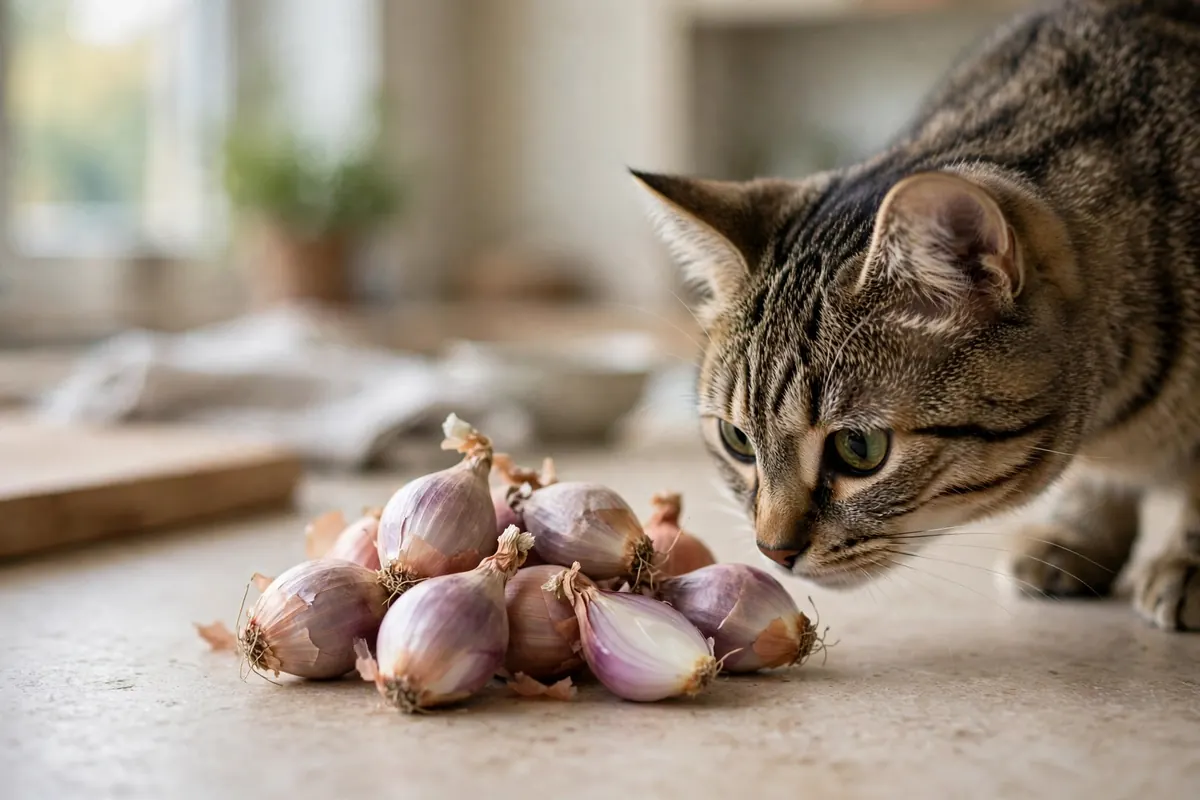
The Short Answer: No — Shallots Are Toxic to Cats
No — cats should never eat shallots. Shallots are members of the allium family, the same family as onions, garlic, chives, and leeks, and they are toxic to cats in every form: raw, cooked, dried, or powdered. The compounds in shallots damage a cat's red blood cells and can lead to anemia, even from a small amount hidden in a sauce or dressing.
Shallots are easy to overlook because they are mild, sweet, and often used in small amounts. A cat may never eat a whole shallot, but it can easily lick a sauce, steal a bite of a dressed salad, or lap up stock that was simmered with shallots. Keep reading for why shallots are dangerous, where they hide, and what to do if your cat has already eaten some.
Are Shallots Safe for Cats?
No, shallots are not safe for cats in any amount or any form. Raw shallots, roasted shallots, shallot powder, and shallot-flavored sauces all carry the same risk. Cooking softens the flavor of a shallot, but it does not remove the compounds that harm cats, and drying or grinding shallots into powder concentrates them instead of making them safer.
Cats are far more sensitive to allium vegetables than people are, and their small body size means a modest amount can matter. There is no safe serving size for shallots and no preparation method that makes them safe. Keep shallots out of your cat's bowl and out of reach on the counter. Our cat food safety guide covers the full list of foods that can harm cats.
Why Are Shallots Toxic to Cats?
Shallots contain sulfur compounds called thiosulfates, the same substances that make onions and garlic toxic to cats. When a cat eats shallots, these compounds attack the red blood cells, damaging them so they can no longer carry oxygen properly. The damaged cells break down over the following days, and the cat can develop anemia.
Shallots sit in the same danger group as onions, and vets treat all alliums as equally risky for cats. A shallot is smaller than an onion, so it is tempting to think a little bit is harmless — but size does not change the chemistry. The damage can also be delayed: a cat may seem perfectly fine for a day or two before weakness or pale gums appear, which is why any shallot eating should be taken seriously right away.
What Happens If My Cat Eats Shallots?
The first signs are usually stomach upset: vomiting, diarrhea, loss of appetite, and stomach pain. Your cat may drool, hide, or refuse its next meal. These signs can appear within a few hours of eating shallots, or not until the next day.
The more serious signs come from anemia and can take one to three days to appear. Watch for unusual tiredness, weakness, rapid breathing, and pale gums — lift your cat's lip gently and check whether the gums look paler than their usual pink. Dark or reddish urine is another warning sign that red blood cells are breaking down.
Any of these signs after your cat has eaten shallots is a reason to call the vet the same day. Do not wait to see whether the symptoms pass on their own.
Can Kittens Eat Shallots?
No, kittens should never eat shallots. Kittens are smaller and still developing, so they are even more vulnerable to the compounds in shallots than adult cats. A curious kitten may nose at a shallot on the counter or lick a plate of food seasoned with shallot, so keep shallots and shallot-flavored dishes well out of reach.
How Much Shallots Can a Cat Eat?
None. There is no safe amount of shallots for a cat — not a sliver of raw shallot, not a spoonful of shallot sauce, and not a pinch of shallot powder. If you want to share a savory treat with your cat, choose something known to be safe, such as a small piece of plain cooked chicken, offered only occasionally.
Shallots Hiding in Sauces, Dressings, and Seasoning Blends
Shallots rarely appear on a plate on their own. They are minced into vinaigrettes and salad dressings, simmered into soups and stocks, stirred into cream sauces, and folded into marinades and stuffing. A cat that licks a plate or steals a bite of a dressed salad has eaten shallots, even though the small pieces are easy to miss.
Shallot powder is a hidden source too, turning up in spice blends, soup mixes, and ready meals. Before letting your cat near a dish, read the label and look for the words shallot, onion, garlic, chive, and leek. If any of them appear — even near the end of the ingredients list — keep the dish away from your cat. When you cook with shallots, keep your cat out of the kitchen while you chop, and wipe the board and knife before your cat can lick them.
What to Do If Your Cat Ate Shallots
If you catch your cat eating shallots, act quickly and calmly:
- Move the shallots away. Take the plate, sauce, or shallot away from your cat so it cannot eat any more.
- Call your vet. Do this right away, even if your cat seems fine. Tell the vet what your cat ate, how much, and when.
- Do not induce vomiting. Never try to make your cat vomit at home unless your vet tells you to.
- Keep your cat indoors and calm. Offer fresh water and a quiet place to rest.
- Watch for symptoms. Check for vomiting, lethargy, pale gums, and dark urine over the next three days, and tell your vet about anything unusual.
Safe Alternatives to Shallots
If your cat likes savory flavors, give it a safe outlet. A small piece of plain cooked chicken or turkey, with no skin and no seasoning, is a much better treat. A few flakes of plain cooked fish also work for most cats.
Cats are obligate carnivores: meat is the center of their diet, and vegetables are only an occasional extra. There is no flavor a shallot adds that a cat needs.
Shallots may be mild and sweet, but for cats they carry the same danger as onions and garlic. Raw, cooked, dried, or powdered, every form can damage red blood cells and cause anemia, and there is no safe amount. The most likely danger is a sauce or dressing hiding shallots, so read labels and keep seasoned dishes away from your cat. If your cat does eat shallots, call your vet the same day.
Can cats eat shallots?
No. Shallots are toxic to cats in every form — raw, cooked, dried, or powdered — and should never be fed to a cat.
Are shallots safe for cats?
No. Shallots belong to the allium family and contain compounds that damage a cat's red blood cells, which can lead to anemia.
Can kittens eat shallots?
No. Kittens are smaller and still developing, so they are even more vulnerable to shallots than adult cats.
What happens if my cat eats shallots?
Your cat may develop vomiting, diarrhea, and loss of appetite, followed by signs of anemia such as weakness and pale gums. Call your vet the same day if your cat ate shallots.
How much shallots can a cat eat?
None. There is no safe amount of shallots for a cat — not a sliver, not a spoonful of sauce, and not a pinch of shallot powder.
Are shallots in sauces and dressings dangerous for cats?
Yes. Shallots hide in vinaigrettes, cream sauces, soups, and seasoning blends, so read labels and keep any dish containing shallots away from your cat.