Can Cats Eat Turkey?
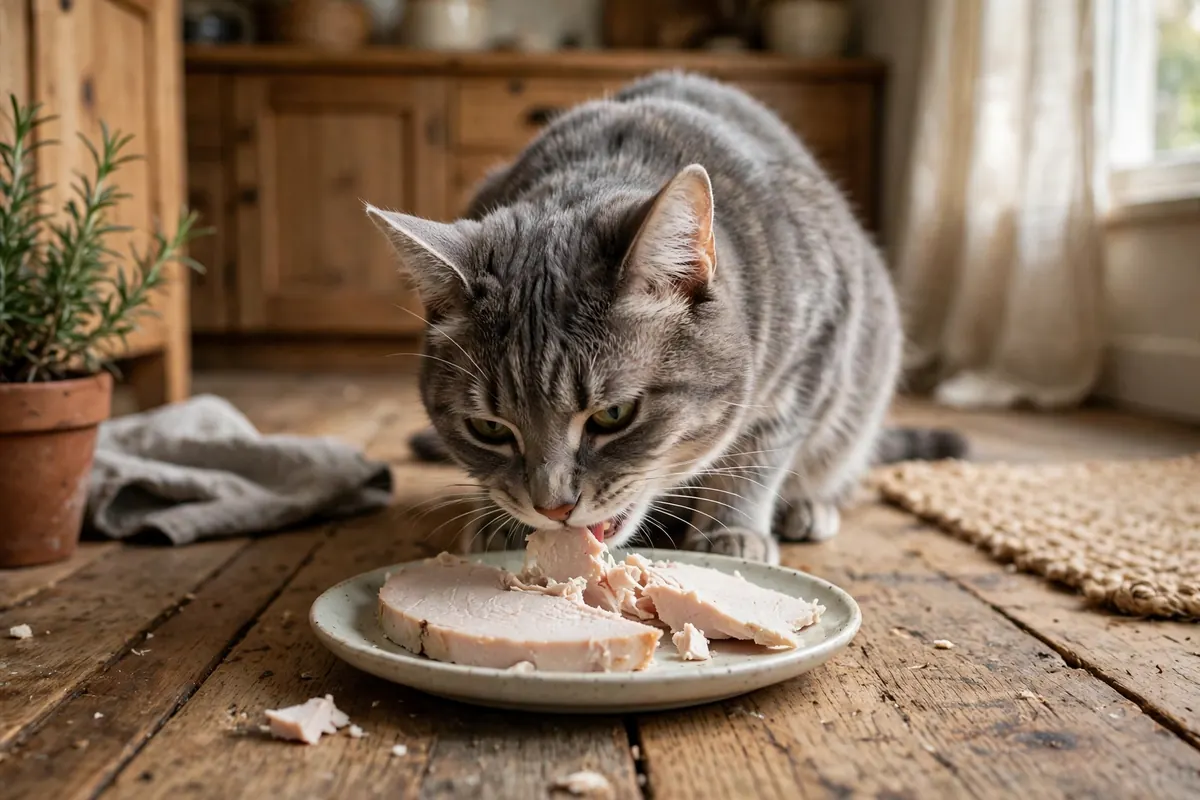
The Short Answer: Yes — Plain Cooked Turkey Is Safe
Yes — cats can eat turkey, as long as it is plain, fully cooked, and served without skin, seasoning, gravy, or bones. Turkey is a lean protein that most cats enjoy, and a small piece of plain turkey is a fine occasional treat. But the turkey on a holiday table is a very different food from the plain turkey your cat can safely eat.
The danger at Thanksgiving is not the turkey itself — it is everything served with it: buttery skin, salty gravy, onion stuffing, and rich leftovers. Keep reading for how to serve turkey safely, how much your cat can eat, and which leftovers to keep away from your cat.
Is Turkey Safe for Cats?
Yes, plain cooked turkey is safe for most cats. Turkey is a lean meat rich in protein, and cats are obligate carnivores built to eat meat. A small piece of plain turkey breast, cooked through and cut into bite-sized pieces, is a healthy occasional treat.
What makes turkey unsafe is the seasoning and the extras. Salt, garlic, onion, butter, gravy, and stuffing all turn a safe piece of turkey into a risky one. Serve turkey plain, with nothing added, and it is a fine treat. Our cat food safety guide covers which holiday foods are safe and which to avoid.
Plain Turkey vs Thanksgiving Leftovers
Plain turkey and Thanksgiving leftovers are not the same food. Plain turkey is a piece of cooked turkey breast with no skin and no seasoning. Thanksgiving leftovers are turkey mixed with butter, salt, gravy, stuffing, and often onion or garlic — all of which can upset your cat's stomach or worse.
Stuffing is the biggest hidden risk: most stuffing contains onion and garlic, which are toxic to cats. Gravy is salty and fatty, and the skin is rich in fat that can trigger stomach upset or pancreatitis. If you want to share turkey with your cat at Thanksgiving, set aside a small piece of plain breast before you season the bird — not after.
The Skin, Gravy, and Stuffing Problem
Turkey skin looks like a treat, but it is mostly fat. A cat that eats turkey skin may develop vomiting, diarrhea, or a sore stomach, and fatty foods can trigger pancreatitis in sensitive cats. Gravy adds salt and fat, and many gravies are made with onion or garlic.
Stuffing is the most dangerous part of the plate. Onion and garlic are toxic to cats, and stuffing is full of both. Never let your cat eat stuffing, and keep the serving dishes covered or out of reach while your cat is around. A cat that steals from the table can eat a dangerous mix before anyone notices.
How Much Turkey Can a Cat Eat?
Treats, including turkey, should stay under 10% of your cat's daily calories. For a typical 4 kg (about 9 lb) adult cat eating around 200 calories a day, that means roughly 20 calories of treats — about two or three small cubes of plain turkey breast, around 20 to 25 grams.
Offer turkey once or twice a week at most, and cut back if your cat starts gaining weight. Turkey is a treat, not a meal replacement, and a cat that fills up on turkey may skip its balanced cat food and miss nutrients it needs.
How to Serve Turkey Safely
Choose plain turkey breast, remove the skin, and make sure the meat is fully cooked with no pink in the middle. Let it cool completely, then cut it into small, bite-sized pieces your cat can chew easily.
Never serve turkey bones, which can splinter and injure your cat's mouth or gut. Never serve deli turkey or processed turkey slices, which are salty and often contain preservatives and onion or garlic powder. Plain, home-cooked turkey breast is the only turkey your cat should eat.
Can Kittens Eat Turkey?
Yes, kittens can eat small pieces of plain cooked turkey, but only once they are weaned and eating solid food — usually from around eight weeks of age. Kittens need a complete kitten food for growth, so turkey should only be a tiny occasional treat, not a meal.
Cut the turkey into very small pieces, make sure it is fully cooked and cooled, and watch your kitten for any stomach upset afterward. Never offer a kitten turkey skin, gravy, stuffing, or bones.
What Happens If My Cat Eats Seasoned Turkey?
A cat that eats seasoned turkey or leftovers may develop vomiting, diarrhea, or a sore stomach within a few hours. If the leftovers contained onion or garlic, the risk is more serious: those ingredients damage red blood cells and can lead to anemia over the following days.
Watch for vomiting, loss of appetite, weakness, and pale gums. If your cat ate stuffing, gravy, or a large amount of skin, call your vet the same day and tell them what your cat ate and how much.
What to Do If Your Cat Ate Turkey Bones or Leftovers
If your cat stole turkey bones or leftovers, stay calm and remove any remaining food. Offer fresh water and keep your cat indoors. Do not try to make your cat vomit, and do not offer milk or home remedies.
Call your vet right away if your cat ate bones, stuffing, or a large amount of skin or gravy. Bones can splinter and cause choking or internal injury, and stuffing can contain onion and garlic. Tell the vet what your cat ate and when, and watch for vomiting, lethargy, and pale gums over the next few days.
Plain cooked turkey is a safe, lean treat for most cats — in small amounts, once or twice a week. The rule at Thanksgiving is simple: set aside a small piece of plain breast before you season the bird, and keep the skin, gravy, stuffing, and bones away from your cat. Your cat does not need the holiday extras, and the plain piece is the treat it will enjoy most.
Can cats eat turkey?
Yes. Plain, fully cooked turkey without skin, seasoning, gravy, or bones is safe for most cats as an occasional treat.
Is turkey safe for cats?
Yes, when it is plain turkey breast with the skin removed and no seasoning. Seasoned turkey and leftovers are a different story.
Can cats eat Thanksgiving turkey leftovers?
Not the usual leftovers. Skin, gravy, and stuffing are fatty, salty, and often contain onion or garlic, which are toxic to cats.
Can kittens eat turkey?
Yes, once they are weaned and eating solid food. Offer only a tiny piece of plain cooked turkey as an occasional treat.
How much turkey can a cat eat?
For a typical 4 kg cat, about two or three small cubes — around 20 to 25 grams — once or twice a week, as part of the 10% treat allowance.
What happens if my cat eats turkey bones?
Bones can splinter and cause choking or internal injury. Remove any remaining bones and call your vet right away.