Can Cats Eat Walnuts?
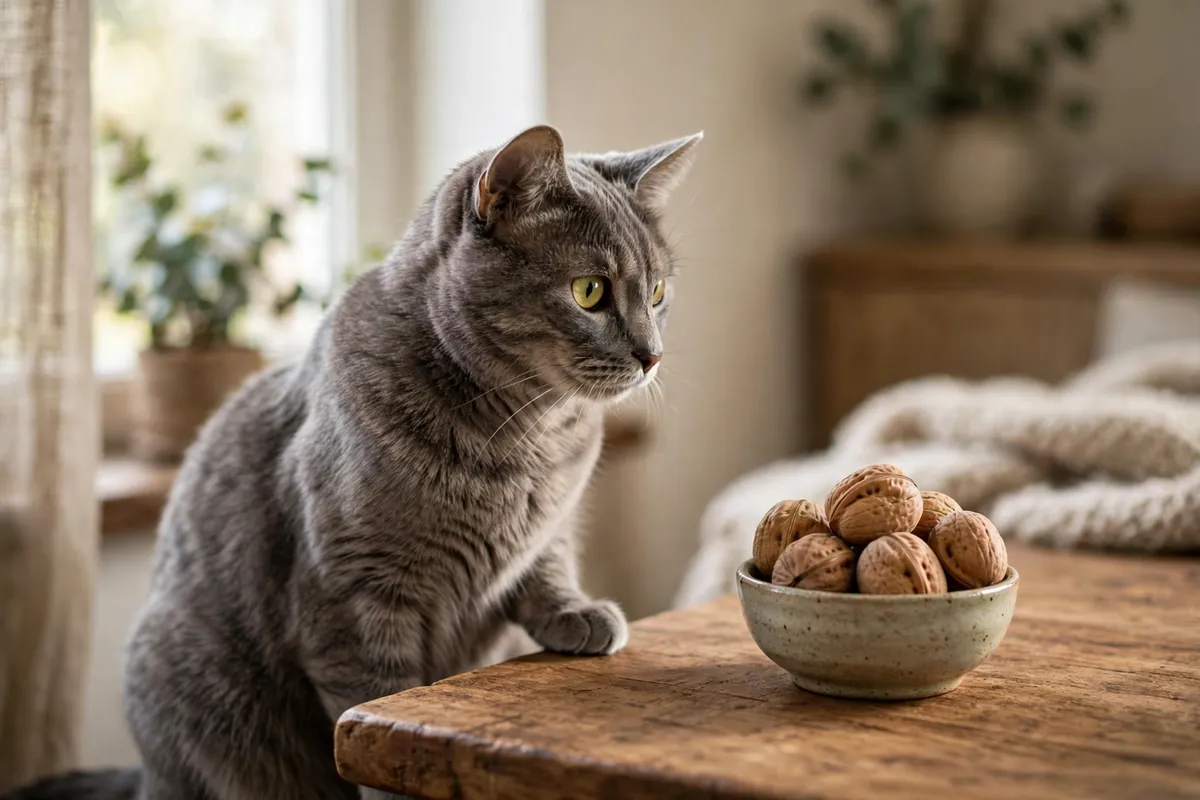
Walnuts sit in an awkward grey area: they are not as clearly toxic as macadamia nuts, but they are not as harmless as a plain peanut either. Some veterinary sources report vomiting and tremors in pets that eat walnuts, while others simply list them as a food to avoid because of their high fat content and choking risk. The honest answer is that the evidence is mixed — and when it is mixed, the safest advice is not to feed them.
This guide covers what is known about walnuts and cats, the difference between English and black walnuts, the mold problem in old walnuts, and what to do if your cat has already eaten some.
The Verdict: Can Cats Eat Walnuts?
Verdict: CAUTION. Walnuts are best avoided for cats. Some sources report vomiting, tremors, and other signs of illness in pets that eat walnuts, and even the mildest reading still leaves a very fatty, hard nut that can choke a cat or upset its stomach. There is no nutritional reason for a cat to eat walnuts, and no safe portion has been established.
Our advice is simple: do not offer walnuts to your cat, in any form. If your cat steals a small piece of plain walnut, it is usually not an emergency — but watch them closely and call your vet if anything seems off.
Why Walnuts Worry Vets: The Mixed Evidence
Unlike grapes or macadamia nuts, walnuts do not have one clear, well-studied toxin that affects cats. What vets do know comes from a mix of case reports and general guidance. Some pet poison resources list walnuts as a food that can cause vomiting, diarrhea, and in some animals tremors or weakness. Others describe walnuts mainly as a high-fat food that can trigger stomach upset and, in larger amounts, inflammation of the pancreas.
That disagreement is itself the point. With walnuts, different trusted sources disagree about how dangerous they are, and very little research has been done specifically in cats. When the risk is uncertain but the benefit is zero — cats get nothing they need from walnuts — the sensible choice is to skip them entirely.
Black Walnuts vs English Walnuts
The walnuts most people buy are English walnuts, the familiar pale, brain-shaped nuts sold shelled in packets. Black walnuts are a different, darker variety, more common in North America, with a much stronger flavour and a harder shell. Black walnuts are the ones most often flagged in pet poison guidance, and they are also the ones most likely to be found in gardens, where fallen nuts can sit and grow mold.
Neither type should be fed to a cat. English walnuts are still very high in fat and hard enough to choke on, and black walnuts carry extra concerns from their stronger compounds and their tendency to mold. If you have a black walnut tree, keep fallen nuts cleaned up and do not let your cat play with them.
The Mold Problem: Old Walnuts Are Worse
One risk that applies to walnuts more than to most other nuts is mold. Walnuts stored badly, left in damp conditions, or fallen from a tree can grow molds that produce tremorgenic mycotoxins — substances that can cause tremors, seizures, and serious illness in animals that eat them.
You cannot tell by looking whether a walnut carries these molds, and cooking does not reliably remove them. If your cat eats a walnut that was old, damp, or found on the ground, treat it more seriously than a fresh walnut from a sealed packet, and call your vet sooner.
Are Walnuts Safe for Cats?
No — walnuts are not a safe food to offer a cat. A tiny piece of plain, fresh English walnut is unlikely to cause serious harm to a healthy adult cat, but that is very different from calling walnuts safe. The reported signs, the high fat, the choking risk, and the mold problem all point the same way: there is no good reason to share them.
Walnut oil, walnut butter, and walnut flour are not safe alternatives either — they concentrate the fat without removing any of the concerns. Baked goods containing walnuts, such as walnut brownies, add sugar and often chocolate as well, and should be kept well away from cats. For a clearer picture of which foods are genuinely dangerous, see our guide to human foods that are poisonous to cats and our guide to whether cats can eat peanuts.
How Much Walnuts Can a Cat Eat?
There is no recommended portion of walnuts for a cat. Unlike plain peanuts, where one crushed nut is a reasonable occasional share, walnuts have no established safe amount, and the mixed evidence means no vet can honestly tell you a portion that is safe. The best portion is none.
If your cat steals a small piece of plain walnut, do not panic — a single small piece is usually not an emergency. But do not take that as permission to offer walnuts on purpose. Watch your cat for the rest of the day, and if you see vomiting, tremors, weakness, or a refusal to eat, call your vet.
Can Kittens Eat Walnuts?
No — kittens should definitely not eat walnuts. A kitten's small body is more vulnerable to every risk walnuts carry: the choking hazard is greater, the fat is harder on a small stomach, and any tremors or weakness would hit a growing kitten harder. Kittens also have no nutritional need for nuts of any kind.
A kitten's growth depends on a complete kitten food, and walnuts only take up room in a tiny stomach. If a kitten does manage to eat a walnut, call your vet the same day even if the kitten seems fine, because kittens can go downhill faster than adult cats.
What Happens If My Cat Eats Walnuts?
A small piece of plain, fresh walnut usually causes nothing worse than mild stomach upset — perhaps a soft stool or a skipped meal. Larger amounts, or salted, flavored, or old and moldy walnuts, are more likely to cause vomiting, diarrhea, and extra thirst.
Take tremors, shaking, weakness, wobbliness, or unusual sleepiness seriously — these are the signs reported in the more serious walnut cases, and they need a vet visit the same day. A swallowed whole walnut is another serious case: watch for pawing at the mouth, gagging, or difficulty breathing. If your cat ate a walnut from the ground or one that looked old or moldy, mention that to your vet.
What to Do If Your Cat Already Ate Walnuts
Work through these steps:
- Take the walnuts away so your cat cannot eat more, and check what kind they were — plain, black, salted, flavored, or old and moldy — and roughly how much was eaten.
- Check for choking signs first. Pawing at the mouth, gagging, or distress means a nut may be stuck — call your vet or an emergency clinic immediately.
- Offer fresh water and let your cat drink freely, especially if the walnuts were salted or flavored.
- Watch for 24 hours. Look for vomiting, diarrhea, tremors, weakness, or wobbliness — not just stomach upset.
- Call your vet right away if you see tremors, weakness, or repeated vomiting, or if your cat ate black walnuts, old or moldy walnuts, a large amount, or if the eater was a kitten.
Never try to make your cat vomit at home unless your vet specifically tells you to. For more food guidance, browse the full Cat Food section on the Purrfect Paws homepage.
Frequently Asked Questions
Are walnuts safe for cats?
No, walnuts are not a safe food to offer a cat. Some sources report vomiting and tremors in pets, and even the mildest reading leaves a very fatty, hard nut with a choking risk.
Can kittens eat walnuts?
No. Kittens should never eat walnuts — the choking risk is higher, their stomachs are more sensitive to fat, and tremors or weakness would affect a growing kitten more seriously.
What happens if my cat eats walnuts?
A small piece of plain walnut usually causes mild stomach upset at most. Larger amounts, black walnuts, or old moldy walnuts are more likely to cause vomiting, diarrhea, tremors, or weakness, which need a vet visit the same day.
How much walnuts can a cat eat?
There is no recommended portion. Because the evidence is mixed and no safe amount has been established, the best portion is none. If your cat steals a small piece, watch them for 24 hours.
Are black walnuts worse than English walnuts for cats?
Yes, black walnuts are generally considered riskier — they are more often flagged in pet poison guidance and more likely to be found fallen and moldy in gardens. Neither type should be fed to a cat.