Can Kittens Have Tuna?
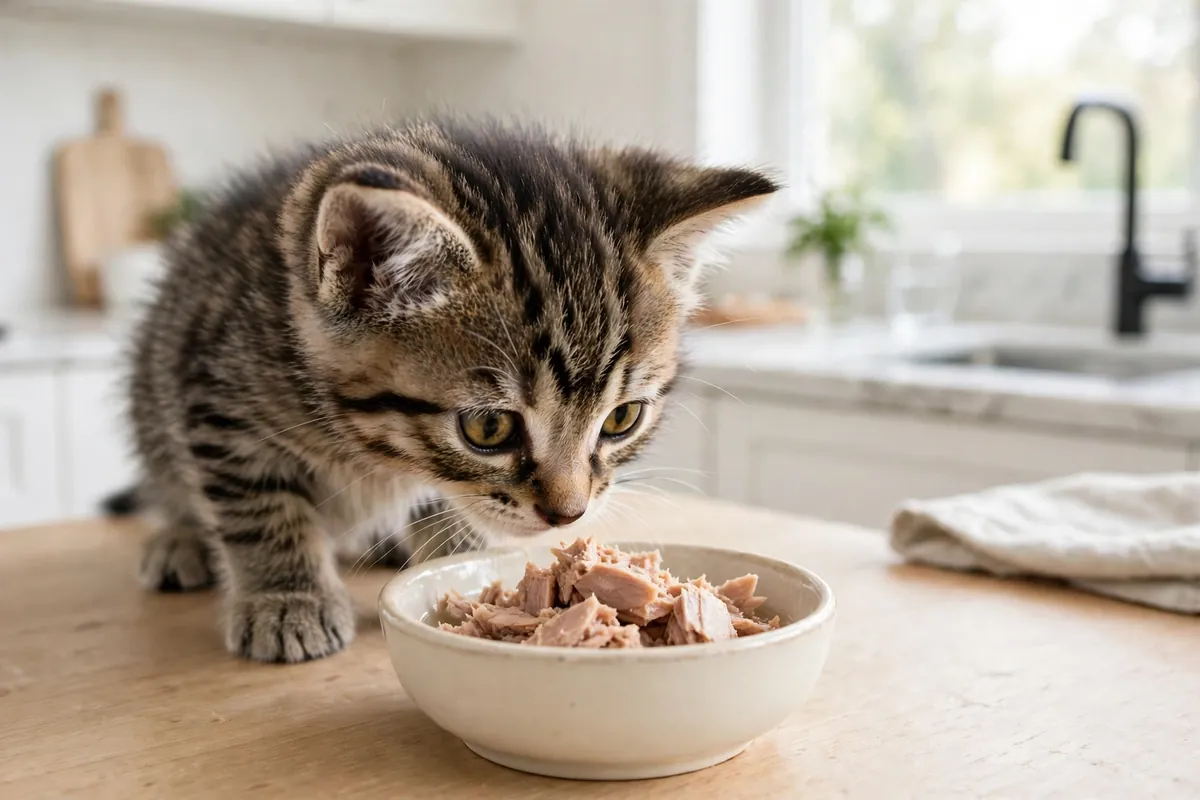
Can kittens have tuna? The short answer is: a tiny taste of plain tuna now and then is usually fine, but tuna should never be a regular part of a kitten's diet. Kittens have very specific nutritional needs in their first year — they need far more protein, calories, and certain nutrients per pound than adult cats — and plain tuna simply does not provide the balanced nutrition a growing kitten requires. Think of tuna as an occasional treat, not a meal.
The confusion is understandable. Cats famously love fish, and a kitten who smells tuna will often beg for it with great enthusiasm. But enthusiasm is not the same as suitability. Tuna carries real risks for kittens, including mercury exposure, an unbalanced diet if fed too often, and the danger of flavoured or seasoned varieties. This guide explains exactly how much tuna, if any, is safe, which kinds to avoid completely, and what to feed your kitten instead.
Why Tuna Is Not a Complete Kitten Food
Kittens grow at an extraordinary rate, doubling or tripling their birth weight in the first few weeks and reaching most of their adult size within a year. To support that growth, kitten food is formulated with higher levels of protein, fat, calcium, and specific nutrients such as DHA for brain and eye development, taurine for heart and vision health, and arachidonic acid. Plain tuna is high in protein but low in several of these essentials, and it contains almost no calcium. A kitten fed mainly on tuna would quickly develop nutritional gaps, including weak bones from calcium deficiency.
Tuna also contains mercury, a heavy metal that accumulates in large, long-lived fish. Adult cats can tolerate tiny amounts occasionally, but kittens are smaller, still developing, and more vulnerable to mercury's effects on the nervous system. This is not a reason to panic over a single lick, but it is the main reason tuna should stay an rare treat rather than a habit. The same logic applies to other large fish, and it is why veterinary nutritionists consistently recommend a complete, balanced kitten food as the foundation of the diet.
How Much Tuna Can a Kitten Have?
If your kitten is healthy, over eight weeks old, and already eating a complete kitten food, a teaspoon-sized taste of plain, unseasoned tuna once in a while is generally considered safe. That means tuna canned in water, drained, with no added salt, oil, onion, garlic, or flavourings — not tuna salad, not tuna in brine with added salt, and never raw tuna. Treats of any kind, tuna included, should make up no more than about ten percent of your kitten's daily calories, and tuna should be only a small part of that treat allowance.
Kittens under eight weeks old should not have tuna at all. Very young kittens are still transitioning from their mother's milk or a milk replacer, their digestive systems are fragile, and new foods can easily cause diarrhoea or vomiting. Even for older kittens, introduce tuna slowly and watch for stomach upset in the following day. If your kitten vomits, develops loose stools, or refuses his normal food after tuna, skip it in future and mention it at his next vet visit.
Types of Tuna to Avoid for Kittens
Not all tuna is equal, and some forms are genuinely dangerous for kittens. Raw tuna can carry bacteria and parasites, and it contains an enzyme called thiaminase that breaks down thiamine (vitamin B1) — a deficiency that can cause serious neurological problems in cats. Canned tuna in oil adds unnecessary fat and calories, while tuna with added salt raises sodium intake far beyond what a small kitten needs. Flavoured tuna products may contain onion or garlic powder, both of which are toxic to cats even in small amounts.
Also avoid tuna-based cat treats marketed for adult cats as a daily food, and never let tuna replace kitten food for a fussy eater. It is tempting to give in when a kitten refuses his bowl but begs for fish, but a kitten who learns that holding out earns tuna can become a picky eater with an unbalanced diet. If your kitten consistently refuses his food, that is worth a vet conversation about the food itself, rather than a reason to switch to tuna.
What to Feed Your Kitten Instead
The best foundation is a commercial food labelled complete and balanced for kittens, or for all life stages, from a reputable brand. Wet kitten food is often easier for young kittens to eat and helps with hydration, while dry kitten food supports dental health and is convenient for free feeding in measured amounts. Many owners use a mix of both, following the feeding guide on the pack and adjusting for their kitten's weight and growth with their vet's guidance.
For a fish flavour your kitten can enjoy safely, look for kitten foods that include fish as one ingredient among many, rather than plain tuna alone. Small amounts of cooked, plain salmon or white fish can also be offered as an occasional treat, following the same ten-percent treat rule. If you want to use a high-value treat for training or bonding, tiny pieces of cooked chicken or a commercial kitten treat are safer everyday choices than tuna.
Signs Tuna Has Not Agreed With Your Kitten
Most kittens tolerate a tiny taste without any issue, but watch for vomiting, diarrhoea, excessive drooling, lethargy, or a refusal to eat normal food in the day after tuna. An allergic reaction to fish is uncommon but possible, and it usually shows as itching, face swelling, or stomach upset. Any swelling of the face, difficulty breathing, or repeated vomiting after eating tuna is a reason to call your vet promptly. For ongoing digestive problems, keep a note of what your kitten ate and when — patterns are much easier for a vet to work with than a single incident remembered weeks later.
The bottom line is reassuring: you do not need to feel guilty about the occasional tiny taste, and you do not need tuna to make your kitten happy. A balanced kitten food, fresh water, play, and attention will do far more for his growth than any fish from a tin. Save the tuna for a rare treat, keep the portion tiny, keep it plain, and let his proper kitten food do the real work of growing a healthy cat.
Frequently Asked Questions
Can kittens have tuna every day?
No. Tuna should only be a rare, tiny treat for kittens, not a daily food. It is nutritionally incomplete for growth and contains mercury that builds up with frequent feeding.
Is canned tuna in water safe for kittens?
A teaspoon of plain tuna canned in water, drained and unseasoned, is generally safe as an occasional treat for kittens over eight weeks old. Avoid tuna in oil, brine, or with flavourings.
Can kittens eat raw tuna?
No. Raw tuna can carry bacteria and parasites and contains an enzyme that destroys thiamine, which can cause serious neurological problems in cats.
What age can kittens try tuna?
Wait until at least eight weeks old, and even then only a tiny taste. Very young kittens have fragile digestive systems and should stick to mother's milk, milk replacer, or kitten food.
My kitten only wants tuna — what should I do?
Do not let tuna replace kitten food. Offer a complete kitten food consistently, use tiny amounts of cooked chicken or kitten treats for training instead, and ask your vet if your kitten persistently refuses food.