Cat Hyperthyroidism Signs
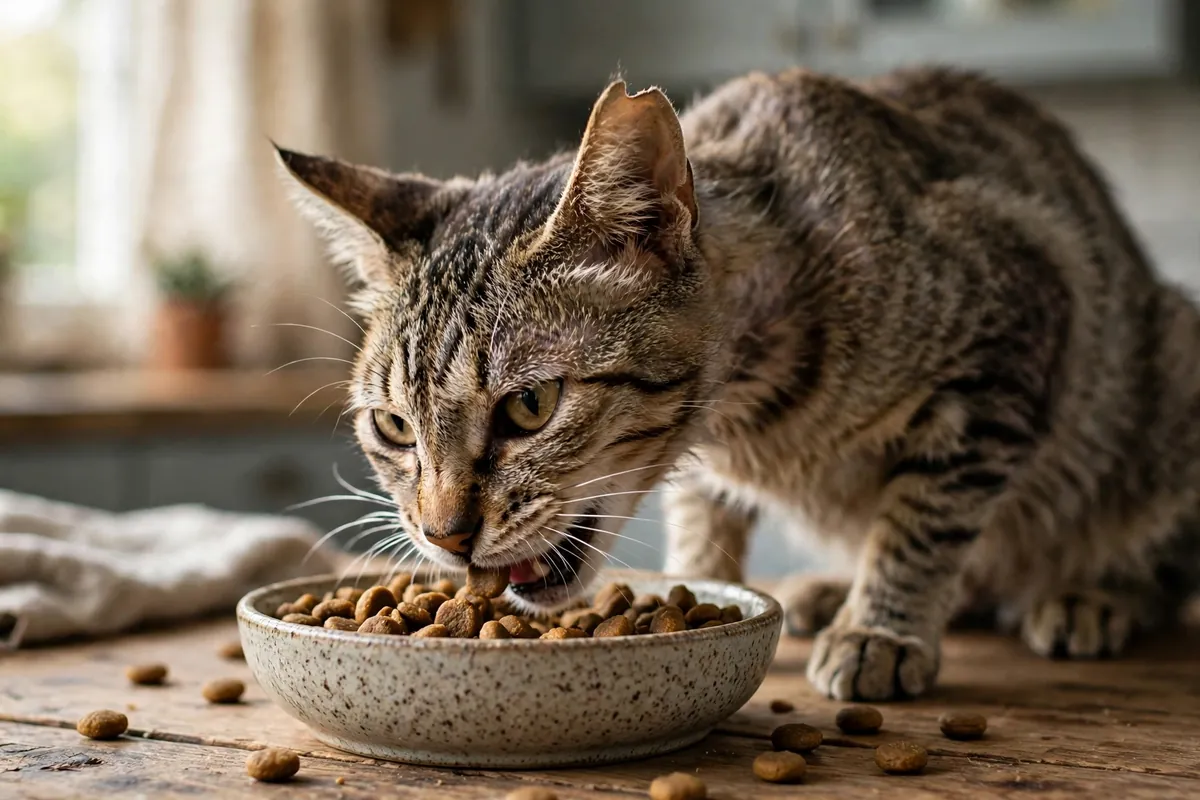
Cat hyperthyroidism symptoms are easy to misread, because the first sign often looks like good news. Hyperthyroidism is an overactive thyroid gland that floods the body with too much thyroid hormone, speeding up metabolism. An older cat who suddenly seems young again — racing around at night, begging for food, full of restless energy — may not be enjoying a second youth. In many senior cats, that burst of energy is the disease itself.
This trap is why hyperthyroidism is so often diagnosed late. Owners naturally celebrate when a quiet old cat perks up, and the weight loss gets blamed on old age or a fussy appetite. In reality, untreated hyperthyroidism strains the heart and kidneys and can seriously shorten a cat's life. This guide covers the signs, diagnosis, what happens without treatment, and how the four treatment options compare.
What Is Hyperthyroidism in Cats?
The thyroid is a small neck gland producing hormones that control how fast the body burns energy. In hyperthyroidism, it becomes overactive — usually from a benign (non-cancerous) enlargement — and produces far too much thyroid hormone. Metabolism shifts into overdrive: heart beats faster, gut moves faster, and the body burns calories faster than food can replace them.
It is one of the most common hormonal disorders in older cats, typically appearing after age 10 in both sexes. The good news: it is very treatable, and well-managed cats often live comfortably for years afterward.
The "Acting Young Again" Trap
Here is the pattern that fools so many owners. A cat who has been slowing down for years suddenly becomes restless and hyperactive, paces the house, yowls at night, and demands food constantly. It feels like a miracle — your old cat has kitten energy back. But when that energy comes with weight loss, it is a warning sign, not a recovery.
The difference lies in the details. A healthy senior cat is active in a settled way: they play, then rest contentedly. A hyperthyroid cat is wired rather than playful — restless, unable to settle, hungry yet visibly thinning, drinking more, and agitated or clingy by turns. If your older cat's "second youth" looks frantic rather than joyful, call the vet, don't celebrate.
Other Signs of Hyperthyroidism to Watch For
- Weight loss despite a big appetite. This is the hallmark combination. The cat eats more than ever — sometimes ravenously — yet steadily loses weight, because the revved-up metabolism burns calories faster than food can supply them. Muscle wasting over the back and hips often shows over weeks.
- Restlessness and night-time yowling. Hyperthyroid cats often pace, struggle to settle, and vocalize loudly at night. Owners sometimes assume this is confusion or attention-seeking, but it is frequently driven by the excess hormone, and it often improves once treatment starts.
- Fast heartbeat and panting. A vet may detect a racing heart rate or a heart murmur during an exam. At home, you might notice your cat breathing faster than usual at rest, or occasionally panting — something cats rarely do. These are signs the heart is working harder than it should.
- Increased thirst and urination. Like diabetes and kidney disease, hyperthyroidism can increase drinking and urination — which is why blood tests, not guesswork, tell these conditions apart.
- Vomiting, diarrhea, and an unkempt coat. A faster gut means food moves through too quickly, causing intermittent vomiting or loose stools. Many hyperthyroid cats also groom less, so the coat looks dull, greasy, or matted — easy to overlook in a long-haired cat.
- Behavior changes. Some cats become unusually clingy or demanding, while others turn irritable when handled. A clear personality shift in a senior cat, especially alongside weight loss, deserves medical attention, not dismissal as grumpiness.
How Vets Diagnose Hyperthyroidism
Diagnosis is usually straightforward. Your vet will start with a physical exam — checking weight trends, feeling the neck for an enlarged thyroid gland, and listening to the heart — then run blood tests. The key measurement is total T4, the main thyroid hormone. A clearly high T4 confirms the diagnosis; if borderline, which happens in early or mild cases, the vet may repeat the test or add further thyroid tests.
Blood work also reveals how the rest of the body is coping. Vets check kidney and liver values and blood pressure, because hyperthyroidism can mask underlying kidney disease, and treating the thyroid can change kidney function. That full picture shapes which treatment is safest.
What Happens If Hyperthyroidism Goes Untreated?
Left untreated, hyperthyroidism does not stay stable — it progresses. The racing metabolism strains the heart, which can thicken and eventually fail, and raises blood pressure, which can damage the eyes, kidneys, and brain. Weight and muscle loss continue, the coat deteriorates, and the cat gradually weakens despite eating well. High blood pressure-related blindness can even develop suddenly.
This is the sad irony of the "young again" trap: the condition that looks like renewed vitality is quietly wearing the body out. The earlier treatment begins, the less damage accumulates, and the better the cat's long-term outlook. A senior cat showing the signs above should be tested promptly, even if they still seem bright and active.
Treatment Options Compared
There are four main approaches, and the right one depends on your cat's age, overall health, temperament, and your circumstances. Your vet will help you weigh them:
| Option | How it works | Pros | Cons |
|---|---|---|---|
| Daily medication | Tablets or transdermal gel that block thyroid hormone production | No anesthesia or hospitalization; easy to start and adjust | Lifelong daily dosing; possible side effects; needs regular blood monitoring |
| Radioiodine therapy | A single injection of radioactive iodine that targets overactive thyroid tissue | Often curative; one-time treatment; no daily pills | Requires a specialized facility and a short hospital stay; higher upfront cost; not available everywhere |
| Surgery | Surgical removal of the affected thyroid gland | Can be curative; one procedure | Requires anesthesia, which carries extra risk for older cats; possible damage to nearby parathyroid glands |
| Prescription diet | A food strictly limited in iodine, which the thyroid needs to make hormone | No drugs or procedures; simple in principle | Only works if the cat eats nothing else at all — no treats, no table scraps, no hunting; not suitable for multi-cat households where food is shared |
Many vets start with medication to stabilize the cat and confirm the diagnosis, then discuss a curative option such as radioiodine for good candidates. There is no single best choice for every cat — the best option is the one your cat tolerates well and you can sustain long term.
Living With a Hyperthyroid Cat
Day-to-day care is mostly about consistency and observation. Give medication exactly as prescribed, at the same times each day, and never skip doses because your cat "looks fine" — hormone levels rise again quickly without it. Weigh your cat monthly, since weight is the simplest early warning that control is slipping, and keep vet rechecks to confirm the dose and catch kidney or heart changes early.
Most cats improve noticeably within weeks of starting treatment — calmer nights, a steadier appetite, and gradual weight gain. Keep the home calm, offer food little and often if appetite is erratic, and groom gently if the coat needs help. With good management, many hyperthyroid cats enjoy years of comfortable life.
When to Call the Vet: Red-Flag Checklist
Contact your veterinarian promptly — the same day, or an emergency clinic after hours — if you notice any of the following:
- Rapid weight loss, especially alongside a ravenous appetite.
- New restlessness, pacing, or loud night-time yowling in a senior cat.
- Breathing that is fast, labored, or open-mouthed at rest.
- Vomiting or diarrhea that persists for more than a day, or any vomiting in a cat who is also losing weight.
- Sudden blindness, bumping into objects, or dilated pupils that do not respond to light.
- Collapse, extreme weakness, or inability to stand.
- A cat on thyroid medication who becomes lethargic, stops eating, or vomits repeatedly — the dose may need adjusting.
When in doubt, call. A simple blood test can settle the question, and catching hyperthyroidism early protects your cat's heart and kidneys.
Frequently Asked Questions
What is hyperthyroidism in cats?
Hyperthyroidism is an overactive thyroid gland producing too much thyroid hormone, speeding up metabolism. It most commonly affects older cats and is usually caused by a benign enlargement of the gland.
Can hyperthyroidism in cats be cured?
Radioiodine treatment and surgical removal of the affected thyroid tissue can cure the condition in many cats, while medication and prescription diet control it without curing it. The best option depends on your cat's age, health, and vet advice.
Is hyperthyroidism painful for cats?
It is not usually described as painful, but untreated hyperthyroidism makes cats feel unwell — restless, hungry yet losing weight, with a racing heart — and can damage the heart and kidneys over time. Treatment usually brings noticeable improvement.
How is hyperthyroidism diagnosed in cats?
Vets diagnose it mainly through blood tests measuring thyroid hormone (total T4), sometimes repeated or combined with other tests if results are borderline. An exam often reveals weight loss, a fast heartbeat, and sometimes an enlarged thyroid gland.
My older cat is suddenly hyperactive — is that hyperthyroidism?
It can be. A sudden burst of restlessness, hunger, and night-time activity in a senior cat is a classic early pattern of hyperthyroidism, especially when combined with weight loss. A simple blood test can confirm or rule it out, so it is worth a vet visit.