Cornish Rex: Complete Breed Guide
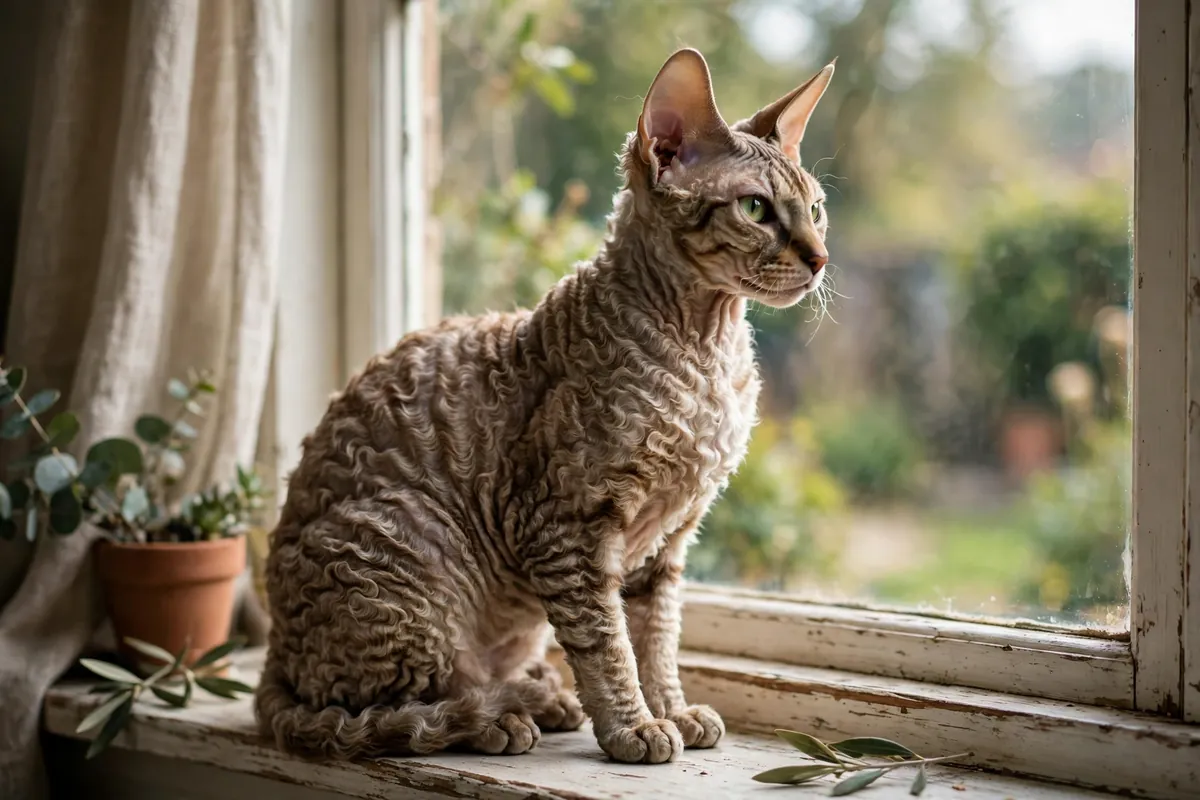
With its rippling, curly coat, oversized ears, and impossibly slender, athletic body, the Cornish Rex looks like no other cat — and it behaves like no other cat either. This is a breed that stays kitten-like for years: leaping to the top of bookshelves, playing fetch down the hallway, riding on shoulders, and curling up under the covers at night. If you want a lively, affectionate, endlessly entertaining companion, the Cornish Rex is one of the most rewarding breeds you can choose.
This complete Cornish Rex breed guide covers the breed's surprising origin, its unique coat and appearance, its high-energy personality, grooming and feeding needs, health considerations, and what it is really like to share your home with one of these curly-coated characters.
Cornish Rex History and Origin
The Cornish Rex story begins in Cornwall, England, in 1950, when a farm cat gave birth to a litter that included one extraordinary kitten with a soft, wavy coat. That kitten, named Kallibunker, became the foundation of the breed. Breeders soon discovered that his curly coat came from a recessive gene — quite different from the gene behind the Devon Rex, which arose separately in the neighboring county of Devon and is a distinct breed despite the similar name and curly appearance.
Careful breeding programs in Britain and later in the United States established the Cornish Rex as a recognized breed, prized for its elegant, greyhound-like build and its waves of soft fur. Today the Cornish Rex is a well-established breed worldwide, beloved by owners who want a cat with both striking looks and an outgoing, clownish personality.
Cornish Rex Appearance: The Curly Coat
The Cornish Rex's defining feature is its coat — or rather, its lack of a normal one. Most cats have three layers of fur: guard hairs, awn hairs, and a downy undercoat. The Cornish Rex has only the soft down layer, which grows in tight, even waves that lie close to the body, like rows of corduroy. The result is a coat that feels like warm velvet and shows off the cat's slim, muscular frame.
Beneath that remarkable coat is an equally distinctive body: long and slender, with an arched back, long legs, a long tapering tail, and a narrow, egg-shaped head with high cheekbones and very large, upright ears. Their eyes are oval and often gold, green, or hazel. Adults typically weigh just 6 to 9 pounds, but they are far more muscular and athletic than their weight suggests. Cornish Rex cats come in virtually every color and pattern, from solid white and black to tabby, tortoiseshell, and colorpoint.
Cornish Rex Temperament and Personality
If the coat draws you in, the personality keeps you. Cornish Rex cats are famously extroverted, curious, and playful. They want to be where the action is — perched on your shoulder while you cook, investigating every shopping bag, or joining in with guests. They are sometimes described as the "greyhounds of the cat world," not only for their build but for their speed, agility, and love of a good sprint around the house.
These cats stay playful far longer than most breeds, and they are unusually trainable for cats: many learn to fetch, walk on a leash indoors, and come when called.
Cornish Rex Care: Grooming, Feeding, and Play
Grooming a Cornish Rex is easy, but it must be gentle. Because the coat is so fine and delicate, vigorous brushing can break the waves or damage the hair. A light pass with a soft brush or your hand once a week is usually plenty, and many owners simply wipe the coat with a damp cloth. Bathing should be infrequent and done with a gentle, cat-safe shampoo, since over-bathing can dry out the skin and disturb the coat's natural oils.
These cats are also famously warm-seeking. With so little insulating fur, a Cornish Rex will hunt out sunny spots, warm laps, radiators, and blankets — and in cold weather, many happily wear a soft cat sweater indoors. Keep your Cornish Rex as an indoor cat, and provide warm, draft-free sleeping spots.
Feeding deserves attention too: Cornish Rex cats have fast metabolisms and high energy levels, so they burn calories quickly and often eat more than you might expect for their size. Feed a high-quality, protein-rich diet, measure portions, and watch body condition rather than relying on weight alone — you should be able to feel, but not prominently see, the ribs. Daily interactive play is essential: wand toys, feather teasers, climbing shelves, and puzzle feeders all help channel that famous energy.
Cornish Rex Health and Lifespan
Cornish Rex cats are generally healthy and typically live 11 to 15 years, with many living longer. Their thin coat does make them more sensitive to cold and sunburn, so indoor living and sun protection matter. Like several purebred cats, they can be prone to hypertrophic cardiomyopathy (a form of heart disease), so responsible breeders screen breeding cats, and regular veterinary checkups — including heart listening at routine visits — are wise.
Some Cornish Rex lines can also be affected by a hereditary muscle condition known as hypotrichosis-related myopathy in kittens, which is why choosing a reputable breeder who health-tests is especially important. Skin irritation can occasionally occur if the coat is over-groomed or over-bathed. As with any cat, sudden changes in appetite, energy, breathing, or litter box habits should prompt a veterinary visit rather than a wait-and-see approach.
Living With a Cornish Rex
A Cornish Rex suits an active, interactive household. They do well with families, couples, and singles who are home a good deal and enjoy playing with their cat. They adapt well to apartments as long as vertical space — shelves, tall trees, window perches — gives them room to climb and survey their kingdom. They usually welcome other pets, especially if introduced gradually, and they are a good choice for owners who want a cat that is truly part of the family rather than a decorative presence.
They are less suited to homes where everyone is out all day, or to owners who want a calm, low-energy lap cat that sleeps for 18 hours. A Cornish Rex will be on the move, in your face, and in your bed — and for the right owner, that is exactly the point.
Is a Cornish Rex Right for You?
Choose a Cornish Rex if you want a strikingly unusual-looking cat with a huge personality: athletic, affectionate, funny, and endlessly interactive. Be ready for daily play, a warm spot on the sofa permanently reserved, and a cat that will follow you everywhere. If you prefer a quiet, independent cat, another breed may suit you better. When choosing a breeder, ask about heart screening and health testing, and make sure kittens stay with their mother until at least 12 weeks; breed-specific rescues are also worth checking for adult Cornish Rex cats needing homes.
From the first ripple of that velvet coat to the last game of fetch before bedtime, the Cornish Rex is a breed that turns everyday life into entertainment — a small, curly-coated companion with a very big character.
Frequently Asked Questions
Are Cornish Rex cats hypoallergenic?
No cat is truly hypoallergenic. Cornish Rex cats shed less than many breeds because they lack a thick outer coat, and some allergy sufferers find them easier to live with, but they still produce the Fel d 1 protein that triggers most cat allergies. Spend time with the breed before committing if allergies are a concern.
Do Cornish Rex cats need special grooming?
Their wavy coat needs gentle handling. Brush lightly and infrequently with a soft brush, avoid over-bathing, and never use harsh grooming tools that could break the delicate curls. Most Cornish Rex cats need only occasional light grooming.
Are Cornish Rex cats good with children and other pets?
Yes. Cornish Rex cats are famously social, playful, and adaptable. They usually enjoy children, other cats, and cat-friendly dogs, especially when introductions are made gradually.
Do Cornish Rex cats get cold easily?
They can. With only a thin, wavy coat and little insulating fur, Cornish Rex cats feel the cold more than most breeds. Keep them indoors, provide warm beds and blankets, and consider a cozy sweater in winter if your cat tolerates it.
How active are Cornish Rex cats?
Very active. Cornish Rex cats are athletic, curious, and playful well into adulthood. They love to climb, leap, chase toys, and even play fetch, and they need daily interactive play to stay happy.