Do Cats Like the Smell of Lavender?
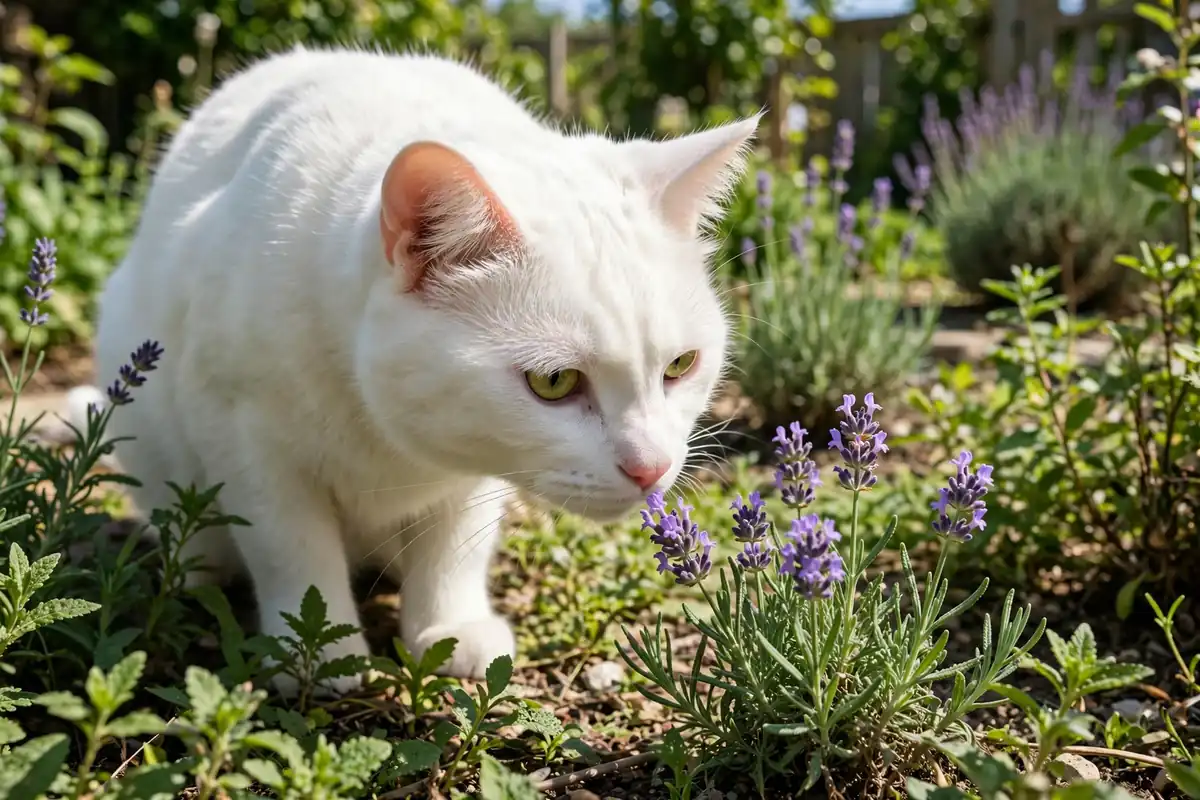
Do cats like the smell of lavender? For most cats, the answer is no — lavender is one of the scents cats tend to avoid, and for good reason. Cats have a sense of smell roughly fourteen times stronger than ours, so a fragrance that seems gentle and relaxing to us can smell overwhelming to them. Many cats will sniff a lavender plant once, pull back, and walk away, which is their polite way of saying they are not interested.
There is also an important safety distinction to make: the smell of a fresh lavender plant in the garden is very different from lavender essential oil, diffusers, or scented products indoors. Lavender essential oil contains compounds that are toxic to cats, and concentrated exposure can make a cat genuinely ill. This guide explains how cats actually react to lavender, why the oil is dangerous, and which calming options are genuinely safe for a feline home.
How Cats React to the Smell of Lavender
Most cats show mild avoidance of lavender. Put a sprig near a cat and you will often see a quick sniff, a head turn, ears flattening slightly, or the cat simply leaving the area. That is not fear — it is a preference. Cats are famously particular about smells, and they tend to dislike strong floral, citrus, and herbal fragrances, including lavender, rosemary, and rue. A minority of cats seem indifferent, and a few will rub against a lavender plant in the garden, but enthusiastic love of lavender is rare in cats, unlike their famous devotion to catnip and silver vine.
Individual variation matters, though. A cat who grew up around a lavender bush may ignore it completely, while a cat encountering it for the first time may sneeze or avoid the room. Kittens and cats with respiratory conditions such as asthma are more sensitive still, and strong scents of any kind can irritate their airways. The safest way to read your cat is to watch his body language: a relaxed cat who stays nearby is unbothered, while a cat who leaves, sneezes repeatedly, or paws at his face is telling you the scent is too much.
Is Lavender Toxic to Cats?
Fresh lavender plants contain small amounts of linalool and linalyl acetate, the compounds that give lavender its scent. In the tiny quantities a cat might ingest by nibbling a leaf in the garden, these are usually only mildly irritating, causing drooling or a brief stomach upset at most — and most cats will not eat lavender in the first place because they dislike the taste as much as the smell. The plant itself is listed as toxic to cats by veterinary poison resources, but garden exposure is generally considered low risk precisely because cats avoid it.
Lavender essential oil is a different story. Essential oils are highly concentrated, and cats are unusually vulnerable to them because their livers lack certain enzymes needed to break down the compounds. Diffusing lavender oil in a closed room, applying it to a cat's fur or bedding, or using lavender-scented cleaning products can cause drooling, pawing at the face, lethargy, vomiting, difficulty breathing, or, in severe cases, liver damage. Never apply essential oils to a cat, never diffuse them in a room your cat cannot leave, and never use lavender oil as a calming remedy for a cat.
Lavender Products Around the House: What to Avoid
The risk comes less from a plant on a windowsill and more from everyday products. Scented candles, reed diffusers, plug-in air fresheners, laundry detergents, and fabric softeners with lavender fragrance all release scent continuously into rooms where cats live, groom, and sleep — and cats groom scented fur and bedding, ingesting whatever was deposited there. Litter products with added lavender fragrance are a particular problem, because the cat stands directly in the scent and then grooms his paws.
If you love lavender, keep it outdoors or in a room your cat does not use, and choose unscented products for anything that touches your cat: litter, bedding, laundry, and cleaning sprays for his areas. If you have been diffusing lavender, ventilate the room well, remove the diffuser, and watch your cat for sneezing, drooling, or unusual quietness over the next day. Any breathing difficulty, persistent vomiting, or collapse after essential oil exposure is a veterinary emergency — take the product packaging with you if you go to the clinic.
Do Cats Find Lavender Calming?
Lavender is marketed to humans as a calming scent, and it is natural to wonder whether it works for cats too. The evidence for cats is weak, and the risk profile makes it a poor choice regardless. Unlike humans, cats do not reliably relax in response to lavender, and a scent a cat dislikes is more likely to cause stress than to relieve it — a cat who avoids a room because of a diffuser is not calmer, he is just avoiding an unpleasant stimulus.
For genuine feline calming, synthetic feline facial pheromone products, which mimic the scent cats deposit when they rub their cheeks on objects, are the vet-recommended option. They are odourless to humans, designed specifically for cats, and available as plug-in diffusers and sprays. Other proven calming strategies cost nothing: predictable routines, hiding spots, vertical space, play sessions, and a quiet resting area away from household noise. These work with your cat's natural behaviour instead of against his nose.
Safer Scents and Plants for Cat Homes
If you want greenery or fragrance that your cat can actually enjoy, cat grass, catnip, and silver vine are the classics — all safe for cats to sniff, rub, and nibble, and all genuinely enriching. Olive wood, valerian root toys, and chamomile in very small, cat-safe forms are also popular with many cats, though individual reactions vary and valerian can overexcite some cats. As a rule, introduce any new scent or plant one at a time, let your cat choose whether to approach it, and remove it if he shows avoidance or any sign of irritation.
The bottom line on lavender is simple: most cats do not like the smell, the plant is best kept where cats can ignore it, and the oil should stay out of a cat home entirely. You do not need lavender to have a calm cat — a pheromone diffuser, a sunny windowsill, and a predictable routine will do far more, without asking your cat to breathe in a scent he would rather avoid.
Frequently Asked Questions
Do cats like the smell of lavender?
Most cats do not. Lavender is a strong floral scent that most cats avoid or ignore, though a few are indifferent to it. Enthusiastic love of lavender is rare in cats.
Is lavender essential oil safe for cats?
No. Lavender essential oil is toxic to cats because their livers cannot properly break down its compounds. Never apply it to a cat or diffuse it in a room your cat cannot leave.
Can cats be around lavender plants in the garden?
Generally yes — most cats avoid lavender plants on their own, and nibbling a leaf usually causes only mild irritation at most. The risk is much higher from concentrated oils indoors.
What scents do cats like instead of lavender?
Catnip, silver vine, and cat grass are the classic cat-friendly options. Synthetic feline pheromone products are the vet-recommended choice for calming.
My cat was exposed to a lavender diffuser — what should I do?
Remove the diffuser, ventilate the room, and watch for sneezing, drooling, lethargy, or vomiting. Seek prompt vet care for breathing difficulty, persistent vomiting, or collapse.