Is Lavender Toxic to Cats?
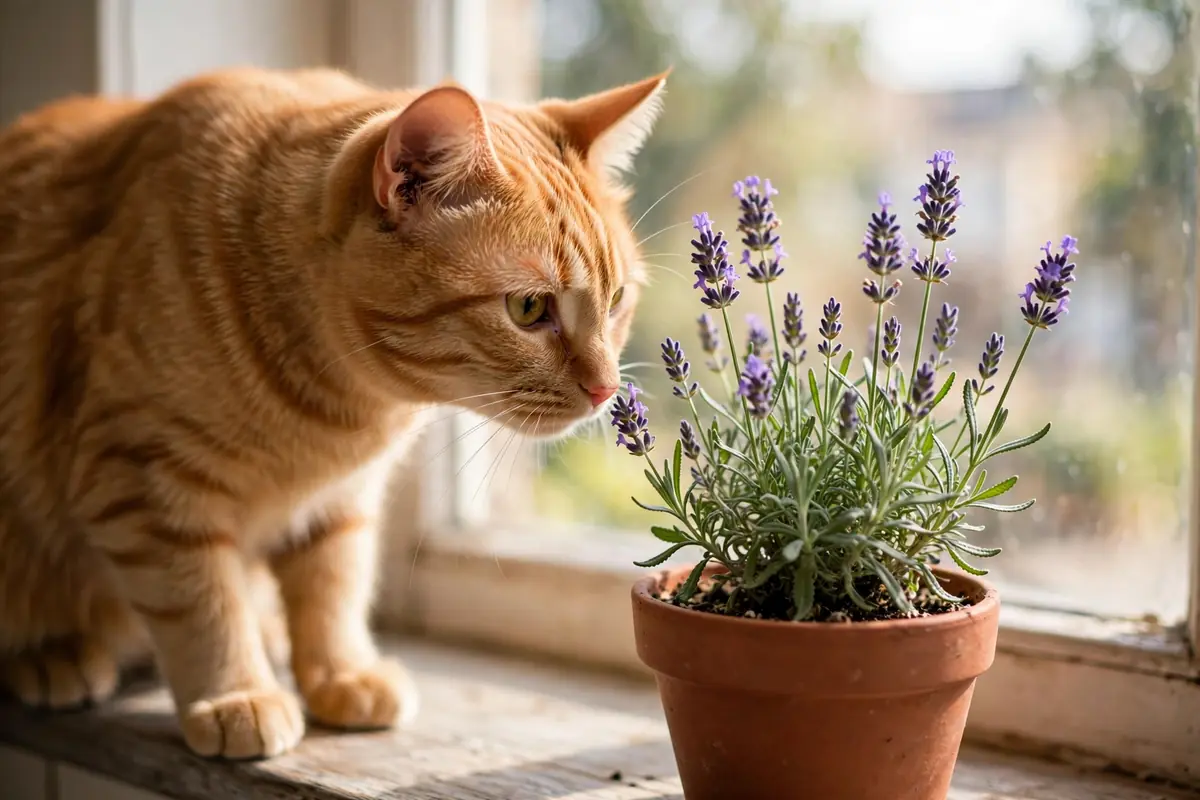
Is lavender toxic to cats? Yes — the ASPCA lists lavender as toxic to cats, dogs, and horses. The plant contains compounds called linalool and linalyl acetate that cats struggle to process, and concentrated forms like lavender essential oil are considerably more dangerous than a sprig of the fresh plant.
That said, not every lavender exposure is an emergency. A curious nibble on a dried sprig is very different from licking spilled essential oil. This guide explains why lavender harms cats, which forms are riskiest, the warning signs of lavender poisoning, what to do if your cat eats some, and the safer plant alternatives that keep both your home and your cat happy.
Is Lavender Toxic to Cats? The Short Answer
Yes. Lavender in all its common forms — fresh plants, dried bouquets, sachets, potpourri, and especially essential oils — contains substances that are toxic to cats. The ASPCA's toxic plant database lists lavender (Lavandula) as toxic to cats, with the toxic principles identified as linalool and linalyl acetate.
The level of danger depends heavily on the form and the amount. Most cats find the strong scent of lavender off-putting and leave the plant alone, which is one reason serious poisonings are uncommon. But curious kittens, bored indoor cats, and cats attracted to the texture of dried flower buds do chew plants — and essential oils, which concentrate the plant's compounds many times over, are a genuine hazard even in small amounts.
Why Lavender Harms Cats (Linalool & Linalyl Acetate)
Lavender's signature scent comes from a cocktail of aromatic compounds, two of which — linalool and linalyl acetate — are the problem for cats. These compounds are found in the flowers, leaves, and stems of the plant, and they are extracted in very high concentration when lavender is distilled into essential oil.
Cats are unusually sensitive to these compounds because of how their livers work. Cats lack certain liver enzymes (glucuronyl transferase) that humans and dogs use to break down and clear many plant compounds and essential oils. That means substances a human body handles easily can linger and build up in a cat's system, irritating the digestive tract and, in larger exposures, affecting the nervous system and liver.
This is not unique to lavender — it is the same reason many essential oils (tea tree, eucalyptus, citrus oils, and others) are considered dangerous for cats. Lavender sits in the middle of the risk spectrum: less acutely dangerous than tea tree oil, but still officially classified as toxic, and still capable of making a cat genuinely sick.
Signs of Lavender Poisoning in Cats
If your cat has chewed lavender or been exposed to its oil, watch for these signs over the next several hours:
- Nausea and vomiting. The most common reaction — the body trying to expel the irritating compounds.
- Loss of appetite. A cat that suddenly refuses food after plant exposure may have an upset stomach or nausea.
- Drooling. Excessive drooling can follow chewing the bitter plant material or licking oil.
- Lethargy. An unusually sleepy, withdrawn, or wobbly cat after lavender exposure deserves prompt veterinary attention.
- Difficulty breathing. Rare with the plant itself, but possible with concentrated essential oil exposure — treat this as urgent.
Mild signs after a small nibble of dried lavender often pass on their own, but you should still monitor your cat closely for 24 hours. Any sign that worsens instead of improving — repeated vomiting, refusal to eat or drink, extreme sleepiness, or trouble breathing — means it is time to call your veterinarian rather than wait it out.
Lavender Essential Oil: Extra Dangerous
This is the form that deserves the most caution. Lavender essential oil concentrates linalool and linalyl acetate to levels far beyond what any sprig of the plant contains. A few licks of spilled oil, or oil rubbed onto a cat's fur or skin (some well-meaning owners use essential oils as "natural" flea repellents — please do not), can cause serious poisoning.
Diffusers deserve care too. Passive reed diffusers and ultrasonic diffusers release fine oil droplets into the air, which can settle on your cat's fur and be swallowed during grooming, or irritate a cat's sensitive airways. If you love diffusing scents, do it only in a well-ventilated room your cat can freely leave, keep the diffuser out of reach, and never diffuse in a small closed room where your cat sleeps. And never apply any essential oil directly to your cat's skin or fur without explicit veterinary direction — there is no safe DIY dose.
What to Do If Your Cat Eats Lavender
If you catch your cat chewing lavender, stay calm and work through these steps:
- Remove the plant or product. Move the lavender out of reach so your cat cannot eat more.
- Note what and how much. Was it a fresh sprig, dried buds, or essential oil? Roughly how much? Your vet will ask.
- Check your cat. Look for drooling, vomiting, or unusual sleepiness. If your cat licked oil off its fur, you can gently wipe the paws or fur with a damp cloth — do not use solvents or more essential oils.
- Call your vet. A tiny nibble of dried lavender usually just needs monitoring, but your vet can confirm that based on the amount and your cat's size and health. Do not induce vomiting unless your vet specifically tells you to.
- Seek urgent care for serious signs. Repeated vomiting, heavy drooling, lethargy, tremors, or breathing difficulty after oil exposure warrant an emergency visit. Bring the product packaging if there is any.
Safer Plant Alternatives for Cat Homes
You do not have to give up greenery to keep a cat-safe home. Plenty of attractive plants are considered non-toxic to cats, including spider plants, Boston ferns, parlor palms, and — the classic — cat grass, which many cats genuinely enjoy chewing. Herbs like basil and thyme are also generally regarded as safer choices for sunny kitchen windowsills.
Before bringing any new plant home, check it against the ASPCA's toxic and non-toxic plant database — it is the most reliable reference for cat owners. And whatever you plant, remember that even non-toxic plants can cause mild stomach upset if a cat eats a large quantity, so the best habit is still keeping plants interesting but out of easy chewing range. For more guidance on keeping your cat safe and healthy, explore our Cat Health guides or return to the Purrfect Paws homepage.
Frequently Asked Questions
Is dried lavender safe for cats?
Not entirely. Dried lavender contains the same toxic compounds as fresh lavender, just in lower concentration. A curious nibble is unlikely to cause serious harm, but keep dried sprigs and sachets out of your cat's reach.
Can I use a lavender essential oil diffuser around my cat?
It is best not to. Concentrated oils can irritate a cat's airways, and oil droplets can settle on fur and be ingested during grooming. If you diffuse anything around cats, do it only in a ventilated room your cat can leave freely.
What are the signs of lavender poisoning in cats?
Watch for nausea, vomiting, loss of appetite, drooling, and lethargy. Signs are usually mild after a small exposure to the plant but can be more serious with concentrated essential oils.
My cat chewed a lavender sprig — what should I do?
Stay calm, remove the plant, and note how much was eaten. A tiny nibble usually needs only monitoring, but call your vet for advice — and seek urgent help if your cat is vomiting, drooling heavily, or lethargic.
Which plants are safe alternatives to lavender?
Cat-friendly options include spider plants, Boston ferns, parlor palms, and cat grass. Always double-check a plant on the ASPCA toxic plant list before bringing it home.