Is Monstera Toxic to Cats? What Every Owner Must Know
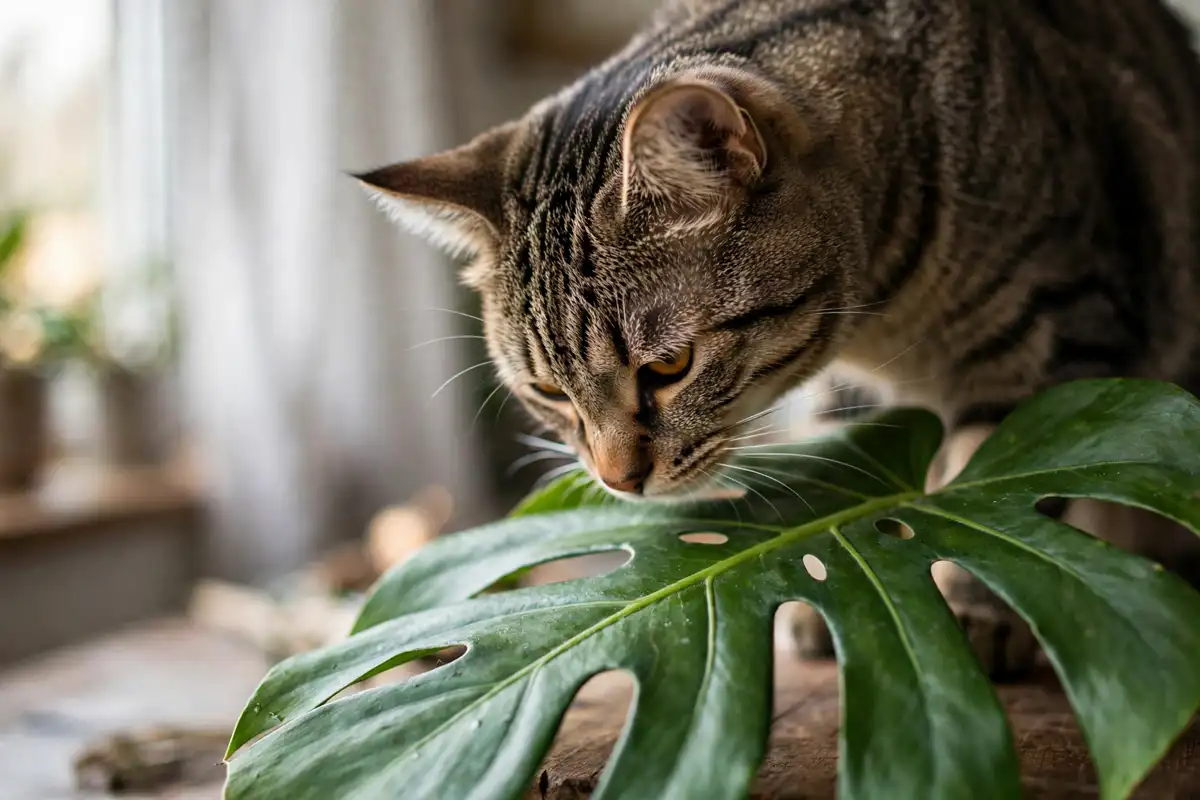
Yes — monstera is toxic to cats. The trendy Swiss cheese plant (Monstera deliciosa) contains insoluble calcium oxalate crystals: microscopic needles that jab into your cat's mouth, tongue, and throat the moment they chew a leaf. The result is instant burning pain, frantic drooling, pawing at the mouth, and often vomiting. The reassuring part is that monstera poisoning is rarely life-threatening — most cases are mild and resolve with simple home care. But it genuinely hurts, and a large bite can cause enough swelling to need a veterinarian. If your home has both a monstera and a cat, here is everything you need to know to keep them safe together.
Monsteras have become one of the most common houseplants in American homes, and cats remain the most popular pets — so the two collide in millions of living rooms. Cats are drawn to those broad, waving leaves partly because chewing greenery is normal feline behavior. Unfortunately, monstera sits on every major toxic-plant list for pets, including the ASPCA's database. Browse our Cat Health guides for more household hazards, or start at the Purrfect Paws homepage for all our cat care articles.
Why Is Monstera Toxic to Cats?
The culprit is a group of compounds called insoluble calcium oxalates — tiny, sharp crystal bundles (known as raphides) packed inside every cell of the plant. When a cat chews a monstera leaf or stem, the chewing breaks open the plant cells and releases thousands of these microscopic needles into the soft tissues of the mouth. Picture chewing on microscopic fiberglass: the crystals embed in the tongue, gums, and throat, causing immediate irritation and pain. Every part of the plant contains them — leaves, stems, aerial roots, and sap — and dogs and horses react the same way.
6 Signs Your Cat Chewed or Ate Monstera
Cats usually announce a monstera encounter loudly — the pain begins the second they bite down. Watch for these signs, which can appear within minutes:
- Intense drooling. A cat that suddenly starts drooling heavily, with saliva dripping from the mouth, has likely chewed something irritating. This is the single most common sign of monstera exposure.
- Pawing at the mouth. Your cat may paw repeatedly at their muzzle, rub their face along the floor, or shake their head, trying to dislodge the irritation.
- Vomiting. Many cats throw up after chewing monstera, and you may spot green leaf fragments in the vomit. One episode is typical; repeated vomiting over several hours is a reason to call the vet.
- Swollen lips or tongue. Redness and puffiness around the mouth can develop as the irritation progresses. In rare cases the throat swells enough to make swallowing difficult — that is an emergency.
- Refusing food or water. A cat with a sore mouth will often turn away from food and water for several hours. A short fast is not dangerous on its own, but a cat that will not eat for more than 24 hours needs veterinary attention.
- Hiding and lethargy. A cat in pain may retreat to a quiet corner and stay unusually still. Mild tiredness that fades within a day is typical; persistent hiding is not.
How Dangerous Is Monstera for Cats, Really?
Here is the reassuring part: monstera is considered mildly to moderately toxic, not severely toxic like true lilies. Lilies (Lilium species) can destroy a cat's kidneys from just a few grains of pollen. Monstera, by contrast, does its damage locally — in the mouth and upper digestive tract — and life-threatening cases in cats are extremely rare. Most cats chew once, feel the burning sensation, and never touch the plant again.
Still, "not usually fatal" is not the same as "harmless." Complications are more likely when a cat eats a large amount, when the chewer is a small kitten, or when the cat already has kidney or digestive problems. Throat swelling that interferes with breathing is uncommon but serious, and repeated vomiting can dehydrate a small cat or kitten quickly. Treat every monstera bite seriously while taking comfort that the outlook is usually good.
What to Do If Your Cat Chewed Your Monstera
If you catch your cat in the act — or find suspicious bite marks on your plant — stay calm and work through these steps:
- Separate cat and plant. Move your cat away from the monstera, or move the plant to another room. You can gently wipe away large leaf fragments from around the mouth, but do not reach deep into the throat.
- Offer fresh water. A drink can help rinse the mouth. Some cats drink eagerly; others refuse because their mouth hurts. Never force water into your cat's mouth.
- Do not induce vomiting. Making a cat vomit after chewing monstera is not recommended — the crystals have already irritated the tissues on the way down, and vomiting drags them back over the same raw tissues a second time.
- Offer something soft later. Once the initial pain fades, usually within 30–60 minutes, offer wet food to check whether they can eat comfortably.
- Monitor for a few hours. Watch for ongoing drooling, repeated vomiting, labored breathing, or trouble swallowing. Mild symptoms that steadily improve are fine to watch at home.
- Call your vet for guidance. A quick call costs nothing, and vets handle plant-exposure questions routinely. Seek care promptly if symptoms are severe, not improving after several hours, or involve breathing difficulty.
Keeping Cats and Monsteras in the Same Home
You do not have to choose between your plant and your cat — many owners keep both with a little management. The most reliable strategy is physical separation: keep monsteras in rooms the cat cannot enter, hang them in planters well out of jumping range, or house them in a closed plant cabinet. Remember that cats jump surprisingly high and dangling aerial roots are especially tempting, so a high shelf alone is often not enough. Some owners add deterrents such as citrus-scented spray on the pot (never on the leaves), though results vary. The single best trick is offering an approved alternative: grow a pot of cat grass (wheatgrass or oat grass) your cat is allowed to chew freely. A cat with their own salad bar is far less interested in your monstera.
Cat-Safe Alternatives to Monstera
If management sounds like more trouble than it is worth, swap the risk for plants that are genuinely safe. The ASPCA lists several attractive, easy-care houseplants as non-toxic to cats: parlor palms, spider plants, Boston ferns, calatheas, and prayer plants all look great and will not trigger a vet visit. One caution: "non-toxic" does not mean "eat unlimited amounts." A cat that gorges on any plant can still vomit, so even safe plants deserve a spot slightly out of constant nibbling reach.
Frequently Asked Questions
Is monstera poisonous to cats or just irritating?
It is officially classified as toxic to cats because of its insoluble calcium oxalate crystals. The poisoning is usually limited to painful irritation of the mouth and digestive tract rather than organ damage, but it still counts as toxicity and should be taken seriously.
How much monstera is dangerous for a cat?
There is no safe dose — even a single bite can cause painful symptoms. Most cats stop after one taste because it hurts immediately, but larger amounts raise the risk of significant swelling, repeated vomiting, and dehydration, especially in kittens.
My cat bit my monstera once and seems fine — should I still worry?
A cat that took one small bite and shows no drooling, vomiting, or mouth pain after an hour or two has likely avoided the worst of it. Keep an eye on them for the rest of the day, and use the scare as a reason to move the plant out of reach.
Can cats be around monstera plants without eating them?
Many cats ignore houseplants entirely, and plenty of owners keep monsteras without incident. The risk depends on the individual cat — a curious kitten or a dedicated plant-chewer is far more likely to take a bite than a senior cat who has never cared about plants.
What plants are safe alternatives to monstera for cat owners?
Attractive cat-safe options include parlor palms, spider plants, Boston ferns, calatheas, and prayer plants. A large Boston fern or parlor palm gives a similar tropical look without the risk.