Is Pothos Toxic to Cats?
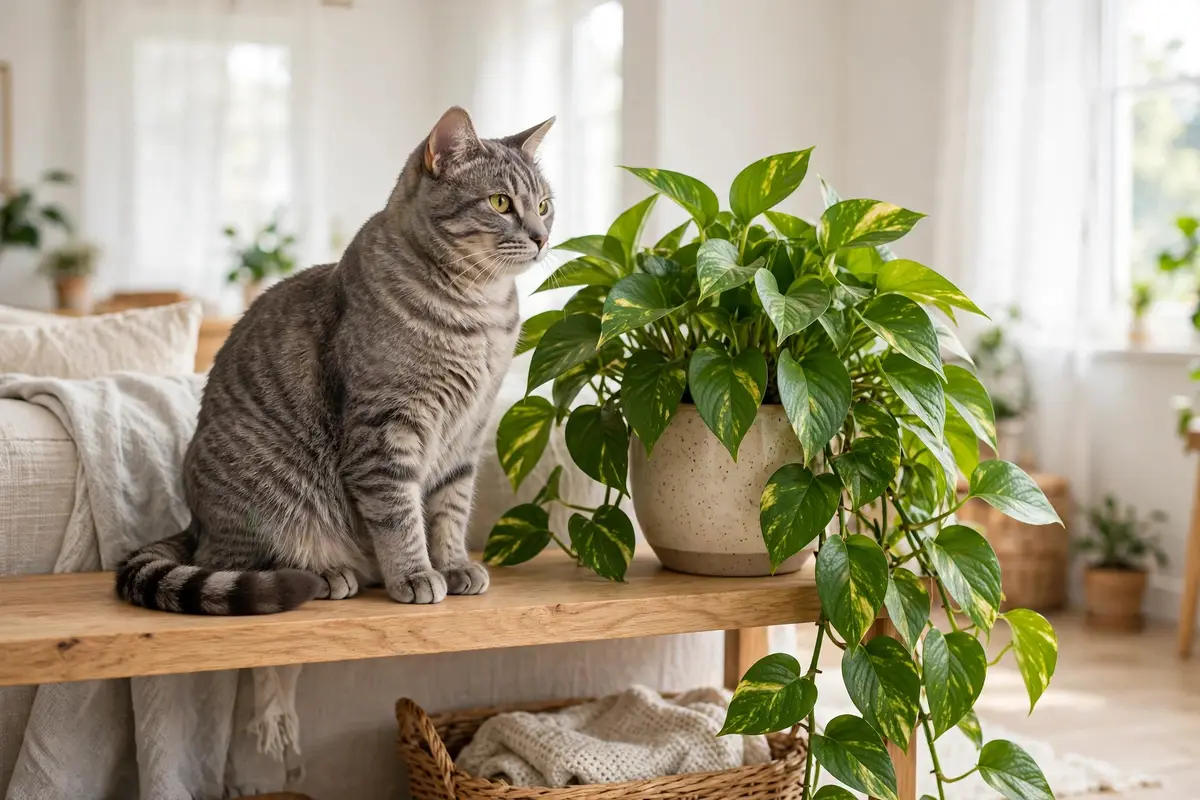
Yes — pothos is toxic to cats. Every part of the plant — leaves, stems, and vines — contains insoluble calcium oxalate crystals, microscopic needle-like structures that stab into the soft tissues of a cat's mouth and throat when chewed. The result is immediate, intense burning pain, drooling, and pawing at the mouth. Pothos poisoning is rarely fatal, but it is painful and frightening, and a cat that chews pothos needs veterinary attention. If you keep pothos (also called devil's ivy) at home, this guide explains exactly what it does to cats, the symptoms to watch for, what to do in the moment, and which cat-safe plants give you the same lush look.
Pothos is one of the most popular houseplants in America — nearly indestructible, beautiful, and hanging in countless living rooms. Unfortunately, its trailing vines dangle at exactly the height that tempts a curious cat. Many plant-loving cat owners do not realize the danger until their cat takes that first exploratory bite.
What Makes Pothos Toxic to Cats?
The culprit is a group of compounds called insoluble calcium oxalates. Inside pothos tissue sit thousands of tiny, sharp crystal bundles known as raphides. When a cat bites into a leaf, the plant cells rupture and release these microscopic needles, which embed in the tongue, gums, lips, and throat. The pain is immediate — most cats yelp, spit the leaf out, and start drooling within seconds.
This is a different kind of toxicity from, say, lilies, which attack the kidneys. Calcium oxalate plants cause mechanical injury plus irritation: the crystals physically wound the mouth lining, and the plant's juices add chemical irritation on top. The good news hidden in this mechanism is that the pain itself limits the damage — the cat almost always stops chewing right away. But "rarely fatal" is not the same as harmless, and the swelling and pain still deserve prompt care.
All the common pothos varieties — golden pothos, marble queen, neon pothos, jade, and n'joy — carry the same crystals. Closely related plants in the aroid family, including monstera, philodendron, and dieffenbachia (dumb cane), are toxic to cats for exactly the same reason.
Symptoms of Pothos Poisoning in Cats
Signs usually appear within minutes of the first bite. Watch for:
- Intense drooling. Thick, ropey saliva is often the first thing owners notice — the cat's mouth is in pain and producing saliva in response.
- Pawing at the mouth. Cats frantically rub their faces or paw at their lips and tongue, trying to dislodge the burning sensation.
- Oral pain and swelling. The lips, tongue, and gums may look red and puffy. The cat may cry out when trying to eat or drink.
- Vomiting. If any plant material was swallowed, the stomach reacts the same way the mouth did — nausea and vomiting are common.
- Trouble swallowing. The cat makes repeated gulping motions or refuses food and water because swallowing hurts.
- Loss of appetite and lethargy. A cat with a sore mouth will often hide and refuse meals for a day or so while the irritation settles.
In severe cases, swelling in the throat can make breathing noisy or labored — that is an emergency. Most exposures, though, are limited to a painful mouth and a miserable few hours.
How Much Pothos Is Dangerous?
There is no "safe" amount. Even a single nibble releases enough crystals to cause significant mouth pain, especially in a small cat or kitten. That said, serious poisoning is uncommon precisely because the pain is so immediate — cats rarely swallow large quantities of pothos the way they might with a tastier plant.
The real risk factors are repeated exposure and young kittens, who may chew more persistently and have smaller airways if swelling occurs. Also, do not assume one uneventful nibble means your cat is "immune" — every exposure causes injury, and sensitivity does not decrease with practice.
What to Do If Your Cat Chews Pothos
Stay calm and act quickly:
- Remove the plant from your cat's reach immediately so there is no second bite.
- Rinse the mouth gently. Offer fresh water or use a damp cloth to wipe the lips and tongue — do not force water down the throat or reach deep into the mouth.
- Do not induce vomiting. The crystals already injured the mouth once; bringing the material back up injures it again and risks aspiration.
- Call your veterinarian or a pet poison helpline. Describe what the plant was, how much was chewed, and your cat's current symptoms.
- Offer soft food and water once the initial pain eases — a cat that will eat and drink is a reassuring sign.
Your vet may recommend an in-person visit to check for significant swelling, especially if the cat is drooling heavily, vomiting repeatedly, or having any trouble swallowing. Treatment is usually supportive — pain management, fluids if dehydrated, and monitoring — while the mouth heals over a day or two.
Cat-Safe Plant Alternatives to Pothos
You do not have to give up the lush, trailing jungle look. These plants are considered non-toxic to cats:
- Spider plant. Cascading striped leaves, nearly as easy as pothos, and many cats adore batting at the dangling plantlets.
- Parlor palm. Elegant and pet-safe, though the fronds are a tempting chew target — keep it where it can be admired, not shredded.
- Swedish ivy. A trailing look similar to pothos with soft, rounded leaves. Safe for cats, though any plant eaten in bulk can cause mild stomach upset.
- Cat grass (wheatgrass). The ultimate solution for chronic plant-chewers: grow a pot of grass and let your cat nibble freely. It often redirects the chewing habit entirely.
- Boston fern and prayer plant. Both are non-toxic and add fullness, though ferns shed and prayer plants like humidity.
When buying new plants, check the label and cross-reference with a trusted toxic-plant list before bringing anything home. "Pet-friendly" marketing is not always accurate.
How to Keep Cats Away From Houseplants
If you are not ready to rehome your pothos, separation is the answer — not training the cat to ignore it. Hang pothos high in a macramé hanger with the vines trimmed so nothing dangles within jumping reach. Better still, keep it in a room the cat cannot enter, like a closed home office.
Offering cat grass gives habitual chewers a safe outlet and often reduces their interest in your decorative plants. Citrus peels or pet-safe bitter sprays deter some cats, but results vary — and a determined cat will power through a bad taste. The most reliable strategy remains the simplest: the plant your cat cannot reach is the plant that cannot hurt them.
Frequently Asked Questions
Is pothos toxic to cats?
Yes. Pothos contains insoluble calcium oxalate crystals that cause intense mouth pain, drooling, vomiting, and difficulty swallowing when chewed by cats. It is usually not fatal, but it is painful and needs veterinary attention.
What are the symptoms if my cat eats pothos?
The most common signs are immediate drooling, pawing at the mouth, oral pain, vomiting, and trouble swallowing. The burning mouth pain usually makes the cat spit the leaf out quickly, which limits how much is eaten.
Can pothos kill a cat?
Pothos poisoning is rarely fatal, because the burning mouth pain usually stops the cat from eating much. The danger lies in the pain, swelling, and dehydration from vomiting — and very rarely, severe throat swelling. Always call your vet if your cat chewed pothos.
What cat-safe plants look like pothos?
For a similar trailing look, try a spider plant, Swedish ivy, or a peperomia. Cat grass (wheatgrass) and parlor palms are also safe choices that give cats something green to nibble.
How do I keep my cat away from my pothos?
Hang the plant out of reach, place it in a room the cat cannot enter, or replace it with a cat-safe alternative. Offering cat grass often redirects a plant-chewing habit. Bitter sprays have mixed results and should be pet-safe if you try one.