Fireworks and Cats: 12 Ways to Keep Your Cat Calm and Safe
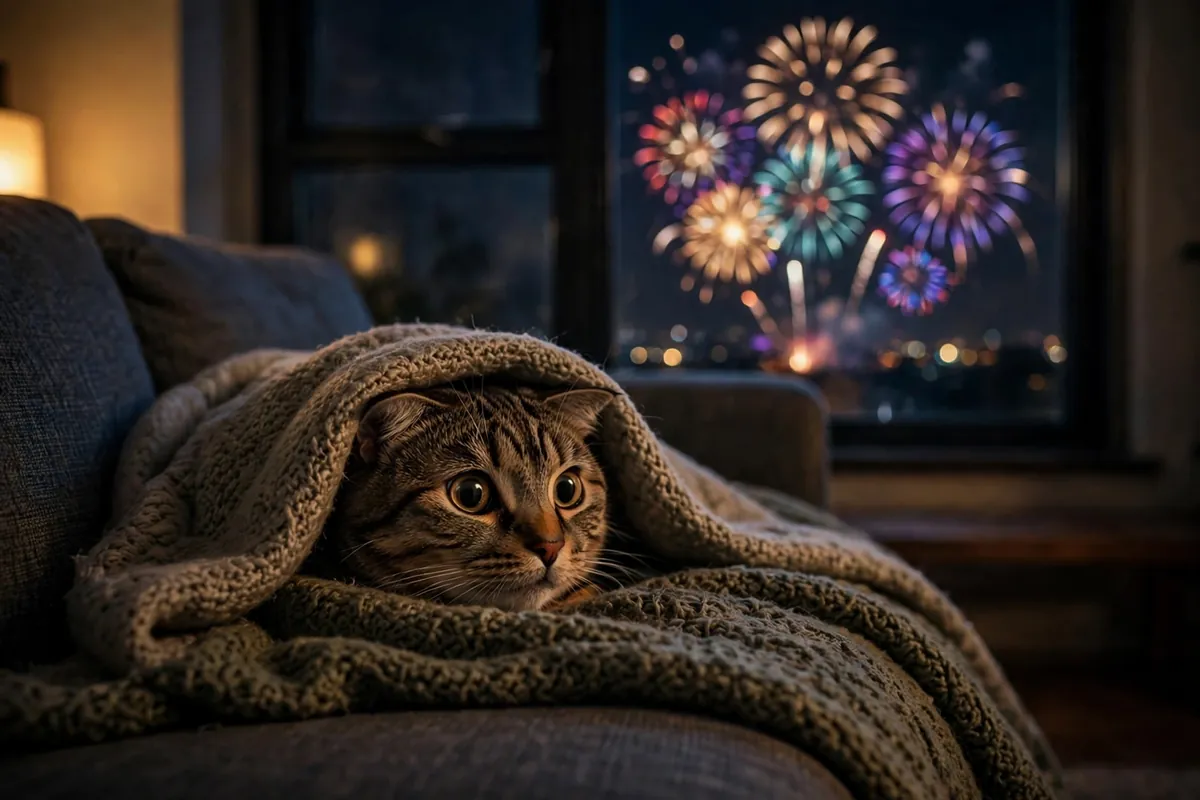
Fireworks are a celebration for people and a crisis for many cats. To a cat, fireworks are not pretty lights in the sky — they are sudden, deafening bangs with no warning, no visible source, and no clear end. Cats hear a much wider range of sounds than we do, so what sounds loud to you can feel overwhelming to them. The good news is that a little preparation makes an enormous difference. These 12 practical steps will help you keep your cat calm and safe before, during, and after fireworks.
The key principle is simple: you cannot stop the noise, but you can control your cat's environment. A safe room, a familiar routine, and a calm owner do more than any single product. Start preparing as early as you can — ideally days before a known fireworks event, not ten minutes before the first bang.
Why Fireworks Frighten Cats So Much
Understanding the fear helps you respond to it kindly. Cats are both predators and prey animals, and their survival instincts are finely tuned. A sudden loud noise triggers a stress response: the heart rate rises, muscles tense, and the instinct is to run and hide. Because fireworks keep coming in unpredictable bursts, the cat never gets the "all clear" signal that would let it relax.
Frightened cats show it in different ways. Some hide under beds or inside wardrobes for hours. Others pace, pant, tremble, or cry. Some refuse food, over-groom, or have accidents outside the litter tray. A few become aggressive when touched, not out of spite, but because fear has pushed them past their coping limit. None of this means your cat is badly behaved — it means it is scared and needs safety, not scolding.
Outdoor cats face the greatest physical danger. A panicked cat can bolt into traffic, climb a fence it cannot get back over, or run far from home and become lost. That is why the single most important fireworks rule is also the simplest: keep cats indoors.
Before the Fireworks: 6 Preparations
- Bring cats inside early. Do not wait until dusk. Bring outdoor cats in well before fireworks are expected to start, and keep windows, doors, and cat flaps closed and locked. If your cat usually goes out in the evening, start the indoor routine a few days early so it does not feel like a sudden punishment.
- Set up a safe room. Choose a quiet interior room, away from windows facing the displays if possible. Put your cat's bed, litter tray, food, water, scratching post, and a couple of favorite toys in there. Add a cardboard box or a covered bed — many cats feel safest in an enclosed hiding spot they chose themselves. Leave the room door slightly ajar if your cat prefers to come and go, but make sure the rest of the house is escape-proof.
- Check identification. Make sure your cat's microchip details are up to date and that any collar tag shows a current phone number. If the worst happens and your cat does escape, up-to-date identification is what brings it home. A quick check takes two minutes and is easy to forget until it matters.
- Close curtains and muffle sound. Draw the curtains or close the blinds before dark — flashing lights through windows can be as startling as the noise. Turn on the television, radio, or calming music at a normal volume to provide a steady background sound that softens the contrast of each bang.
- Tire your cat out with play. A good play session earlier in the day, followed by a meal, helps many cats settle more easily in the evening. Use a wand toy or a puzzle feeder to burn off energy naturally, then let your cat rest. Do not force play on a cat that is already anxious.
- Talk to your vet in advance if needed. If your cat panics severely every year — injuring itself, refusing food for a long time, or remaining distressed for days — speak to your veterinarian well before the event. They can discuss calming options appropriate for your cat. Never give a human sedative, a leftover prescription, or an over-the-counter calming product without veterinary advice.
During the Fireworks: 6 Ways to Stay Calm Together
- Stay home if you can. Your presence is reassuring, even if your cat hides and does not want to be touched. A familiar person moving calmly around the house signals that the world has not actually ended. If you must go out, leave the safe room set up and keep background sound on.
- Follow your cat's lead. If your cat comes to you, offer gentle stroking and a quiet voice. If it hides, let it hide. Do not drag a cat out from under a bed to comfort it — that removes its one coping strategy and usually makes the fear worse. Sitting nearby, reading quietly, is often the best comfort you can offer.
- Keep the routine normal. Feed at the usual time, keep the litter tray clean, and avoid introducing new people, new pets, or big changes on fireworks night. Predictability is calming when everything outside feels chaotic.
- Ignore the bangs yourself. Cats watch their owners for cues. If you jump up at every explosion, rush to windows, or speak in a panicked tone, your cat will read that as confirmation of danger. Carry on with ordinary activities, speak normally, and do not make a fuss over each bang.
- Offer distraction, not force. A treat puzzle, a favorite toy, or a gentle play session can help a mildly nervous cat refocus — but only if the cat is interested. If your cat ignores the toy and retreats, respect that choice. Distraction is an offer, not an order.
- Watch for signs that need attention. Most fireworks stress passes within hours, but watch for heavy panting that does not settle, vomiting, diarrhea, injury from trying to escape, or a cat that stays hidden and refuses all food and water well into the next day. Contact your veterinarian if you are worried — it is always better to call than to wait and wonder.
After the Fireworks: What to Check
Do not let your cat out the moment the noise stops. Fireworks often come in waves, with neighbors setting off stragglers late into the night, and a cat that ventures out too early may be startled again. Wait until the neighborhood is fully quiet, then check the garden or balcony for firework debris before opening doors. Spent fireworks, sparklers, and ash can be toxic or cause burns if a curious cat investigates them, so pick them up before your cat goes out.
The next morning, check that your cat is eating, drinking, using the litter tray, and behaving normally. Most cats bounce back quickly once the noise ends, though some remain jumpy for a day or two. Give them time, keep the routine steady, and avoid scolding any accidents or hiding — stress behaviors fade faster when they are met with patience.
If your cat was severely affected, make a note of what helped and what did not. Did the safe room work? Did background music help? Did a particular hiding spot become the favorite? Writing it down now means next year's preparation will be easier and more effective, and it gives your veterinarian useful information if you decide to discuss calming support.
What NOT to Do During Fireworks
- Do not punish fear. Hiding, accidents, and clinginess are stress responses, not disobedience. Punishment adds fear to fear.
- Do not leave cats outside "to get used to it." Repeated exposure to terrifying noise does not desensitize a cat on its own and can make the fear worse.
- Do not use human medication. Human sedatives and painkillers can be dangerous or fatal for cats. Only use products your veterinarian has approved for your cat.
- Do not hold or restrain a panicking cat. A terrified cat can scratch or bite without meaning to, and restraint removes its sense of control. Let it choose where to be.
- Do not leave lit candles or open flames near a hiding cat. A startled cat knocking over a candle is a fire risk. Use electric lights instead.
Frequently Asked Questions
Why are cats so afraid of fireworks?
Cats hear a much wider range of sounds than humans, and fireworks are sudden, loud, and unpredictable. A cat cannot tell where the noise is coming from or when it will stop, so its instinct is to flee and hide until the danger passes.
Should I keep my cat indoors during fireworks?
Yes. Keep cats indoors well before fireworks are expected to start, and keep windows, doors, and cat flaps shut. A frightened outdoor cat can bolt into traffic or become lost, and may not return for hours.
Should I comfort my cat or leave it alone during fireworks?
Follow your cat's lead. If it comes to you, gentle stroking and a calm voice can help. If it hides, let it stay hidden — do not drag it out. Forcing attention on a frightened cat usually increases its stress.
Can my vet help if my cat panics badly every year?
Yes. If your cat becomes extremely distressed, injures itself, or stops eating for a long time after fireworks, talk to your veterinarian well before the next event. They can discuss calming options suited to your cat. Never give a human sedative or a leftover prescription without veterinary advice.
How long should I watch my cat after fireworks end?
Keep your cat indoors until the noise has fully stopped and the neighborhood is quiet, and check on it the next morning. Look for normal eating, drinking, litter use, and behavior. If anything seems off for more than a day, contact your veterinarian.