How to Care for a Newborn Kitten Without a Mother
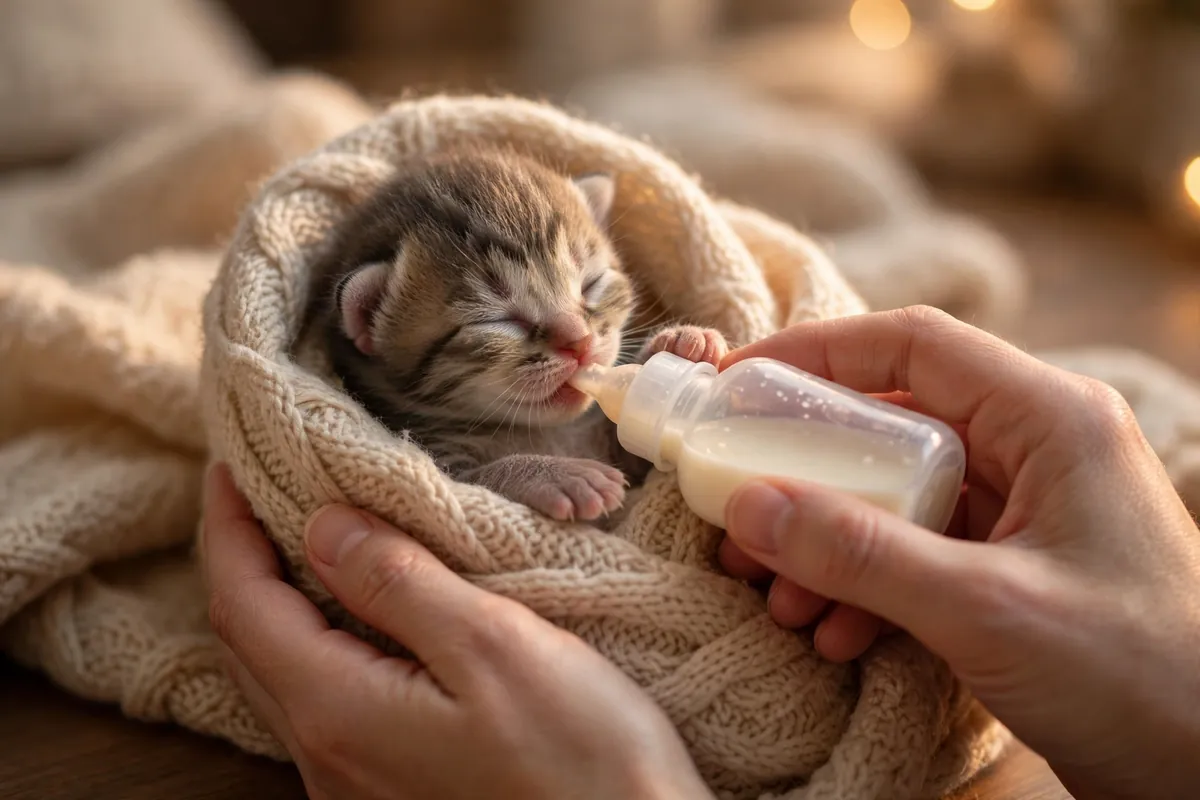
Finding a tiny kitten alone at night is frightening — but you can help, and the first hours matter most. A newborn kitten without a mother needs four things above all else: warmth before feeding, kitten milk replacer every 2 to 3 hours around the clock, gentle stimulation to urinate and defecate after every feed, and daily weighing to prove it is growing.
This guide covers the emergency checklist, how to tell whether the mother might still return, a feeding schedule by age, weaning, the supplies you need, and the warning signs that mean an urgent vet visit. Newborn care is demanding — night feeds included — but it follows a clear routine.
Found a Kitten Tonight: Emergency Checklist First
If you have just found a kitten, work through this checklist in order — warmth comes before food, because a cold kitten cannot digest milk safely.
- Warm the kitten gently. Place it in a box lined with soft towels, with a covered hot-water bottle or a heating pad set on low under half the box — never the whole box, so the kitten can crawl away from the heat. Never feed a cold kitten; warm it first and check that it is alert enough to swallow.
- Feed kitten milk replacer only. Mix kitten milk replacer (KMR) exactly as the package directs and warm it to body temperature — test a drop on your wrist. Feed with a small kitten bottle or syringe, holding the kitten belly-down, never on its back, so milk does not go into its lungs. Never give cow's milk: it causes diarrhea that can dehydrate a tiny kitten.
- Stimulate after every feed. Until about 3 to 4 weeks old, a kitten cannot urinate or defecate alone. After each feed, gently rub its belly and genital area with a warm, damp cloth until it eliminates. Do this every time, day and night.
- Weigh the kitten daily. Use kitchen scales and weigh at the same time each day. A healthy newborn should gain roughly 10 to 15 grams a day. Weight loss, or no gain for two days, is an early warning to call your vet.
- Keep the nest clean, quiet, and safe. Change soiled bedding promptly, keep the box away from drafts, pets, and small children, and handle the kitten gently and only as needed. If you can, share night feeds with another person.
Before You Take Kittens In: Is the Mother Really Gone?
Mother cats often leave their kittens alone for hours while they hunt or move the litter, and a mother that feels watched may stay away longer. Scooping up kittens too soon can separate them from a mother who was coming back — and no human care matches a mother's milk.
If the kittens look warm, plump, clean, and quiet in a safe spot, observe from a distance for several hours without touching them, staying well back. Take them in right away if they are cold, crying constantly, visibly thin, injured, in danger, or if the mother has not returned after a long watch. When in doubt, call a local rescue or vet clinic and describe what you see.
Feeding Schedule by Age
Newborn kittens need small, frequent feeds because their stomachs are tiny. Use this as a starting guide, adjusting amounts with your vet's advice:
- 0 to 1 week: every 2 to 3 hours, day and night — about 8 to 12 feeds a day, a few millilitres per feed.
- 1 to 2 weeks: every 3 hours, including overnight, with slightly larger amounts as the kitten grows.
- 3 weeks: every 3 to 4 hours; the kitten's eyes are open and night feeds may stretch a little.
- 4 to 5 weeks: every 4 to 6 hours, alongside first tastes of solid food (see weaning below).
- 6 to 8 weeks: mainly solid food, with milk replacer only as a supplement if your vet advises it.
Feed slowly and watch the kitten swallow. Milk bubbling from the nose means you are feeding too fast — stop, let the kitten rest, and slow down. Burp the kitten gently after each feed by holding it upright and patting its back. Never microwave formula; warm the bottle in a bowl of warm water instead.
Keeping a Newborn Warm, Clean, and Comfortable
Newborn kittens cannot regulate their own body temperature for the first few weeks, so their nest does that job. Keep the nesting box warm and stable, with heat under only half the box so the kitten can move away if it gets too warm. Use soft, washable bedding, and change it whenever it becomes damp — damp bedding chills a kitten quickly.
Groom the kitten gently with a soft, damp cloth, mimicking a mother's tongue, and keep its face clean after feeds. Introduce a low-sided litter box around 3 to 4 weeks, once it is moving steadily. Handle the kitten calmly and briefly in the early days, then increase gentle contact as its eyes open.
Weaning: From Bottle to Bowl
Weaning usually begins around 4 weeks. Offer a gruel made from wet kitten food mixed with milk replacer, served in a shallow dish several times a day, while continuing bottle feeds. Expect mess — kittens walk through gruel and learn by tasting. Gradually thicken the gruel, then move to plain wet kitten food, with dry kitten food introduced later once the kitten chews well.
Most kittens eat mainly solid food by 6 to 8 weeks. Keep fresh water available. Weigh the kitten through weaning: steady gain confirms the transition is working, while stalled weight means you should slow down and check with your vet.
Supplies You Need
- Kitten milk replacer and a small kitten bottle with a slow-flow nipple, plus syringes as backup.
- A nesting box, soft towels, and a safe heat source such as a covered hot-water bottle.
- Kitchen scales for daily weighing, plus a notebook to record weight and feeds.
- Warm damp cloths for stimulation and cleaning, and a low-sided litter box from about 3 to 4 weeks.
- Wet kitten food for weaning, and your vet's phone number.
Common Mistakes to Avoid
The most common mistakes are all avoidable once you know them. Giving cow's milk or diluted human baby formula is the biggest one. Feeding a kitten on its back risks milk entering the lungs. Skipping stimulation after feeds leaves the kitten unable to eliminate. Overfeeding in one feed can cause bloating and diarrhea, so small and frequent beats large and rare. Finally, waiting too long to seek vet help is a real risk: a kitten that fed yesterday but refuses today needs advice the same day.
When to Get Vet Help Urgently
Book a vet visit within 24 hours, and seek urgent help sooner if you see any of these signs: the kitten is cold, limp, or unresponsive; it refuses feeds or cries constantly; it has diarrhea, vomiting, or a swollen belly; it is losing weight or not gaining for two days; its breathing is labored; or there are wounds, heavy fleas, or discharge from the eyes or nose. Tell the vet the kitten's age, weight, and feeding history.
Frequently Asked Questions
Can I give a newborn kitten cow's milk?
No. Cow's milk does not match a kitten's nutritional needs and often causes diarrhea, which is dangerous for a tiny kitten. Use kitten milk replacer (KMR) made for kittens, mixed exactly as the package directs.
How often should I feed a newborn kitten?
Newborns need feeding every 2 to 3 hours around the clock, including overnight. The gap widens as they grow: every 3 to 4 hours by about 3 weeks, and every 4 to 6 hours by 4 to 5 weeks as solid food begins.
Do I need to help a newborn kitten go to the toilet?
Yes, until about 3 to 4 weeks old. After every feed, gently rub the kitten's belly and genital area with a warm, damp cloth until it eliminates. Without this stimulation, a newborn cannot eliminate on its own.
When should I take an orphaned kitten to the vet?
As soon as you can, ideally within 24 hours, and immediately if the kitten is cold, limp, not feeding, crying constantly, has diarrhea, or is losing weight. Newborns decline fast, so early vet advice matters.
When can an orphaned kitten start eating solid food?
Weaning usually starts around 4 weeks with a gruel of wet kitten food mixed with milk replacer, offered several times a day alongside bottle feeds. Most kittens eat mainly solid food by 6 to 8 weeks.