How to Introduce Two Cats: Step-by-Step
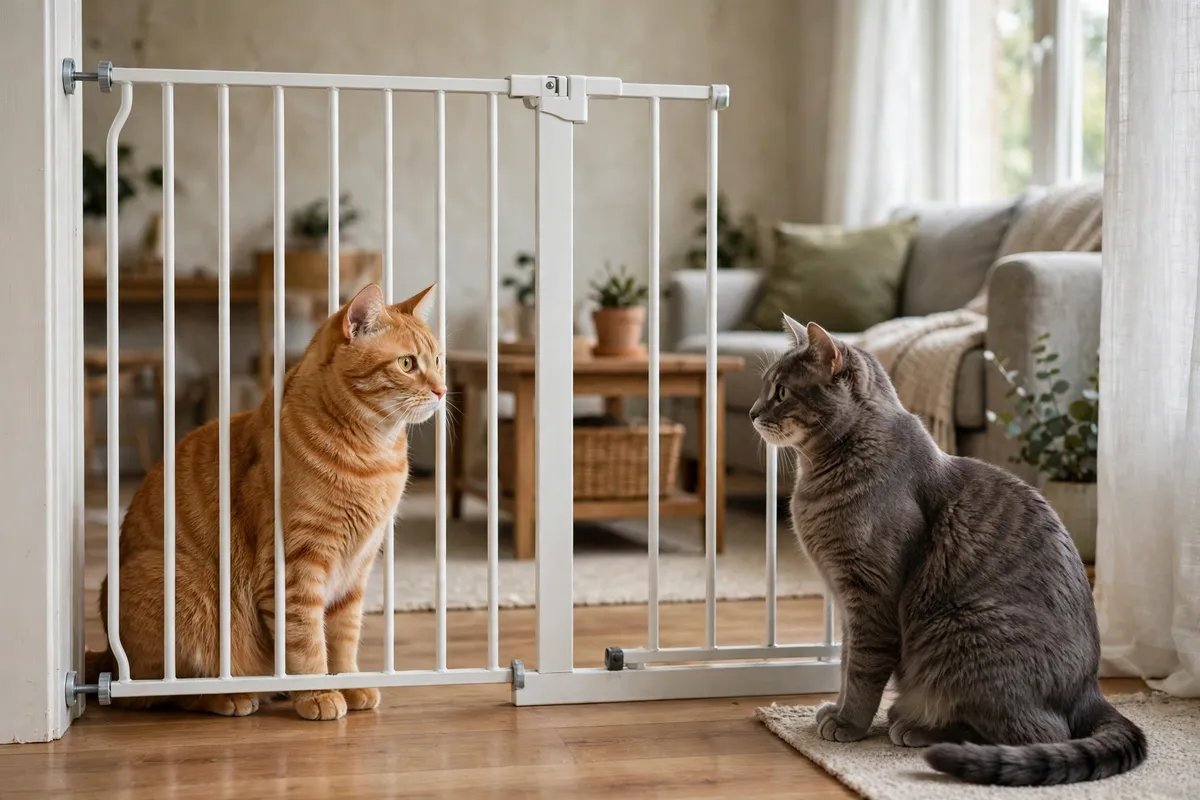
Bringing home a second cat? The single most important thing you can do is introduce the two cats slowly — over days or weeks, not hours. The method that works best is gradual and phase-by-phase: let them smell each other before they see each other, swap scents and rooms, feed them on opposite sides of a closed door, allow short visual meetings through a baby gate, and only then let them share space under supervision. Rushing this process is the number one reason new cat pairings start with hissing matches and end with a tense household.
Cats are territorial animals, and your resident cat sees your home as their kingdom. This guide walks you through the proven step-by-step method used by shelters and behaviorists — reading body language, how long each phase takes, and what to do when things go sideways. For more new-cat help, browse our care guides and Purrfect Paws.
Why Slow Introductions Matter: Your Cat's Territorial Instinct
To understand why slow introductions work, you have to see the world the way a cat does. Unlike dogs, which are social pack animals, cats are solitary hunters by nature. In the wild, a cat's survival depends on controlling a territory with reliable food, water, and safe hiding spots — and intruders are treated as a genuine threat to survival. That wiring does not disappear just because your cat now sleeps on a memory-foam bed.
Your resident cat has spent months or years scent-mapping your home — every cheek rub on the sofa and scratch on the post says: this is mine. When a strange cat suddenly appears in that territory, your resident cat does not think "new friend." They think "intruder," and the result is stress, hissing, and sometimes real fighting.
A gradual introduction respects that instinct instead of fighting it. By letting the cats learn each other's scent first and pairing every step with food, treats, and play, you teach both cats that the other one's presence predicts good things — the foundation for peacefully sharing a home.
Before Day One: Set Up Separate Base Camps
Before the new cat walks through your front door, prepare two separate living areas. The new cat gets a "base camp" — a spare bedroom or bathroom with a litter box, food and water bowls, a scratching post, a cozy hiding spot, and a few toys. The resident cat keeps the rest of the house.
Follow the "n plus one" rule for key resources: one litter box per cat, plus one extra, placed in different locations — not side by side. Food and water bowls should also be separate, ideally in different rooms. Cats who feel they must compete for resources are far more likely to fight.
Give the new cat a few days to settle into their room while the resident cat adjusts to the strange smells under the door. A cat who feels safe in their own space will be calmer when introductions begin.
Phase 1: Swap Scents Before They Ever Meet
Cats live in a world of smell, so the first introduction should happen nose-first. Rub a clean sock or soft cloth on one cat's cheeks — where scent glands are concentrated — and let the other cat sniff it, then reverse. Curious sniffing is great; hissing at first is normal.
Pair the scent with something good: place the scented cloth near the other cat's food bowl at mealtime and swap bedding between rooms every day or two.
The goal of this phase is beautifully boring: each cat should treat the other's scent as unremarkable background information. Most cats get there within a few days; shy cats may need a full week.
Phase 2: Trade Spaces and Feed on Opposite Sides of the Door
Once the scent cloths stop causing drama, move to site swapping: let the new cat explore the rest of the house while the resident cat hangs out in the new cat's room (with their own litter box and water). This lets each cat investigate the other's territory safely — just supervise so nobody gets cornered.
At the same time, start feeding both cats on opposite sides of the closed door to the new cat's room. Start with bowls a few feet from the door — close enough that each cat knows the other is there, far enough that both eat calmly — then inch them closer over several days.
The magic here is simple conditioning: great food appears at the exact moment the other cat's smell and sounds are present. If either cat refuses to eat or hisses and walks away, the bowls are too close — move them back and try again tomorrow.
Phase 3: First Visual Contact Through a Baby Gate
When both cats are eating calmly on either side of the door, it is time for them to actually see each other. Install a tall baby gate (or two stacked gates — cats are excellent jumpers) in the new cat's doorway, with the door open behind it. Keep first sessions to five or ten minutes, a few times a day.
Keep sessions positive: high-value treats, a wand toy on each side, and end every session on a good note — before anyone gets tense. Lengthen sessions as the cats relax.
Expect some hissing and staring; that is normal communication, not failure. What you are looking for is a trend: over several days, the staring should get shorter, the body language looser, and at least one cat should start showing interest in food or play instead of fixating on the other.
Phase 4: Supervised Time Together, Then Full Access
When the cats can eat, play, and relax on either side of the gate without drama, remove the gate for short supervised sessions in one room. Keep cardboard handy to block line of sight if tension rises, and never leave them alone together yet.
Distraction is your best tool: play with both cats using separate wand toys, offer treats, and reward calm behavior. Start with short sessions and extend gradually. Always give both cats an easy escape route — a cat who cannot retreat is a cat who fights.
When several days of supervised sessions go smoothly, start leaving the gate open for longer stretches while you are home, then eventually remove it entirely.
Setbacks Are Normal: Troubleshooting and When to Get Help
Almost every introduction hits a bump. Hissing, growling, and the occasional swat are normal boundary-setting — they become a problem only when they escalate or never fade. Chasing, ambush attacks, screaming fights, or constant hiding and appetite loss mean you moved too fast. Just go back one phase for a few days.
For tough cases: make sure both cats are spayed or neutered, since unaltered cats are more territorial, and add vertical space — cat trees and shelves let cats share a room without sharing the floor.
Call in professional help if the cats injure each other, if aggression continues for weeks despite going slowly, or if one cat develops stress behaviors like avoiding the litter box or over-grooming. Your veterinarian can refer you to a certified animal behaviorist. With a patient, phased approach, the large majority of cats learn to coexist peacefully within a month or two.
Frequently Asked Questions
How long does it take to introduce two cats?
Most introductions take two to four weeks, but go at your cats' pace: confident cats may share space within a week, while shy cats can need six to eight. Advancing only when the current phase feels boring is the fastest route in the long run.
Is hissing normal when introducing cats?
Yes. Hissing is how cats say “back off” and set boundaries, and it is a normal part of the negotiation. It becomes a concern only if it escalates into chasing, cornering, or actual fighting — in that case, go back one phase and slow down.
Should I just let them fight it out?
No — never. Letting cats “work it out” through fighting creates lasting negative associations that are much harder to undo. Every fight teaches both cats that the other means danger, so supervise all early contact and separate them before things escalate.
Can two adult cats be introduced, or does one have to be a kitten?
Absolutely — use the same slow method. Kittens are often more flexible, but plenty of adult pairs become close companions. Match energy levels when you can, and give adults extra time in the early phases.
My resident cat stopped eating since the new cat arrived. What should I do?
Appetite loss means your resident cat is stressed — the introduction is moving too fast. Go back to complete separation for a few days, give them quiet one-on-one time, and restart scent swapping. If any cat refuses food for more than 24 hours, contact your veterinarian.