How to Switch Cat Food Without Upset Stomach
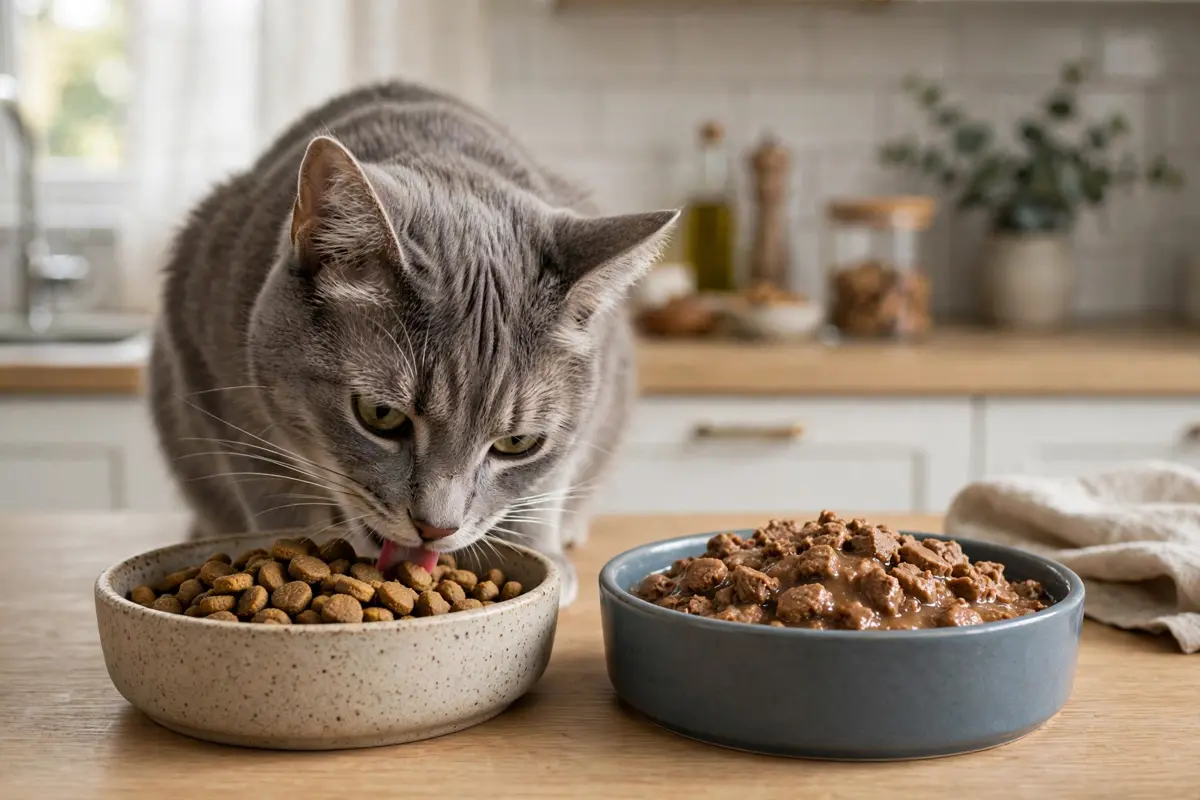
So you have decided to switch your cat's food — maybe for better nutrition, a lower price, or because the vet recommended it. Here is the golden rule: never swap foods overnight. A sudden change shocks your cat's digestive system and very often leads to vomiting, diarrhea, or a cat who simply refuses to eat at all.
The fix is beautifully simple: a gradual 7–10 day transition where you mix increasing amounts of the new food into the old. Below you will find the exact day-by-day schedule vets recommend, how to handle sensitive stomachs, what to do when your cat stages a hunger strike against the new kibble, and how to recover if you already switched too fast.
Why Cats Need a Slow Transition
A cat's gut is home to a delicate community of bacteria tuned to digesting the current diet. Change the food abruptly and that bacterial balance is thrown into chaos — the result is the classic trio of soft stools, vomiting, and gassiness. Beyond biology, there is psychology: cats are neophobic, meaning they are naturally suspicious of new foods. A slow mix lets the unfamiliar smell and taste creep in gradually instead of ambushing them at the bowl.
There is one more reason patience pays. If you transition slowly and your cat develops itching or digestive trouble on day five, you know exactly what changed and when. Swap everything overnight and you will have no idea whether the problem is the new food, a hairball, or something else entirely.
The 7-Day Transition Schedule
This is the standard schedule most veterinarians recommend for a healthy adult cat. Mix the two foods in the same bowl at each meal:
- Days 1–2: 75% old food, 25% new food. Just enough of the new food for your cat to notice the smell. Most cats eat this mix without blinking.
- Days 3–4: 50% old food, 50% new food. The halfway point. Watch the litter box — stools should stay firm. Slightly softer is okay; watery is a sign to slow down.
- Days 5–6: 25% old food, 75% new food. The new food is now dominant. Appetite should be normal and energy steady.
- Day 7 onward: 100% new food. The old bag can retire to the backup shelf. Keep an eye on digestion for one more week to be sure.
Two practical tips: measure with an actual scoop or kitchen scale rather than eyeballing, and store the old food properly so it stays fresh through the transition week. If you are weighing broader nutrition questions, our Cat Food guides cover everything from wet versus dry to label reading, and the Purrfect Paws homepage is the starting point for the whole library.
Sensitive Stomachs: Take 10–14 Days
Some cats have digestive systems that protest at the slightest change — you know who they are. For these cats, stretch the schedule: spend 3–4 days at each ratio instead of two, making it a 12–14 day transition. Kittens under six months and senior cats also do better with the slower pace, since their digestion is less adaptable.
If your cat has a diagnosed sensitive stomach or a history of inflammatory bowel issues, check with your vet before switching at all — the right new food matters as much as the right speed, and your vet may suggest a specific formula.
What If Your Cat Refuses the New Food?
The hunger strike is the most common transition problem, and it is almost always about smell and texture rather than taste. Try these tricks:
- Warm it slightly. Warming wet food to room temperature (or just above) releases aroma and makes it far more appealing. Never microwave — heat gently in warm water.
- Slow the ratio. Drop back to 10% new food and creep up in tiny steps. Some cats need two weeks at each stage, and that is fine.
- Keep mealtimes consistent. Offer the mix for 20–30 minutes, then pick it up until the next meal. Grazing all day on the old food removes all motivation to try the new.
- Do not starve them into it. This is critical: a cat that eats nothing for more than 24 hours (12 hours for kittens) risks a serious liver condition called hepatic lipidosis. If your cat truly will not touch the mix, go back a step rather than waiting them out.
Oops, I Switched Too Fast — Now What?
Already swapped overnight and now dealing with the consequences? Do not panic — and do not immediately swap back and forth, which only confuses the gut further. If you still have some old food left, restart the gradual schedule from day one. If the old food is gone, feed small, frequent meals of the new food and keep things bland and calm for a few days.
Mild soft stools for a day or two usually resolve on their own. But call your vet if vomiting or diarrhea lasts more than 48 hours, if there is blood in the stool, or if your cat stops eating or becomes lethargic. Those signs point beyond a simple transition upset.
When Switching Is Urgent
Sometimes you do not have the luxury of ten days — a vet prescribes a therapeutic diet for kidney disease, urinary issues, or allergies and wants the change now. In that case, follow your vet's specific instructions; they may accept a faster 3–5 day transition because the medical benefit outweighs the digestive risk. Keep portions small, monitor closely, and report any worrying symptoms promptly.
Done right, switching foods is uneventful — which is exactly the goal. Slow, steady, and observant beats fast and dramatic every single time.
Frequently Asked Questions
How long does it take to switch cat food properly?
Plan on 7–10 days for a healthy adult cat using the gradual mixing schedule. Cats with sensitive stomachs, kittens, and seniors do better with 10–14 days. Rushing it is the number one cause of transition-related vomiting and diarrhea.
Can I switch from dry food to wet food the same way?
Yes — and go even slower if you can. The texture change from crunchy kibble to soft wet food is a big leap for many cats. Start with just a spoonful of wet food mixed into the kibble and build up over 10–14 days.
My cat won’t eat anything but the old food. Should I just wait it out?
No. Cats should not go more than 24 hours without eating (12 hours for kittens) because of the risk of fatty liver disease. Instead, slow the transition right down — even 5–10% new food increments — and try warming the food to boost its smell.
Is diarrhea normal when switching cat foods?
Mildly soft stools for a day or two can happen even with a careful transition. But watery diarrhea, vomiting, or symptoms lasting more than 48 hours are not normal — slow the transition down or call your vet.
Can I mix foods from different brands during the transition?
Absolutely — that is exactly what the transition schedule is. Just make sure both foods are complete and balanced for your cat’s life stage, and complete the switch rather than mixing indefinitely, so nutrition stays consistent.