Traveling With a Cat in the Car: 12 Tips for a Calm Trip
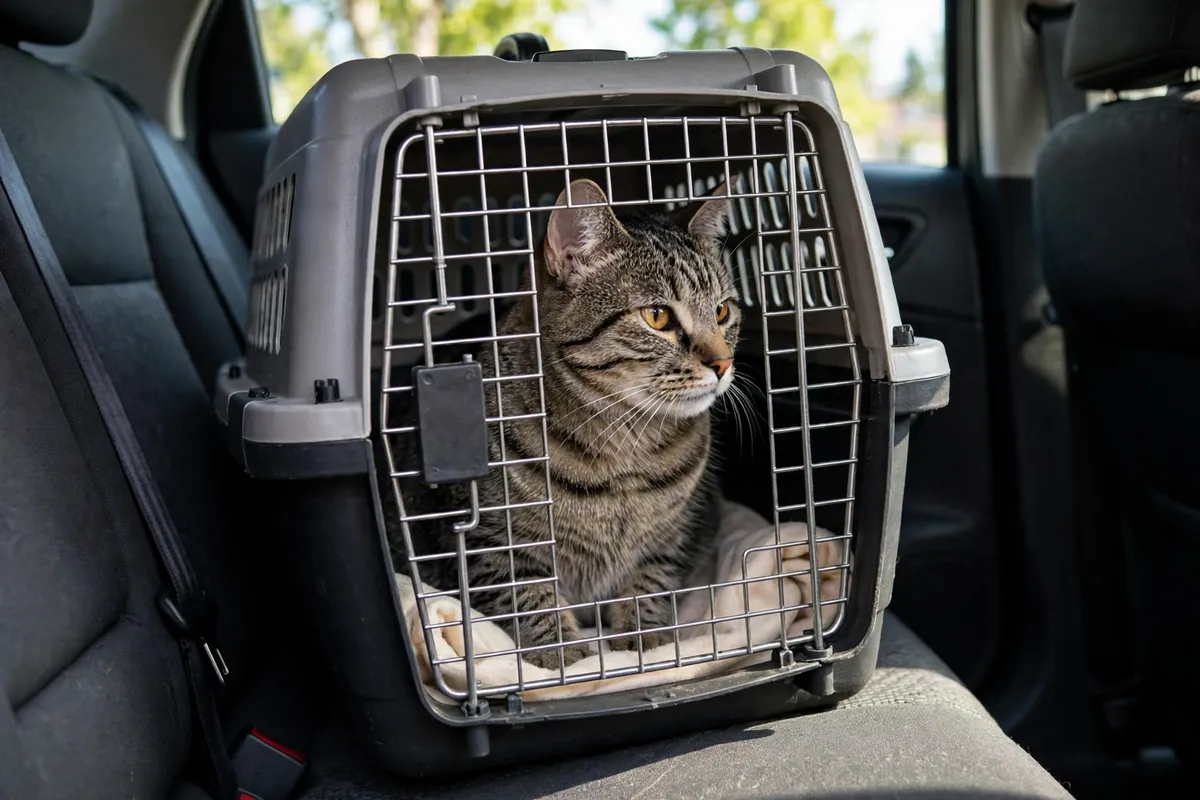
Most cats hate car rides — but with the right preparation, a trip by car does not have to be a howling, stressful ordeal for either of you. The secret is simple: train your cat to accept the carrier before the trip, keep them safely secured inside it for the whole journey, and plan the drive around their comfort. Whether you are heading to the vet, visiting family, or moving house, these 12 tips will help you travel with your cat in the car calmly and safely.
1. Start Carrier Training Days Before the Trip
The number one reason cats panic in cars is that the carrier only appears when something unpleasant is about to happen. Change that association. Leave the carrier out in the living room with the door open for several days before your trip, with a soft blanket and a few treats inside. Let your cat explore it, nap in it, and walk in and out freely. Short practice sessions — closing the door for a few minutes, then lifting the carrier and walking around the house — build confidence gradually. A cat that already trusts the carrier will be far calmer on the road.
2. Choose the Right Carrier for Car Travel
Pick a sturdy, well-ventilated carrier that is large enough for your cat to stand, turn around, and lie down comfortably, but not so large that they slide around on corners. Hard-sided carriers offer the best protection in a sudden stop, while soft-sided carriers work well for smaller, calmer cats. Make sure the door latches securely — a cat that escapes mid-journey is a serious safety risk. Line the bottom with an absorbent pad and a familiar-smelling blanket from home.
3. Secure the Carrier — Never Let Your Cat Roam Loose
This is the most important safety rule of car travel with cats: your cat must stay inside a secured carrier for the entire drive, no exceptions. A loose cat can crawl under the brake pedal, block your view, or bolt through an open door at a rest stop. In a crash, an unrestrained cat is thrown around the cabin and can be badly injured. Place the carrier on the back seat or the floor behind a seat, and thread the seatbelt through the carrier handle or use a seatbelt strap to hold it steady so it cannot slide or tip.
4. Keep the Car Cool, Quiet, and Calm
Cats are sensitive to temperature and noise. Keep the car at a comfortable temperature — not too hot, not blasting cold air directly at the carrier — and keep the radio at a low volume or off. Avoid slamming doors and sudden loud music. A light blanket draped over the carrier (leaving ventilation open) can help a nervous cat feel hidden and safe, much like a den. Talk to your cat in a soft, steady voice during the drive; your calm tone genuinely helps.
5. Feed Lightly Before You Leave
Feed a light meal about three to four hours before departure, then avoid feeding while the car is moving. Motion sickness is common in cats, and a full stomach makes vomiting more likely. Offer water during stops instead — a small bowl, or a few ice cubes in a dish, works well. If your cat is prone to travel sickness, mention it to your vet before the trip; they may suggest a feeding schedule or medication that helps.
6. Never Leave Your Cat Alone in a Parked Car
Never, ever leave your cat alone in a parked car — not for five minutes, not with a window cracked, not on a mild day. Parked cars heat up to dangerous temperatures shockingly fast in warm weather, and in winter they can chill just as quickly. Heatstroke can develop in minutes and can be fatal. If you need to stop somewhere your cat cannot go, plan ahead: use drive-throughs, take turns with a travel companion, or leave your cat at home for that errand.
7. Plan Breaks on Longer Drives
For trips longer than two or three hours, plan a stop every couple of hours in a safe, shaded spot. Keep your cat in the carrier during stops — do not open it outdoors, where a frightened cat can escape in seconds. Use the stop to offer water, check that the carrier bedding is dry, and let the car air out. For very long journeys, an overnight stop is kinder than pushing through a full day of driving; book pet-friendly accommodation in advance.
8. Talk to Your Vet About Calming Aids
Some cats benefit from calming support on travel day, but this is a decision to make with your veterinarian, not on your own. Options your vet may discuss include pheromone sprays applied to the carrier bedding, over-the-counter calming supplements, or prescription medication for very anxious cats. Never sedate your cat without veterinary guidance — the wrong dose or product can be dangerous, and a heavily sedated cat cannot regulate its body temperature properly. If your vet does prescribe something, do a trial dose at home before travel day so you know how your cat reacts.
9. Pack a Cat Travel Kit
Before you leave, pack a small bag for your cat: a portable water bowl and a bottle of water, a few favorite treats, extra absorbent pads and a spare blanket, a small bag of their usual food, any medication, paper towels and waste bags for cleanups, and a recent photo of your cat in case they get lost. If you are traveling far from home, bring your vet's phone number and a copy of your cat's vaccination records — some hotels and boarding facilities ask for them.
10. Make Sure Your Cat Is Identified
A frightened cat that slips out of a carrier in an unfamiliar place is hard to recover. Before any trip, check that your cat's collar fits properly and carries an ID tag with your mobile number, and confirm that their microchip registration details are up to date. A breakaway collar is the safest choice for cats, since it releases if it snags. Identification is a small step that makes a huge difference if the worst happens.
11. Watch for Signs of Travel Stress
Meowing, panting, drooling, restlessness, or going to the bathroom in the carrier are all signs your cat is stressed — but they are usually not emergencies on their own. Panting with an open mouth is unusual for cats, so if it continues after you have cooled the car and calmed things down, pull over safely and check on them. Vomiting once from motion sickness is unpleasant but common; repeated vomiting, lethargy, or difficulty breathing means you should call your vet. Most cats settle after the first twenty minutes once the car is moving steadily.
12. Arrive Calmly and Let Your Cat Decompress
When you arrive, carry the carrier inside before opening it, and open it in a single quiet room rather than in the middle of a busy house. Let your cat come out in their own time — do not tip them out or drag them out. Set out water, food, and a litter box nearby, and give them a few quiet hours to explore at their own pace. If the trip was a move, read our guide on helping your cat adjust to a new home for the next steps. A calm arrival turns a stressful trip into a story your cat quickly forgets.
Frequently Asked Questions
Can I let my cat roam free in the car?
No. A loose cat can crawl under the pedals, block your view, or bolt out of an open door. In a crash, an unrestrained cat becomes a projectile and can be seriously hurt. Always keep your cat in a secured carrier while the car is moving.
How long can a cat travel in a car?
Most cats handle trips of a few hours well if they are in a comfortable carrier with ventilation and the car stays at a pleasant temperature. For trips over 4–6 hours, plan stops to offer water and check on your cat, and for very long journeys, overnight stops are kinder than driving all day.
Should I feed my cat before a car trip?
Feed a light meal about 3–4 hours before departure, then avoid feeding in the moving car. A full stomach plus motion can cause vomiting. Offer small amounts of water during stops instead.
Is it safe to leave a cat in a parked car?
No, never — not even for a few minutes, and not with a window cracked. Parked cars heat up dangerously fast in warm weather and can get dangerously cold in winter. Take your cat with you or leave them at home.
Do calming supplements work for car travel?
Some cats respond to pheromone sprays or veterinarian-recommended calming products, but results vary. Never sedate your cat without veterinary guidance — ask your vet before the trip which option, if any, suits your cat.