How to Trim Cat Nails Safely at Home
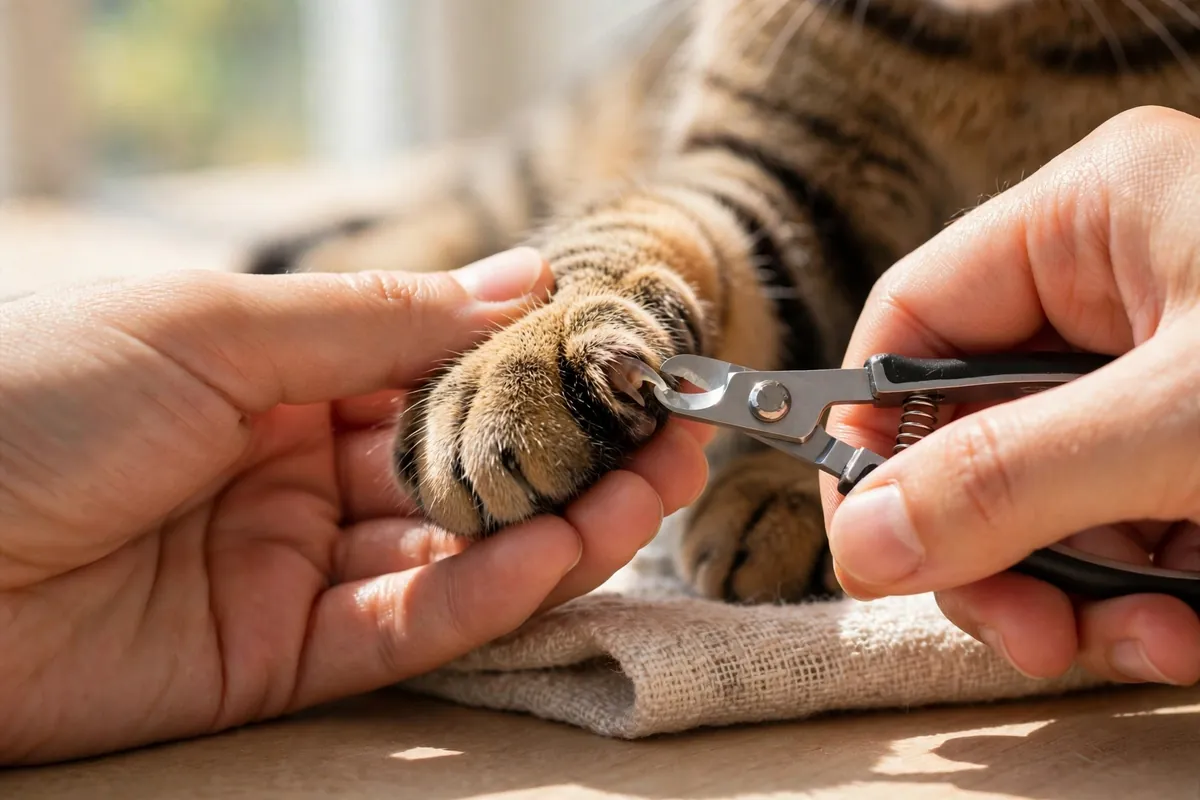
Yes — trimming your cat's nails at home is completely safe, and it is easier than most owners expect. The core skill is simple: cut only the sharp, curved tip of each claw, staying well clear of the pink "quick" inside the nail where the blood vessels and nerves live. With proper clippers, good lighting, and a reasonably calm cat (a few treats help a lot), most nail trims take under ten minutes. This guide covers the tools you need, how to spot the quick, a calm step-by-step trimming method, restraint tips for squirmy cats, what to do if you nick the quick, and how often to repeat the job.
Why Trim Your Cat's Nails?
Outdoor cats wear their claws down on rough surfaces, but indoor cats do not — their claws just keep growing. Overgrown claws snag painfully on carpets and blankets, and in extreme cases can curl into the paw pad, which hurts and risks infection. Regular trims also mean shallower scratches during lap-kneading and wild play, and they spare your furniture. Trimming does not remove the scratching instinct, so keep a good scratching post handy — trimming manages the sharpness, the post manages the urge.
The Right Tools for the Job
Gather everything before the cat arrives. You will need:
- Cat nail clippers. Scissor-style clippers suit most owners and give a clear view of the nail. Whatever style you choose, sharpness matters most — dull clippers crush the nail instead of slicing it.
- Styptic powder or plain cornstarch. Your safety net if you nick the quick. Keep it within arm's reach, not in another room.
- Treats. Small, high-value treats for rewarding calm behavior between paws.
- Good lighting. You need to see the quick clearly, especially on dark nails. Natural daylight near a window is ideal.
- A towel (optional). For wrapping a nervous cat so only one paw is exposed at a time.
Skip human nail clippers — they are shaped for flat human nails and can crush or split a cat's curved claw. A proper pair of cat clippers costs little and lasts for years.
Meet the Quick: The One Thing You Must Know
A cat's claw is a curved sheath of keratin wrapped around a living core called the quick — blood vessels and nerves. Cutting into it hurts and bleeds, which is exactly what you are avoiding. On light nails the quick shows as a pinkish line partway down the nail; cut only the translucent tip beyond it, leaving a comfortable margin. On dark nails the quick is hidden, so trim only the very tip of the hook. When in doubt, trim less — you can always take more off next week. If you are unsure where the quick ends, ask your vet or a groomer to demonstrate during your next visit.
Step-by-Step: How to Trim Cat Nails Safely
- Pick a calm moment. Right after a nap or play session is ideal — never when your cat is wound up, hungry, or already annoyed.
- Settle in. Sit with your cat on your lap or beside you, facing away. Offer a treat so the session starts positively.
- Expose one claw. Press the pad softly with your thumb so the claw slides out. Practice this a few times before the clippers come near.
- Find your cut line. Identify the quick (the pink zone on light nails). Cut about 2 millimeters beyond where the pink ends — just the sharp curved hook.
- Trim decisively. Position the clippers perpendicular to the nail and make one clean, quick snip. Slow, hesitant squeezing is what crushes nails.
- Reward and move on. Give a treat after each paw — or each nail for a nervous cat. Praise in a calm, warm voice.
- Do not forget the dewclaws. The thumb-like claw on the inner side of each front paw never touches the ground, so it never wears down — and it is the most likely to overgrow into the pad.
- Stop when you are ahead. One paw today and another tomorrow is perfectly valid — and often smarter.
Restraint Tips for a Nervous or Squirmy Cat
If your cat resists nail trims, these techniques help:
- Desensitize first. For a week before the first real trim, handle the paws daily — press the pads, extend the claws, then treat. The cat learns paw-touching predicts good things.
- Use the towel burrito. Wrap the cat snugly in a large towel with only one paw sticking out. Most cats calm down once wrapped, and the flailing-limb problem disappears.
- Recruit a helper. One person holds and soothes (and dispenses treats), the other trims. The easiest setup for beginners.
- Trim when sleepy. A cat fresh from a sunbeam nap is dramatically more cooperative than one in zoomies mode.
- Never punish. Scolding or forcing a terrified cat teaches them trims are something to fear. If your cat panics — panting, vocalizing, thrashing — stop for the day; forcing it risks injury. Ask your vet about trimming during a checkup, or have a groomer handle it while you desensitize at home.
Keep sessions short: two calm minutes beat ten stressful ones, and end on a good note even if only one nail got done. You can browse more step-by-step routines in our Care Guides section, and the homepage has the full library of cat care tips.
What to Do If You Cut the Quick
It happens to almost everyone eventually — even groomers. The nail will bleed, sometimes surprisingly freely, and it stings. Stay calm — your cat takes cues from you. Press styptic powder or cornstarch onto the tip and hold gentle pressure for a few minutes; bleeding almost always stops on its own. Keep the cat quiet afterward and skip the rest of the trim for today. Call your veterinarian if bleeding does not stop within about 10 to 15 minutes, or if the toe looks swollen or infected in the following days. One nicked quick is not an emergency — just trim more conservatively next time.
How Often Should You Trim Cat Nails?
For most adult indoor cats, every 2 to 3 weeks is the sweet spot. Check kittens weekly — their claws grow fast and stay needle-sharp. Senior cats need frequent checks too, since older claws thicken and retract poorly. Outdoor cats may need trims less often, but check monthly anyway. Signs a trim is due: clicking on hard floors, snagging on fabrics, or visibly curling tips.
5 Mistakes to Avoid
- Cutting too much at once. The number-one beginner error. Take off less than you think — conservative trims done regularly beat dramatic ones done rarely.
- Trimming a stressed cat. A tense cat jerks at the wrong moment, which is how quicks get nicked. Calm cat, calm owner — or postpone.
- Using dull or wrong clippers. Dull blades crush; human clippers split. Keep cat clippers sharp and replace them when they stop cutting cleanly.
- Skipping the dewclaws. They sit apart from the other toes and are easy to forget — yet they are the most likely to overgrow into the pad.
- Considering declawing instead. Declawing is not a trim — it amputates the last bone of each toe, risking chronic pain, gait changes, and behavior problems. Regular trimming plus a scratching post is the humane answer.
After a few sessions, trimming becomes a quick, unremarkable routine — like brushing or litter scooping. Your cat gets comfortable claws, your furniture gets a break, and a calm trim a day or two before bath day means shallower scratches if your cat grabs you.
Frequently Asked Questions
How often should I trim my cat's nails?
Every 2 to 3 weeks for most adult indoor cats. Check kittens and senior cats weekly, since kitten claws grow fast and senior claws thicken and retract less with age.
What happens if I accidentally cut the quick?
The nail will bleed and sting briefly. Stay calm, press styptic powder or cornstarch onto the tip with gentle pressure for a few minutes. Bleeding usually stops on its own; call your vet if it continues beyond about 10 to 15 minutes.
Can I use human nail clippers on my cat?
Not recommended. Human clippers are shaped for flat human nails and can crush or split a cat's curved claw. Use scissor-style or guillotine-style clippers made specifically for cats.
Should I trim my kitten's nails too?
Yes. Kitten claws are needle-sharp, and starting young turns nail trims into a normal routine. Keep sessions short and gentle, reward with treats, and it is fine to do just one or two nails at a time.
Is declawing a better option than trimming?
No. Declawing amputates the last bone of each toe and can cause lasting pain and behavior problems. Regular nail trimming combined with a good scratching post is the humane alternative.