Introducing Your Cat to a New Baby: Step by Step
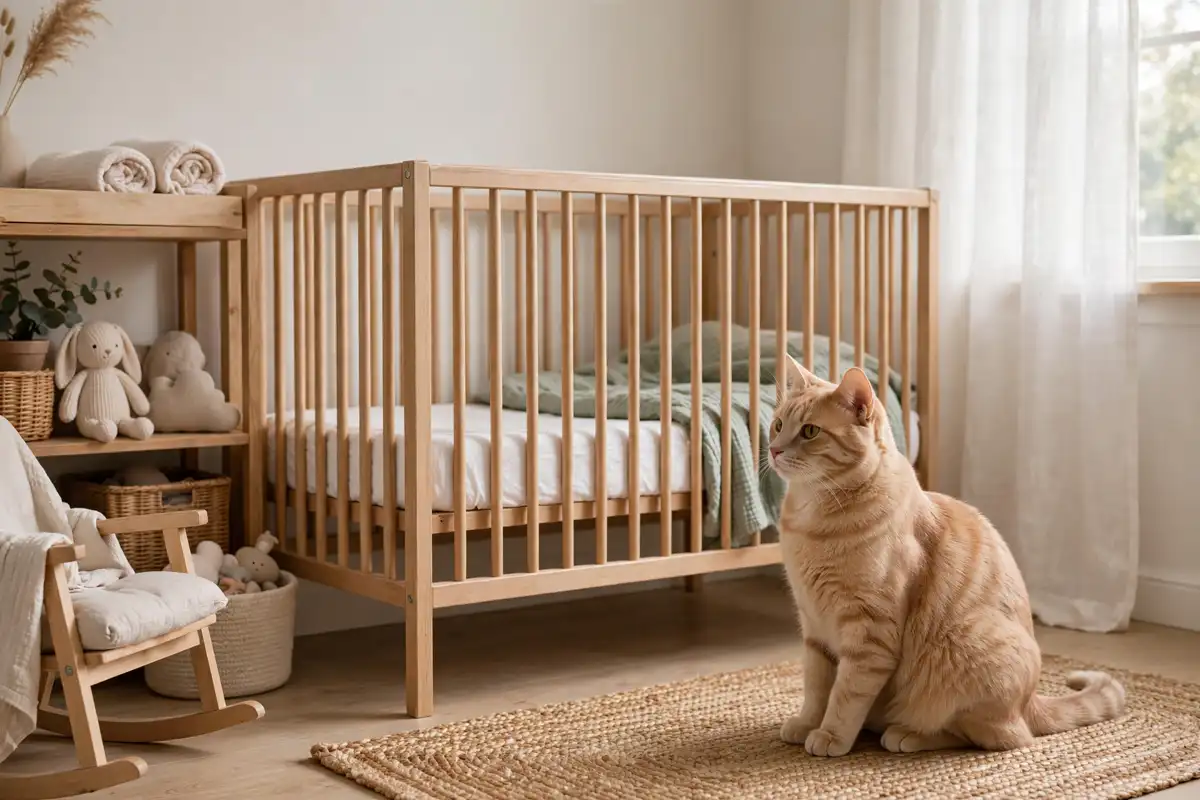
A new baby is on the way and your cat has been your baby for years — so how do you introduce your cat to the newborn safely? Go slowly and start early. The winning formula is simple: set up the nursery weeks before the due date, let your cat get used to baby sounds and smells gradually, keep the cat out of the crib from day one, and let the first real meetings happen calmly and on your cat's terms. Most cats adjust to a new baby within a few weeks, especially when their routines stay predictable.
This guide walks you through the whole process — from nursery prep and the first sniff to reading stress signals and setting up a baby-safe home. With a little planning, your cat and your newborn can share a household happily and safely.
Why a New Baby Feels Like a Big Deal to Your Cat
Cats are creatures of habit, and a new baby changes nearly everything about their environment: new furniture appears, rooms get rearranged, strange sounds fill the house, and your attention shifts. Your cat is not being dramatic — they are responding to genuine disruption the same way any territorial animal would.
The good news is that cats are remarkably adaptable. What looks like "jealousy" is almost always stress from change, and stress responds well to predictability. Keep feeding times, litter box location, and play sessions as consistent as you can, and you remove most of what upsets cats during this transition. Your cat does not need to understand what a baby is — they just need their world to still make sense.
Preparing Your Cat Before the Baby Arrives
The best time to start is during pregnancy, not after the baby is home. Gradual change is the entire secret here.
Set Up the Nursery Early
Assemble the crib, changing table, and stroller several weeks ahead so your cat can investigate while things are still boring. Let them sniff the new furniture, then establish the boundaries you want now — if the crib will be off-limits, teach that rule before the baby sleeps in it. Trying to enforce a new boundary while your cat is already stressed by a crying newborn is far harder.
Introduce Baby Smells and Sounds Gradually
Cats live by scent. Play recordings of baby crying, gurgling, and babbling at low volume while your cat eats or relaxes, slowly increasing the volume over a couple of weeks. Pair the sounds with treats so your cat builds a positive association. You can also dab a little baby lotion on your hands so the scent becomes familiar. By the time the real baby arrives, nothing about the noise or smell will be shocking.
Create Safe Retreats
Every cat needs a place to escape when the house gets overwhelming. Set up a tall cat tree, a cozy bed in a quiet room, or a cleared shelf as a "cat-only zone" before the baby arrives. If the nursery needs to be cat-free at night, make sure your cat has an equally comfortable alternative spot — never just shut a door and leave them with nowhere pleasant to go.
Step-by-Step: The First Introductions
When the baby comes home, resist the urge to do a dramatic face-to-face meeting. Cats prefer to gather information at their own pace.
- Start with scent only. Before the baby enters a shared room, let your cat sniff a blanket the baby has been wrapped in. Offer a treat while they investigate so the new smell means good things.
- Keep the first meetings calm and short. Sit with the baby in a room where your cat is free to come and go. Ignore the cat and let them approach — curiosity on their terms builds confidence far better than being placed near the baby.
- Stay relaxed. Cats read your body language. If you are tense and hovering, your cat assumes there is something to worry about. Sit comfortably, talk softly, and let the cat sniff the baby's feet or blanket.
- Reward calm behavior. Every time your cat is near the baby without reacting — sniffing, sitting nearby, or simply ignoring the situation — a treat or gentle praise reinforces that this is normal life now.
- Increase contact gradually. Over days and weeks, short supervised sessions become routine. Never pick the cat up and place them on or near the baby, and never force proximity.
If your cat hisses or retreats, that is fine — they are communicating a boundary. Give them space and try again later. Most cats move from cautious to indifferent within a couple of weeks, and many become genuinely fond of the baby's company.
Keeping the Crib and Nursery Baby-Safe
This is the one non-negotiable rule: cats and sleeping newborns must never be unsupervised together. Cats are drawn to warm, soft spots, and a sleeping baby in a crib is exactly the kind of cozy nest a cat finds irresistible. A cat settling down to sleep on or beside a newborn is a suffocation risk, even if the cat has never shown a hint of aggression.
Practical ways to keep the crib cat-free:
- Use a breathable crib tent or net designed to keep pets out.
- Keep the nursery door closed when the baby sleeps — during naps and at night.
- Give the cat an appealing alternative: a heated or plush cat bed near (but not in) the nursery.
- Double-sided tape on crib rails can discourage climbing during the training phase.
For more on setting up a safe household, browse our Care Guides section and start from the homepage for all our cat care resources.
How to Read Your Cat's Stress Signals
Even with perfect preparation, some cats show stress. Watch for hiding more than usual, appetite changes, over-grooming, avoiding the litter box, or sudden aggression. These are requests for help, not misbehavior — never punish them.
The fastest fix is restoring routine: same feeding times, same play sessions, same quiet lap time. Add interactive play to burn off nervous energy, and consider a feline pheromone diffuser in your cat's favorite room. Most stress behaviors fade as the baby's schedule becomes predictable. If litter box problems or appetite loss persist for more than a couple of days, check in with your veterinarian to rule out a medical cause.
The Golden Rule: Never Leave Them Unsupervised
No matter how gentle your cat is, never leave a baby alone with a cat — not "just for a minute" while you grab the phone. Toddlers are another story: as your baby grows into a grabby toddler, teach gentle touch early and always supervise interactions. Children old enough to understand rules can learn to let the cat walk away, which prevents most scratches.
Handled this way, the relationship often becomes something lovely. Many families find the cat becomes the baby's first "friend" — sleeping on the rug during tummy time and calmly accepting small hands. Patience at the start pays off for years.
Frequently Asked Questions
Is it safe for a cat to sleep in the baby's crib?
No. A cat should never sleep in a baby's crib or bassinet, even if your cat has never done anything aggressive. Cats seek out warm, cozy spots, and an unsupervised cat near a sleeping newborn is a suffocation risk. Use a crib tent or keep the nursery door closed at night.
How long does it take a cat to get used to a new baby?
Most cats settle into the new routine within a few weeks to a couple of months. Timid or older cats may take longer. Patience, consistent routines, and positive associations with baby sounds and smells speed up the adjustment.
What if my cat seems jealous of the new baby?
What looks like jealousy is usually stress from disrupted routines. Counter it by keeping feeding and playtime consistent, giving your cat one-on-one attention when the baby sleeps, and never punishing clingy or withdrawn behavior — both are signs your cat needs reassurance, not discipline.
Should I let my cat smell the baby?
Yes, in a calm, supervised way. Let your cat approach and sniff a blanket the baby used, or the baby's feet, while you stay relaxed and reward the cat with a treat. Never force contact or bring the cat's face right up to the baby.
Can cats be dangerous to newborns?
Cats are not naturally dangerous to babies, and myths about cats "stealing breath" are just that — myths. The real risks are a cat accidentally lying on a newborn, scratching during rough play, or passing parasites like toxoplasmosis. All are preventable with supervision, a cat-free crib, and routine vet care.