Kitten Feeding Schedule: How Much by Age (Chart)
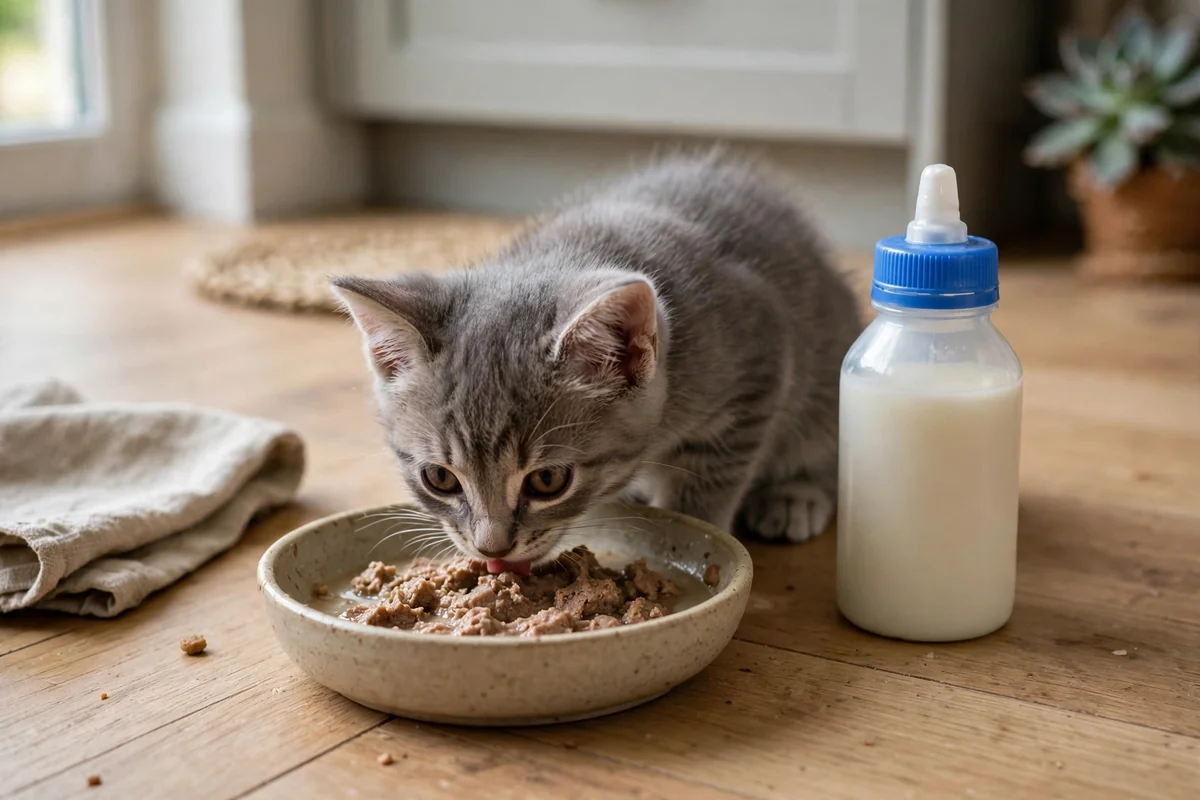
A kitten's feeding schedule changes fast in the first year: newborns need milk every 2–3 hours, weaning kittens need 4 small meals a day, and by 12 months most kittens move to two adult meals. The chart below gives you the amounts and frequencies by age, and the sections after it explain weaning, portion control, and the mistakes that most commonly trip up new kitten owners. Always adjust for your individual kitten with your vet's guidance — a tiny runt and a chunky littermate will not need identical portions.
Getting the schedule right matters because kittens grow at an extraordinary rate, roughly doubling and tripling their birth weight in the first weeks, and they do it on very small stomachs. That combination — huge energy needs, tiny capacity — is exactly why frequent small meals are the rule for kittens and why a single missed day can matter. A good schedule also builds habits that last: kittens fed on a routine grow into adults who eat calmly and maintain weight more easily.
Kitten Feeding Schedule Chart
| Age | What to feed | How often |
|---|---|---|
| 0–4 weeks | Kitten milk replacer only | Every 2–3 hours, including overnight |
| 4–6 weeks | Milk replacer + soft gruel (wet kitten food mixed with replacer) | 4–5 small meals a day |
| 6–8 weeks | Wet kitten food, increasingly solid | 4 meals a day |
| 8–12 weeks | Wet kitten food + some dry kitten kibble | 4 meals a day |
| 3–6 months | Kitten food, wet and/or dry | 3–4 meals a day |
| 6–12 months | Kitten food, moving to adult food near 12 months | 3 meals, then 2 |
Portion sizes vary by brand and by kitten, so use the feeding guide on your kitten food's packaging as the starting point, then adjust by growth and body condition. Your kitten should be gaining weight steadily, with ribs you can feel under a thin layer of fat but not see sharply. Your vet will weigh your kitten at vaccination visits and can tell you whether the amount is right — bring your feeding routine to those appointments.
Weaning: From Milk to Solid Food
Weaning usually begins around 4 weeks and finishes by 8 weeks. Start with a gruel: wet kitten food thinned with kitten milk replacer or warm water into a soupy paste, served on a shallow plate. Kittens will step in it, sniff it, and eventually lap it — mess is part of the process. Over two to three weeks, gradually thicken the gruel, reduce the added liquid, and introduce small pieces of wet food, then a little dry kitten kibble softened with water if needed.
Never rush weaning because it is messy or inconvenient. A kitten separated from its mother before 8 weeks still needs milk replacer alongside the gruel until it eats solid food confidently. If a weaning kitten refuses the gruel, try warming it slightly, offering it on your finger, or feeding in a quieter spot. Persistent refusal, especially with lethargy or diarrhea, deserves a vet call — weaning problems can escalate quickly in small kittens.
Bottle-Feeding Basics for Orphaned Kittens
Orphaned kittens under 4 weeks need kitten milk replacer from a proper kitten bottle, fed every 2–3 hours around the clock. Hold the kitten on its tummy, never on its back, with the bottle at a slight angle so milk flows slowly — too fast a flow risks milk entering the lungs. After each feed, gently stimulate the kitten's bottom with a warm, damp cloth to help it urinate and defecate, as very young kittens cannot do this alone. Weigh the kitten daily on kitchen scales: steady daily gains are the best sign the schedule is working.
Never give cow's milk to a kitten. It is too low in protein and fat for a growing kitten and commonly causes diarrhea, which dehydrates small kittens fast. If you run out of milk replacer in an emergency, call your vet or a rescue organization for guidance rather than improvising with human milk products.
Water, Treats, and the Switch to Adult Food
Fresh water should be available from weaning age onwards, in a shallow bowl the kitten can reach easily. Some kittens are fussy about water bowls, so try a second bowl in another room or a low ceramic dish. Treats are fine in tiny amounts from about 8 weeks, but keep them under 10 percent of daily calories — a kitten's main nutrition must come from complete kitten food, not treats.
Switch to adult food gradually around 12 months, or at the age your vet recommends for your kitten's breed — larger breeds mature more slowly and may stay on kitten food longer. Mix increasing amounts of adult food into the kitten food over 7 to 10 days to avoid stomach upset. At the same time, reduce meals from three to two a day, keeping the daily total appropriate for your young adult cat's weight and activity.
Mistakes New Kitten Owners Make
- Feeding adult cat food too early. Adult food is lower in calories, protein, and key nutrients than growing kittens need.
- One big meal a day. Kittens cannot eat enough in one sitting to fuel a day of growth — frequent small meals are essential.
- Leaving wet food out all day. It dries out, loses smell, and grows bacteria in warm rooms. Offer fresh portions and remove leftovers after 30 minutes.
- Overfeeding from guilt. A constantly full bowl plus treats can produce an overweight kitten, which is harder to slim down later.
- Ignoring weight checks. Weekly weighing at home catches problems early — a kitten who stops gaining needs attention before it stops eating.
The first year passes quickly, and so does the feeding schedule: milk every few hours, then gruel, then four meals, then three, then two. Follow the chart, weigh your kitten regularly, and adjust with your vet's help, and you will give your kitten the steady fuel it needs for healthy growth.
Tracking Growth: Weigh Your Kitten Weekly
A kitchen scale is one of the most useful tools a kitten owner can own. Weigh your kitten once a week at the same time of day, and write the weight down, because steady gain is the clearest proof that the feeding schedule is working. Healthy kittens gain weight every week, though the rate slows as they approach adult size, and small day-to-day wobbles are normal. What matters is the trend over two to three weeks: a kitten who stops gaining, loses weight, or gains far more slowly than littermates deserves a vet check, even if they still seem lively. Bring your weight log to vaccination visits, along with notes on appetite and stools, and your vet can adjust portions precisely instead of guessing. Weekly weighing also teaches you your kitten's normal body shape, so you notice weight changes early for the rest of their life.
Frequently Asked Questions
How often should I feed a 2-month-old kitten?
About 4 small meals a day of wet kitten food, with some dry kitten kibble introduced gradually. Offer fresh portions each time and remove uneaten wet food after 30 minutes.
When can kittens start eating solid food?
Weaning usually starts around 4 weeks with a soft gruel of wet kitten food mixed with milk replacer, and most kittens eat solid food confidently by 8 weeks.
How much should a kitten eat per day?
It depends on the brand and the kitten, so start with the feeding guide on your kitten food's packaging and adjust by steady weight gain and body condition. Your vet can confirm the amount at vaccination visits.
Can kittens drink cow's milk?
No. Cow's milk is too low in protein and fat for kittens and commonly causes diarrhea. Bottle-fed kittens need proper kitten milk replacer, and weaned kittens need fresh water.
When should I switch my kitten to adult cat food?
Usually around 12 months, gradually over 7 to 10 days. Larger breeds mature more slowly, so your vet may recommend staying on kitten food longer.