How Often Should I Feed My Cat? Age-by-Age Chart
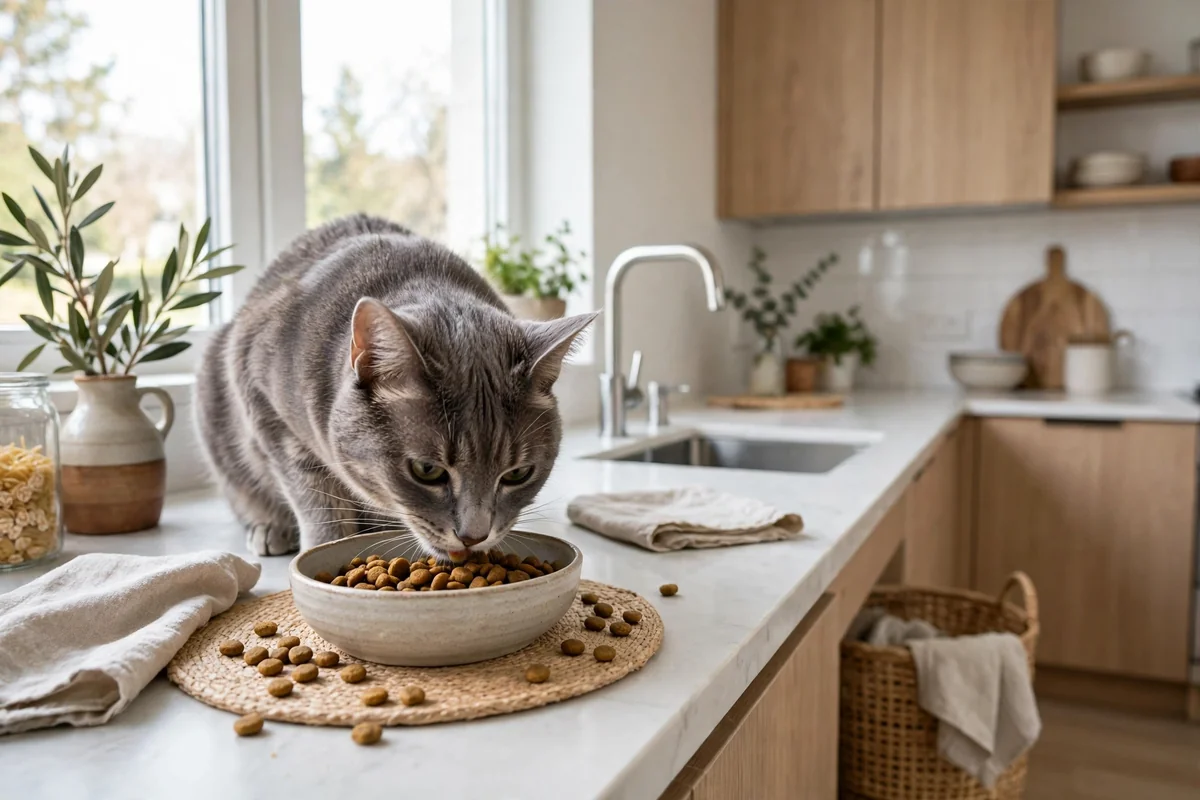
As a starting point, most adult cats do best on two measured meals a day, kittens need three to four small meals, and senior cats usually suit two to three smaller meals. The exact schedule depends on your cat's age, weight, activity, and health, but the principle stays the same: regular, measured meals beat an always-full bowl for most cats. The chart below gives you a clear starting point, and the sections after it explain how to adjust it for your cat.
Feeding frequency matters more than many owners realize. It affects weight, digestion, begging behavior, and even how easily you notice illness — a cat who misses a scheduled meal is a cat whose appetite change you spot the same day, while a cat grazing from a full bowl can quietly eat less for a week before anyone notices. A routine also gives your cat security: cats are creatures of habit, and predictable mealtimes reduce anxiety-related begging and night-time waking.
Age-by-Age Feeding Chart
This chart covers typical healthy cats. Your vet may adjust it for pregnancy, illness, or weight management, so treat it as a starting point, not a prescription.
| Age | Meals per day | Notes |
|---|---|---|
| Up to 6 months | 3–4 small meals | Growing fast; needs frequent energy and kitten food. |
| 6–12 months | 3 meals, moving to 2 | Gradually merge the middle meal into breakfast and dinner. |
| Adult (1–10 years) | 2 meals | Morning and evening, roughly 12 hours apart, measured portions. |
| Senior (11+ years) | 2–3 smaller meals | Smaller, more frequent meals suit smaller appetites and sensitive digestion. |
Scheduled Meals vs Free-Feeding
Free-feeding — leaving dry food out all day — is convenient, but it is the leading cause of gradual weight gain in indoor cats. It makes portion control almost impossible, especially in multi-cat homes where one cat eats the other's share, and it hides appetite changes that are often the first sign of illness. Scheduled meals solve all three problems: you know exactly how much each cat ate, and when.
There are exceptions. Very active outdoor cats, nursing mothers, and some kittens under 6 months may genuinely need food available more often. If you do free-feed, measure the day's total amount each morning rather than topping the bowl up endlessly, and switch to scheduled meals if your cat starts gaining weight. An automatic feeder with a timer can keep the schedule even when you are out or sleeping in.
How Much at Each Meal?
Frequency and portion size work together: the daily total matters most, and you split it across the day's meals. Start with the feeding guide on your cat food's packaging for your cat's weight, then adjust by body condition — you should be able to feel the ribs under a thin layer of fat, and see a waist from above. If your cat is gaining weight on the guide amount, reduce the total by a small amount and recheck in two weeks; if losing, increase slightly. Treats count too, and should stay under about 10 percent of daily calories.
Wet and dry food can be mixed across meals — for example, wet food in the morning and dry food in the evening — as long as the combined daily total is right. Wet food adds hydration, which is valuable for cats prone to urinary problems, while dry food is convenient and helps some cats' dental routine. Neither is compulsory; the right balance is the one your cat eats happily and that keeps their weight steady.
Special Situations That Change the Schedule
- Overweight cats: keep two measured meals, but reduce the daily total gradually with your vet's guidance. Never crash-diet a cat — rapid weight loss can trigger fatty liver disease.
- Multi-cat homes: feed cats separately, or at least in separate spots, so a confident cat cannot steal a shy cat's meal. Scheduled meals make this easy.
- Cats who vomit after eating: try three or four smaller meals instead of two large ones, and consider a slow-feeder bowl. If vomiting persists, see your vet.
- Diabetic cats: meal timing often needs to match insulin injections, so follow your vet's schedule exactly rather than this general chart.
- Pregnant or nursing cats: need more frequent meals and kitten food for the extra energy, with amounts guided by your vet.
Changing Your Cat's Schedule Without a Protest
Cats dislike sudden change, so move gradually. If you are dropping from three meals to two, shrink the middle meal a little each day over a week while slightly increasing breakfast and dinner. Keep meal times consistent — cats learn the routine within days and will remind you loudly if you are late. If your cat begs between meals, resist adding extra food; instead, play with them, since begging is often boredom rather than hunger, and a short play session before meals also encourages natural hunting-then-eating behavior.
The best schedule is the one you can keep every day. Two regular, measured meals suit most adult cats beautifully, and a steady routine makes weight management, illness detection, and peaceful mornings all easier. Pick your times, measure the portions, and let the routine do the quiet work.
Using Puzzle Feeders to Stretch Mealtimes
If your cat inhales meals in seconds and then begs for more, a puzzle feeder or slow-feeder bowl can transform the routine without adding food. Puzzle feeders make your cat work a little for each meal, which slows eating, reduces vomiting after meals, and provides mental stimulation that indoor cats often lack. Start with an easy puzzle — a lick mat smeared with wet food, or a bowl with raised ridges — and increase the difficulty only once your cat is confident. Split one daily meal across a puzzle feeder in the morning and a regular bowl in the evening to keep things interesting. Cats who eat too fast often seem far more satisfied after a puzzle meal, simply because the meal lasted longer, and owners frequently find that begging between meals drops once feeding becomes an activity rather than a thirty-second event.
Frequently Asked Questions
How many times a day should I feed my adult cat?
Twice a day suits most healthy adult cats — morning and evening, roughly 12 hours apart, with measured portions. Kittens need 3–4 small meals, and seniors often do well on 2–3 smaller meals.
Is it okay to leave food out all day for my cat?
It is convenient but risky: free-feeding commonly leads to gradual weight gain and hides appetite changes. If you free-feed, measure the day's total each morning, and switch to scheduled meals if your cat gains weight.
Should kittens eat more often than adult cats?
Yes. Kittens under 6 months need 3–4 small meals a day because they are growing fast and have small stomachs. Reduce to 3 meals around 6 months, then to 2 meals by about a year old.
What time should I feed my cat?
Consistency matters more than the exact hour. Pick morning and evening times you can keep every day, spaced roughly 12 hours apart, and stick to them — cats thrive on routine.
My cat begs between meals — should I feed it?
Usually not. Begging is often boredom or habit rather than hunger. Try a play session first, and check that the daily portion is right for your cat's weight before adding extra food.