Kitten Not Eating? Causes and What to Do Fast
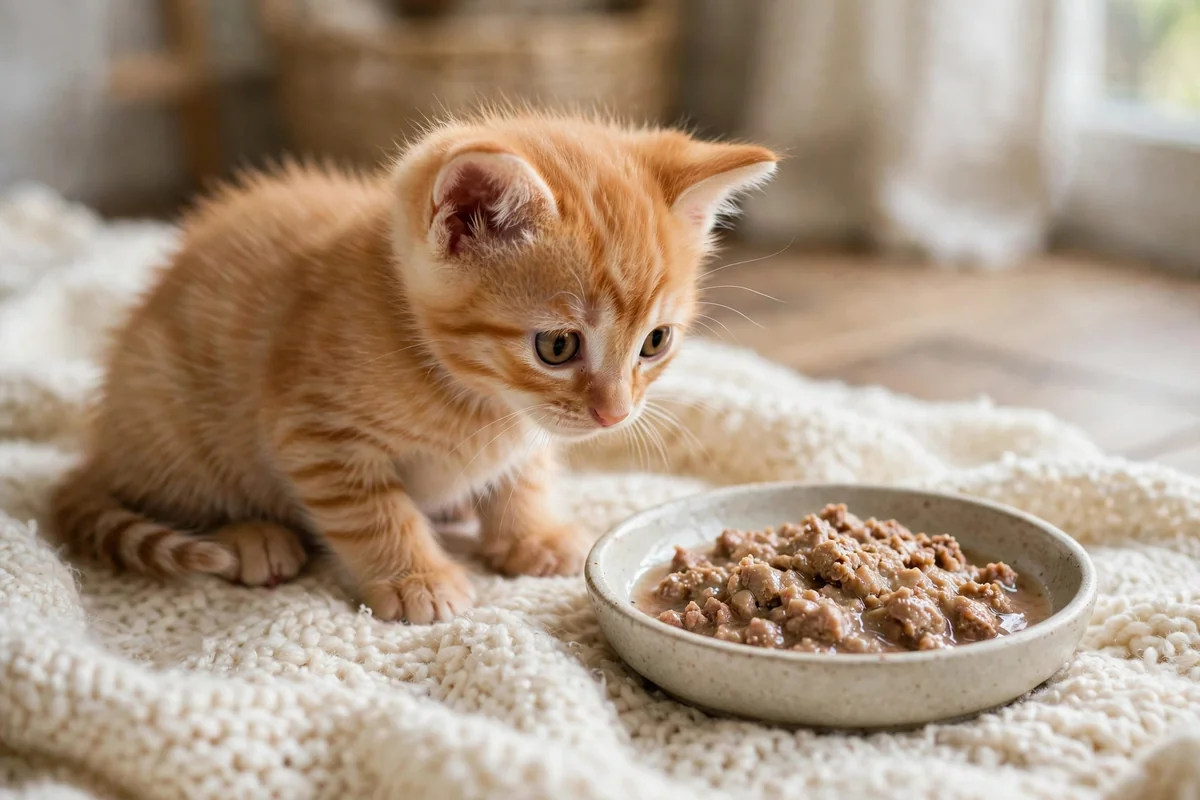
If your kitten is not eating, act fast: a kitten who refuses all food for more than 12 hours needs a vet call, and a newborn under 4 weeks who misses even one or two feeds is an emergency. Kittens have tiny energy reserves and can become dangerously low in blood sugar within hours, so the watch-and-wait approach that works for adult cats does not apply here. The steps below help you find the cause quickly, tempt your kitten safely, and recognize the moment to stop trying at home.
Start by checking the basics: is your kitten actually not eating, or eating less than you expected? A newly weaned kitten eats little and often — many tiny meals a day — so a kitten who nibbles a few times is different from one who turns away from everything. Watch for a full day's pattern, but do not wait a full day if your kitten is also lethargic, cold, vomiting, or has diarrhea. With kittens, early is always better.
Common Causes in Kittens
Weaning trouble is the most common cause in kittens aged 3 to 8 weeks. A kitten taken from its mother too early, or switched abruptly from milk to solid food, may simply not recognize the new food or know how to eat it. Stress runs a close second: a new home, new people, new smells, and separation from littermates can shut down a kitten's appetite for a day or two. This is normal in the first 24 hours after adoption, provided the kitten is otherwise bright and active.
Illness is the cause you must not miss. Upper respiratory infections make it hard for kittens to smell food, which kills their appetite; intestinal parasites, common in young kittens, cause bloating, diarrhea, and poor appetite; and fading kitten syndrome in very young kittens is a genuine emergency. Feeding mistakes also matter: cold food straight from the fridge, a deep bowl a tiny kitten cannot reach into comfortably, cow's milk (which most kittens cannot digest), or adult cat food that is too hard and too low in calories for a growing kitten.
What to Do in the First Hours
- Warm the food. Heat wet kitten food briefly until lukewarm, stir well, and offer a small amount on a shallow plate or saucer.
- Try a gruel. For a weaning kitten, mix wet kitten food with a little warm water or kitten milk replacer into a soft, soupy paste they can lap up.
- Feed little and often. Offer food every 3 to 4 hours during the day rather than leaving one big bowl out. Fresh, aromatic portions work far better than stale ones.
- Feed in a warm, quiet spot. Keep the bowl away from noise, other pets, and the litter box, and make sure the kitten is warm — a chilled kitten will not eat well.
- Try a dab on the lips. Gently placing a tiny amount of food on the kitten's lips can trigger licking and get them started. If they turn away repeatedly, stop.
- Check water and warmth. Offer fresh water in a shallow dish, and keep the kitten's bedding warm and draft-free, especially for kittens under 8 weeks.
For a bottle-fed kitten under 4 weeks, use only kitten milk replacer — never cow's milk — and feed every 2 to 3 hours around the clock, including overnight. A kitten this young who refuses two feeds in a row, feels cold, or cannot latch needs same-day veterinary help. Your vet or a rescue organization can also show you the correct bottle position; feeding a kitten on its back risks milk entering the lungs.
Mistakes That Make Things Worse
Do not force food or milk into a kitten's mouth with a syringe unless your vet has demonstrated the technique — aspiration is a real and serious risk. Do not offer cow's milk, which commonly causes diarrhea in kittens and makes dehydration worse. Do not switch foods every hour in a panic; a kitten with an upset stomach needs consistency, not a tasting menu. And do not give human medicines, wormers meant for adult cats, or leftover prescriptions — kittens need kitten-specific doses, and the wrong product can be toxic.
Also, resist the temptation to wait it out because the kitten "looks okay." Kittens hide illness well, and a kitten who is quiet, cold, or uninterested in play is already telling you something is wrong. A quick vet call costs nothing and can catch a problem while it is still easy to fix.
Red Flags: See a Vet Urgently
- No food for more than 12 hours, or a newborn missing one or two feeds.
- Lethargy, weakness, wobbliness, or a cold body — possible low blood sugar, especially in very young kittens.
- Vomiting or diarrhea, particularly with blood, or diarrhea lasting more than a day.
- Sneezing, runny eyes or nose, or noisy breathing — signs of an upper respiratory infection.
- A swollen belly, visible worms, or a kitten who is not gaining weight despite eating.
- Not urinating or defecating, or crying persistently when trying to go.
Most kittens who stop eating briefly are dealing with weaning, stress, or a simple feeding fix, and they bounce back quickly once the food is warm, soft, and offered often. The key is speed: tempt gently for a few hours, watch closely, and call your vet at the 12-hour mark — or immediately if any red flag appears. With kittens, a fast call is never an overreaction.
Your Kitten's First Vet Visit Matters Here
Every new kitten should see a vet within the first few days at home, and a kitten who is not eating should be seen even sooner. At that visit, your vet will check weight, hydration, teeth and mouth, and signs of parasites, and will usually start a deworming schedule, since intestinal worms are extremely common in young kittens and a frequent hidden cause of poor appetite and slow growth. Bring a note of what you have offered, how much your kitten ate, and whether there has been vomiting or diarrhea, because those details shape the diagnosis. The visit also gives you a baseline weight, so future gains — or the lack of them — are easy to judge. If cost worries you, ask about rescue organizations or low-cost clinics in your area; a single early check often prevents a far more expensive emergency later, and it gives you a vet you can call the next time appetite dips.
Frequently Asked Questions
How long can a kitten go without eating?
Not long. A kitten refusing all food for more than 12 hours needs a vet call, and a newborn under 4 weeks who misses one or two feeds is an emergency. Kittens have tiny energy reserves and can develop low blood sugar quickly.
My new kitten is not eating on its first day home — is that normal?
A short appetite dip from stress is common in the first 24 hours, provided the kitten is bright, warm, and active. Offer warm, soft food often in a quiet spot, and call your vet if the kitten is lethargic or still not eating after 12 hours.
What should I feed a kitten who will not eat solid food?
Try a gruel of wet kitten food mixed with warm water or kitten milk replacer, served lukewarm on a shallow plate. For kittens under 4 weeks, use kitten milk replacer only, never cow's milk.
Can I give my kitten cow's milk?
No. Most kittens cannot digest cow's milk well, and it commonly causes diarrhea, which worsens dehydration. Use a proper kitten milk replacer for bottle-fed kittens.
Should I force-feed a kitten who refuses food?
No, unless your vet has shown you how. Forcing food or milk risks aspiration into the lungs. Offer food gently by hand or on the lips, and get veterinary guidance if the kitten will not eat.